



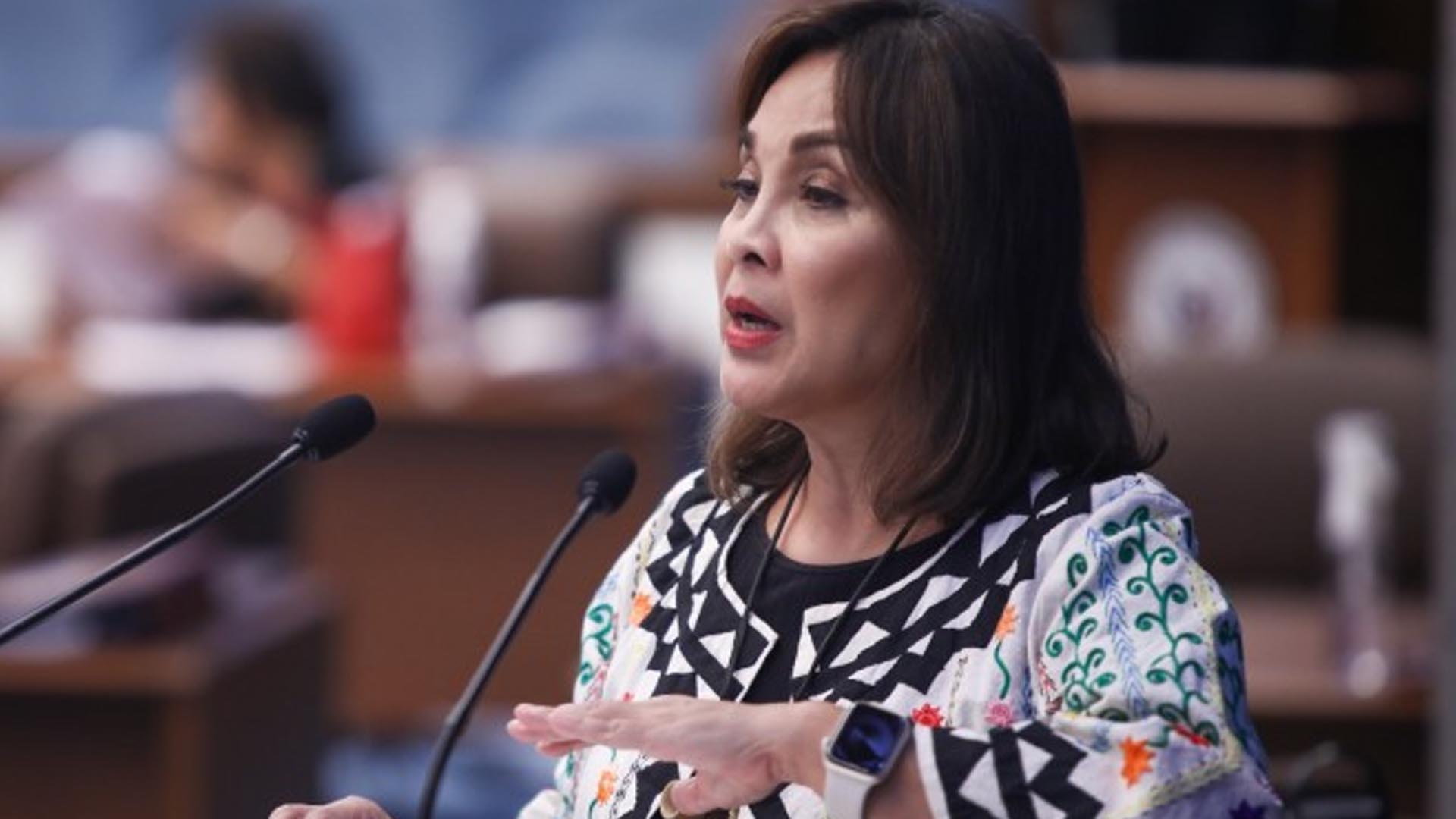






The gravity of the country’s situation in relation to its geographical location demands a responsible and sustainable approach to development, Senator Loren Legarda underscored in a statement on Thursday.
This, after the Philippines topped the 2024 World Risk Index (WRI) for the third consecutive year, indicating high exposure and vulnerability to various crises.
Legarda said development should be pursued with responsibility, accountability, and proficiency for good governance for the benefit of society and the economy.
“Development should reduce rather than produce risks to our society and our economy,” she added.
Legarda admitted that the Philippines faces significant challenges due to its location in the Pacific Ring of Fire, experiencing frequent and severe natural disasters such as typhoons, earthquakes, and volcanic eruptions.
Climate change has only exacerbated these risks, she said, bringing more frequent and severe disasters that disproportionately affect our most vulnerable communities — those living in poverty, the elderly, children, and people with disabilities.
“The urgent task of reducing risks and vulnerabilities in the context of poverty, social inequality, conflicts, and climate change has now become synonymous with the fight for the survival of humanity and securing a resilient, progressive, and sustainable Philippines for future generations,” she said.
Legarda noted that laws necessary to strengthen our country’s disaster risk reduction and management systems, improve climate resilience, and ensure that the country is better equipped to cope with and adapt to the challenges have been enacted.
These include the Philippine Disaster Risk Reduction and Management Act, the Climate Change Act, and the PAGASA Modernization Act, among others.
However, she said the risks remain if these measures are not properly implemented or followed by the people and local governments.
“Our resilience depends not only on laws and systems but on how well we implement them in practice. We must ensure meaningful action to address our vulnerabilities – protecting ecosystems, ensuring proper waste management, and enforcing sustainable land-use practices,” Legarda said.
“Reducing risks and saving our country and our planet are tasks no one can afford to overlook. We cannot afford to delay any longer and continue to expose our people to the escalating risks we face.”
The report by the Institute for International Law of Peace and Armed Conflict of the Ruhr-University Bochum in Denmark assessed countries’ risk levels based on factors such as natural disasters, conflicts, pandemics, and wars.
Among countries with the highest WRI in 2024, the Philippines was followed by Indonesia, India, Colombia, Mexico, Myanmar, Mozambique, Russian Federation, Bangladesh, and Pakistan.
Meanwhile, the countries with the lowest WRI are Monaco, Andorra, San Marino, Luxembourg, Sao Tome and Principe, Liechtenstein, Belarus, Singapore, Qatar, and Bahrain.
Risk factors highlighted
In a statement, the Office of Civil Defense (OCD) said this year’s WRI report mainly focused on interconnected crisis factors that impact populations in considering various types of risks to determine a country’s overall risk profile.
It added that the Philippines taking the top spot in the 2024 WRI is a clear reminder for the government and other stakeholders to work tirelessly in addressing the challenges and issues at hand.
“It is essential to continuously adopt a multisectoral approach in all aspects of disaster risk reduction and management. Collaborative interventions from different sectors are crucial to collectively address the pressing needs,” the OCD said.
It also emphasized the enormity of this task.
“Through collaboration with various sectors, the OCD will continue to promote more comprehensive and concrete efforts to reduce risks. This will involve implementing capacity-building interventions and other measures aimed at minimizing risks and improving the country’s risk profile,” it added. (PNA)


