



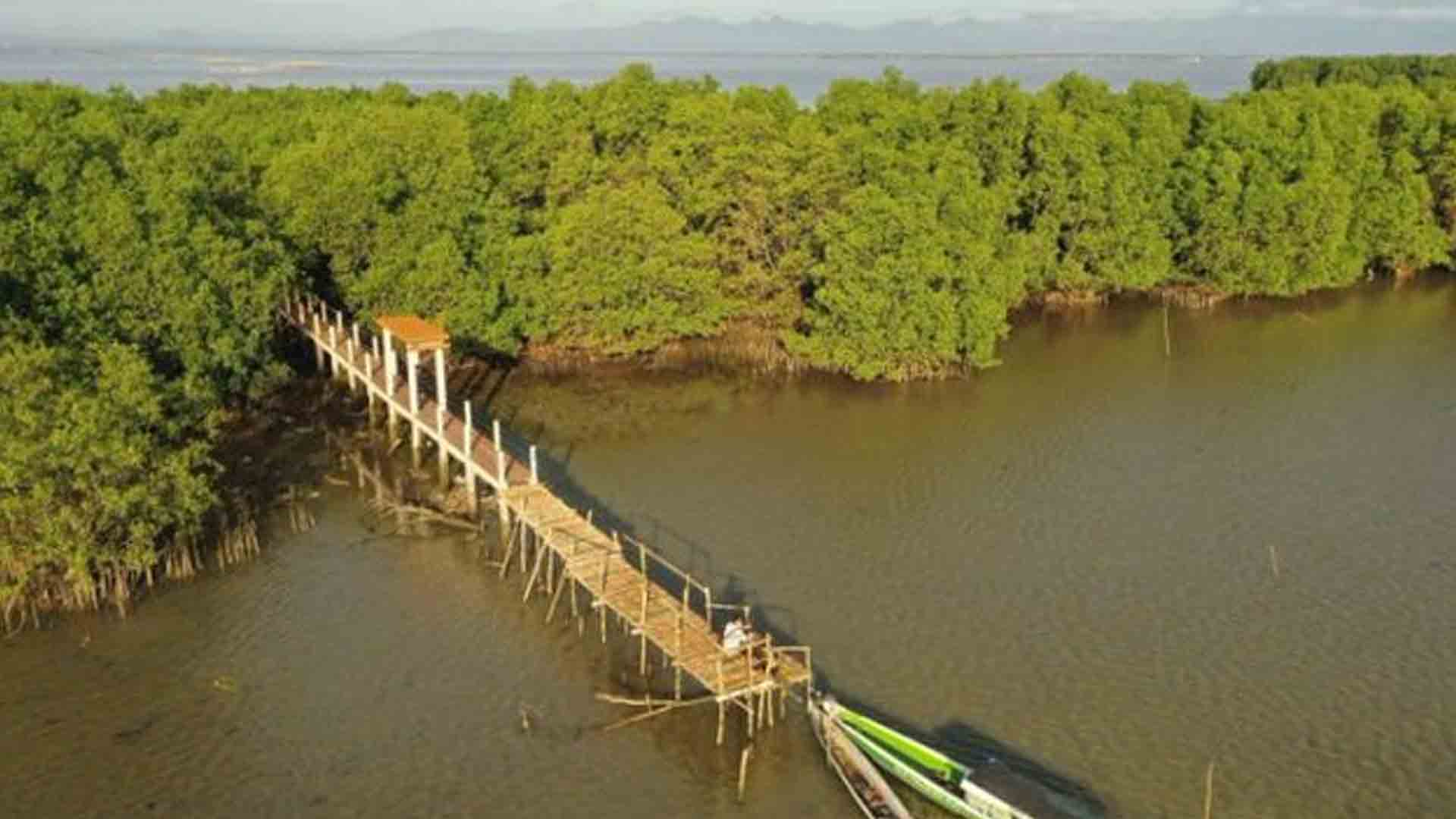







The Sasmuan Pampanga Coastal Wetland (SPCW) is now a Ramsar Site or Wetland of International Importance.
The declaration was made on Tuesday by the Department of Environment and Natural Resources (DENR) – Biodiversity Management Bureau (BMB) based in Quezon City and the Ramsar secretariat based in Gland, Switzerland.
This was confirmed on Wednesday by DENR 3 Director Paquito Moreno Jr., who said the SPCW is the eighth Ramsar Site in the country and first in Central Luzon.
It covers more than 3,500 hectares of coastal waters and four barangays in Sasmuan town, this province.
“We are honored and fortunate that the annual celebration of World Wetland Day has become more significant and special because the SPCW is now officially declared as ‘Wetland of International Importance’,” Moreno said in a statement.
He said that SPCW met four of the nine criteria of Ramsar Site before it was considered as internationally important.
“We met criteria 2 and 3, which means that SPCW supports vulnerable, endangered, or critically endangered species or threatened ecological communities, and play a big role in maintaining the biological diversity of a particular biogeographic region,” he said.
Moreno added that SPCW also met criteria 5 and 6 indicating that SPCW regularly supports 20,000 or more water birds, and that it supports 1 percent of the individuals in a biogeographic population of one species or subspecies of waterbird.
“SPCW is a vital component of our environment and its declaration as Ramsar site is an integral part of our strategies in cleaning and rehabilitating our Manila Bay,” he said.
Laudemir Salac, head of the Provincial Environment and Natural Resources Officer in Pampanga, said more than 80,000 migratory birds composed of 63 species have been observed in SPCW during the January 2021 Asian Waterbird Census (AWC).
“We really need to protect this important ecosystem because of numerous benefits to our local communities and to our biodiversity,” he said.
Moreno thanked the local government of Pampanga and Sasmuan for their support in all the DENR programs in Pampanga.
He also appealed to the public for their active collaboration to sustain the development and protection of SPCW.
DENR record shows that Chinese egret, spotted greenshank, Asian dowitcher, Philippine duck, and grey-backed tailorbird are some of the species frequently visiting SPCW.
A Jansen study in 2018 found out that 46 percent of the water bird species in the Philippines were observed in SPCW.
The 405-hectare Sasmuan Bangkung Malapad Critical Habitat and Ecotourism Area (SBMCHEA) is one of the valuable ecosystems found within the SPCW which is an important habitat to migratory birds and mangrove species including the Avicennia rumphiana locally known as Api-api.
SBMCHEA which is part of the large and enclosed sea of Manila Bay, is a mangrove islet in Pasak River that was formed by the volcanic sediments from the Mount Pinatubo’s devastating eruption in 1991.
The Ramsar Convention on Wetlands is an intergovernmental treaty of which the Philippines is a signatory. It provides the framework for the conservation and wise use of wetlands and their resources.
The Convention was adopted in the Iranian City of Ramsar in 1971 and came into force in 1975. Since then, almost 90 percent of UN member states, from all the world’s geographic regions, have acceded to become “Contracting Parties”. (PNA)


