



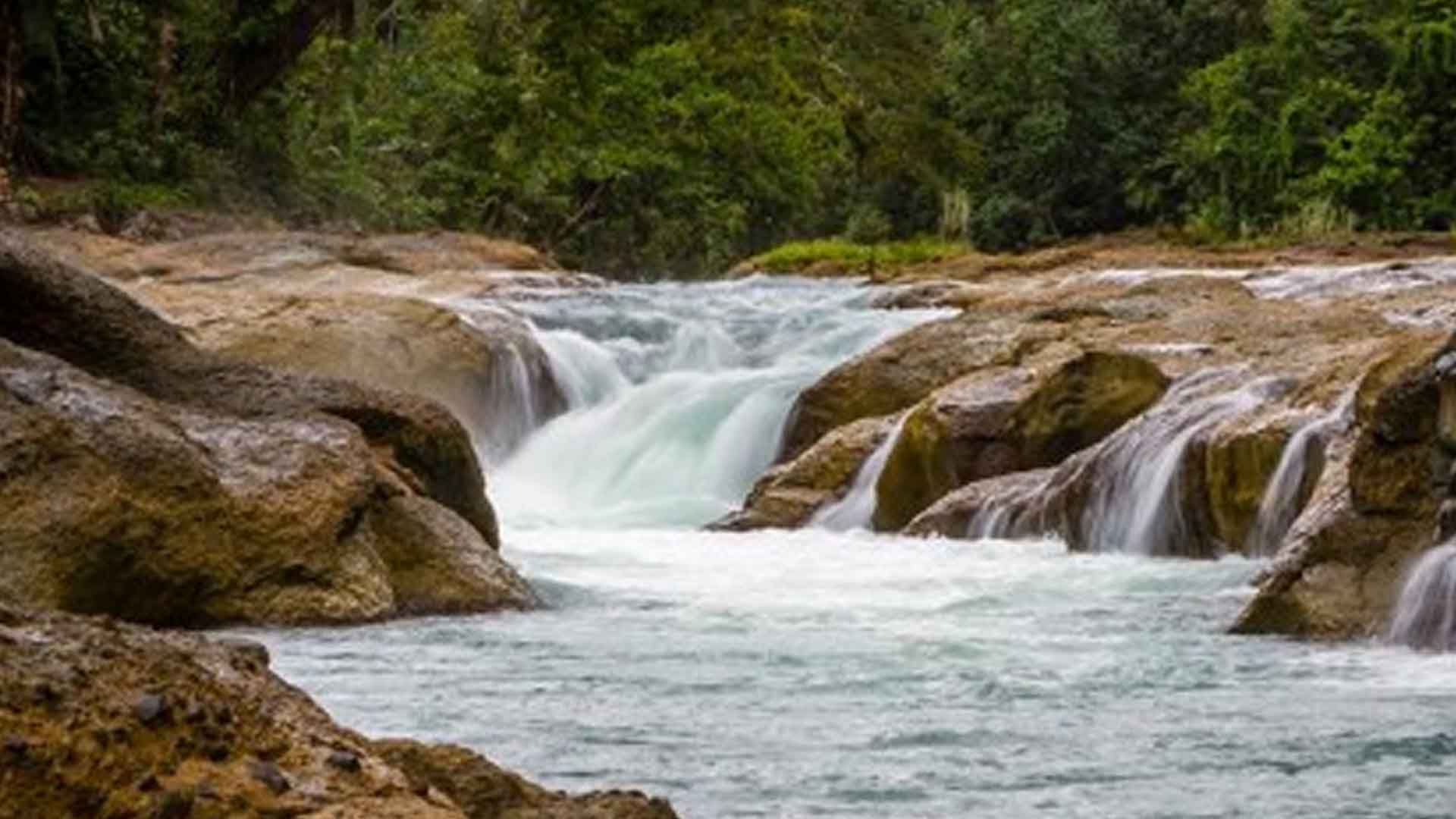






Activities are lined up to raise the chance of Samar Island Natural Park (SINP) to be included in the UNESCO (United Nations Educational, Scientific and Cultural Organization) World Heritage sites.
Angelito Villanueva, Samar provincial environment and natural resources officer, said Monday the application for inclusion is a 10-year activity that started in 2021.
Among the ongoing projects is the installation of concrete monuments in 300 corners of SINP to serves as landmarks covered by the protected area.
“Demarcation is necessary to strengthen the environmental protection initiatives. This is one of the requirements for SINP to qualify to the heritage site list,” Villanueva told the Philippine News Agency in an interview.
Aside from demarcation, the Department of Environment and Natural Resources established buffer zones to embrace other areas for biodiversity conservation.
In 2018, Samar Governor Sharee Ann Tan proposed the inclusion of SINP in the UNESCO list.
Governors from Northern Samar and Eastern Samar supported the campaign.
“If SINP will make it to the World Heritage sites list, we can invite more funding from other countries to strengthen biodiversity conservation efforts and develop eco-tourism activities,” Villanueva added.
SINP is the largest contiguous tract of old-growth forest in the Philippines and the country’s largest terrestrial protected area with an area of 333,300 hectares.
The buffer is spread north to south over the island’s three provinces and totals 458,700 hectares, about a third of the entire island of Samar.
The park is also a center of plant and animal diversity and endemism, containing threatened species belonging to the Eastern Visayas and Mindanao biogeographic regions.
Also inside the SINP are well-known natural landmarks Sohoton Cave and Natural Bridge National Park; Calbiga Cave, the country’s largest and the second largest cave in Asia; and the more than 100-kilometer Ulot River, the longest river in Eastern Visayas that starts from the upland town of San Jose de Buan, Samar and ends in the Pacific Coastal town of Can-avid, Eastern Samar.
The park is also the home to the critically endangered Philippine Eagle, which has been spotted in the forested areas of Taft and Paranas towns.
Since the park was declared a protected area in 2003, a total of 33 species of mammals, 215 species of birds, 51 species of reptiles, 26 species of amphibians and 1,000 species of plants are recorded inside the SINP.
Part of the initiative of the three provinces in the campaign to declare SINP as World Heritage site is partnering with University of Santo Tomas Graduate School – Center for Conservation of Cultural Property and Environment in the Tropics to conduct capacity-building seminar-workshop for the technical working groups organized by each province.
The workshop is structured according to the three pillars of the UNESCO World Heritage inscription, focusing on each module: Outstanding Universal Value, Authenticity and Integrity, and Protection and Management. (PNA)


