



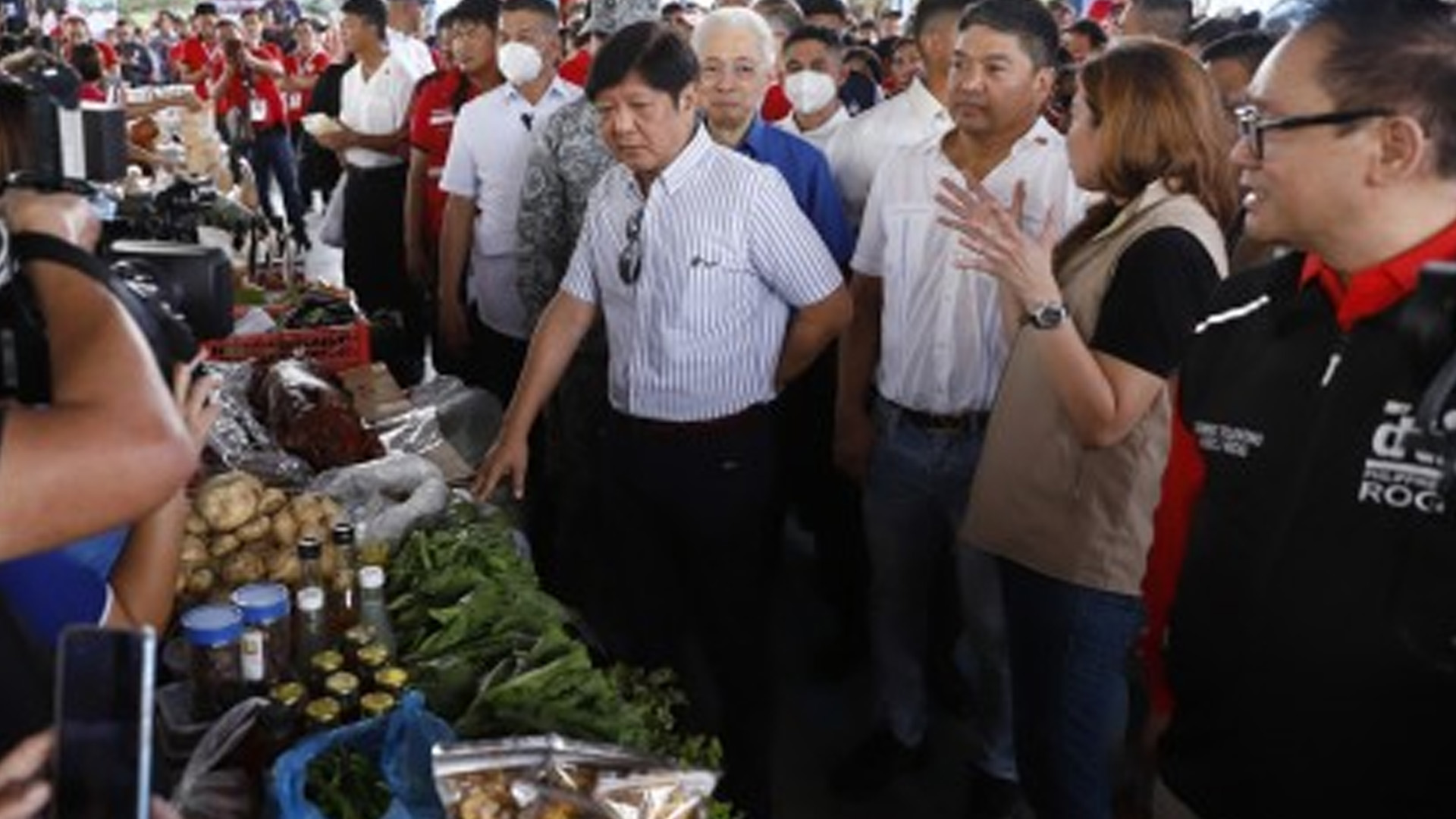






President Ferdinand R. Marcos Jr. has ordered the Department of Agriculture (DA) to further streamline administrative procedures and policies on the importation of agricultural products and remove non-tariff barriers to help ensure food security.
Under Administrative Order (AO) No. 20, Marcos emphasized that administrative constraints and non-tariff barriers continue to persist, which had caused continued increase of domestic prices of agricultural commodities despite existing measures.
Non-tariff barriers are policy measures, other than customs tariff, that restrict trade, including but not limited to quotas, import licensing systems, regulations and red tape.
“It is imperative to further streamline administrative procedures to foster transparency and predictability of policies on the importation of agricultural products in order to help ensure food security, maintain sufficient supply of agricultural goods in the domestic market, and improve local production,” Marcos said in his AO 20.
The order, signed by Executive Secretary Lucas Bersamin on April 18, takes effect immediately.
Marcos directed the DA, in coordination either with the Department of Trade and Industry (DTI) or the Department of Finance (DOF), to streamline procedures and requirements in the licensing of importers, minimize processing time of application for importation, and exempt licensed trades from submission of registration requirements.
The President also ordered the DA to facilitate importation of certain agricultural products beyond the authorized Minimum Access Volume (MAV) and reduce or remove administrative fees.
MAV is the volume of a specific agricultural product that is allowed to be imported with a lower tariff as committed by the country to the World Trade Organization.
Likewise, the DA is ordered to streamline procedures and requirements for the issuance of Sanitary and Phytosanitary Import Clearance (SPSIC), and take concrete steps to improve logistics, transport, distribution and storage of imported agricultural products.
Meanwhile, the Bureau of Customs (BOC) is directed to prioritize the unloading and release of imported agricultural products, subject to the Customs Modernization and Tariff Act, and other applicable laws, rules, and regulations of the bureau.
President Marcos has also created a surveillance team through AO 20 to ensure the effective and efficient implementation of the Order.
Concerned agencies are also directed to jointly submit a quarterly report on the status of the implementation of the AO to the President through the Office of the Executive Secretary and the Inter-Agency Committee on Inflation and Market Outlook (IAC-IMO).
The IAC-IMO, which was established through Executive Order No. 28 (series of 2023), is an advisory body of the Economic Development Group on measures that would keep inflation, particularly food and energy, within the government’s inflation targets. (PNA)


