



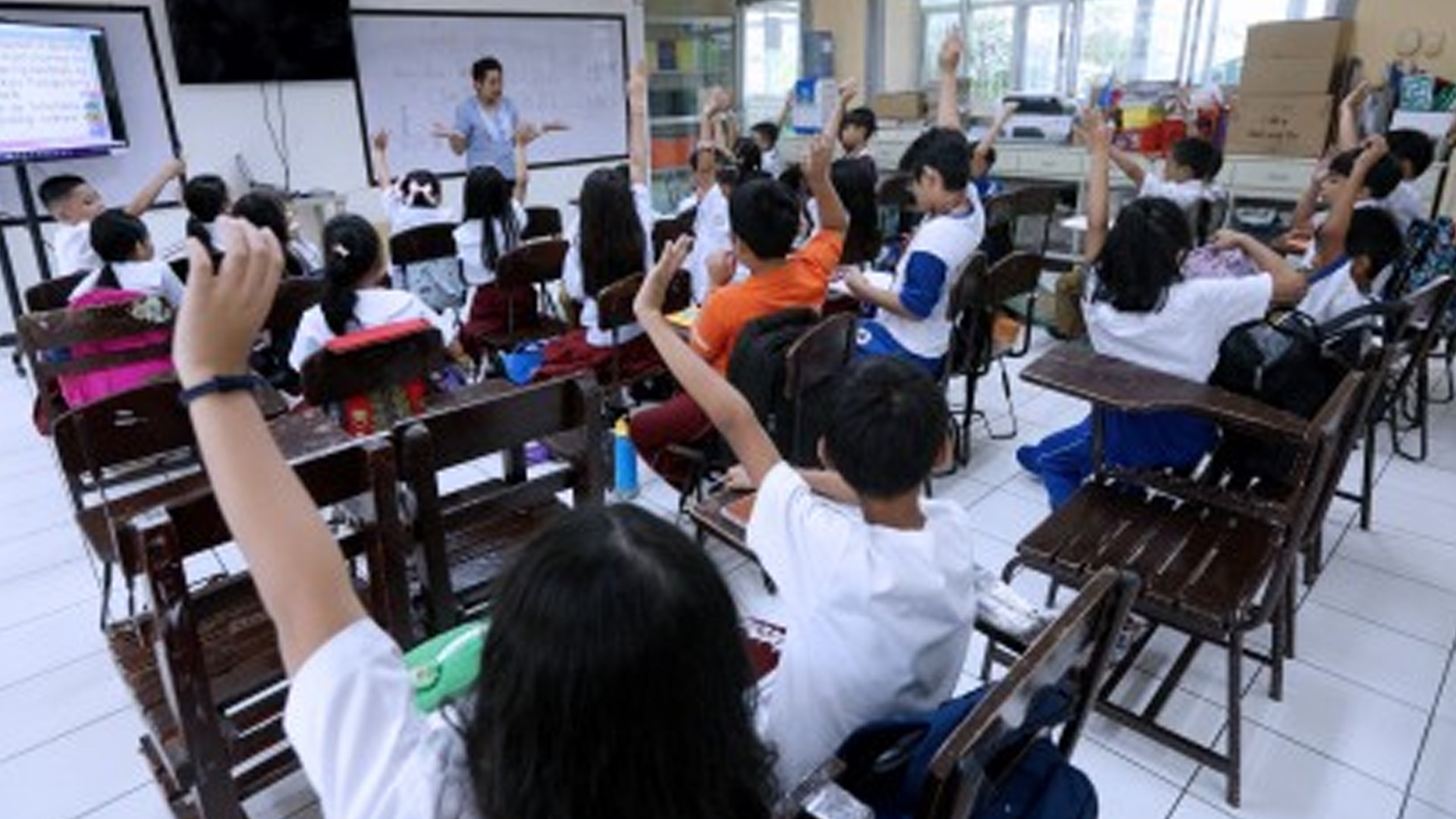






President Ferdinand R. Marcos Jr. approved key education reforms, including the adoption of a three-term school calendar for public education institutions beginning Academic Year 2026–2027, aimed at ensuring uninterrupted learning and improving educational outcomes.
The directive was issued upon the recommendation of the Economic and Development (ED) Council during its eighth meeting, held March 19 at Malacañan Palace in Manila, where Marcos emphasized the need to fast-track approvals for priority government projects alongside key sectoral reforms.
The shift from four grading periods or quarters to a three-term academic calendar aims to address the long-standing issue of compressed learning periods caused by class suspensions due to natural hazards and overlapping major events.
Under the plan, the current four-term structure will be streamlined into three terms, each with dedicated instructional and assessment periods.
The first term will have 54 instructional days and a 10-day assessment period, including a five-day opening block. The second term will include 55 instructional days and a 10-day assessment period, while the third term will have 61 instructional days and a shorter six-day assessment period.
Education officials said the approved structure is expected to benefit learners by providing longer, uninterrupted instructional days, reducing lesson fragmentation, allowing structured recovery periods and improving the overall pacing of instruction.
For teachers, the shift would remove one full grading cycle, introduce dedicated consolidation periods, embed up to 32 hours of professional development, and provide scheduled wellness intervals to reduce recurring workload pressures.
The Department of Education (DepEd) said the new academic calendar is targeted for implementation starting School Year 2026–2027. While the proposal has not undergone pilot testing, consultations were conducted with various educational institutions prior to its presentation.
The President emphasized the importance of maintaining the mandated 180-day contact period for both teachers and students, even amid potential disruptions.
President Marcos also instructed the DepEd to ensure that the proposed shorter school structure adequately supports struggling learners, aligns with the current semestral system in Senior High School, and prepares schools nationwide for full implementation.
The approved reform forms part of the administration’s broader efforts to strengthen the quality of education while ensuring resilience and continuity amid recurring disruptions. (PNA)


