



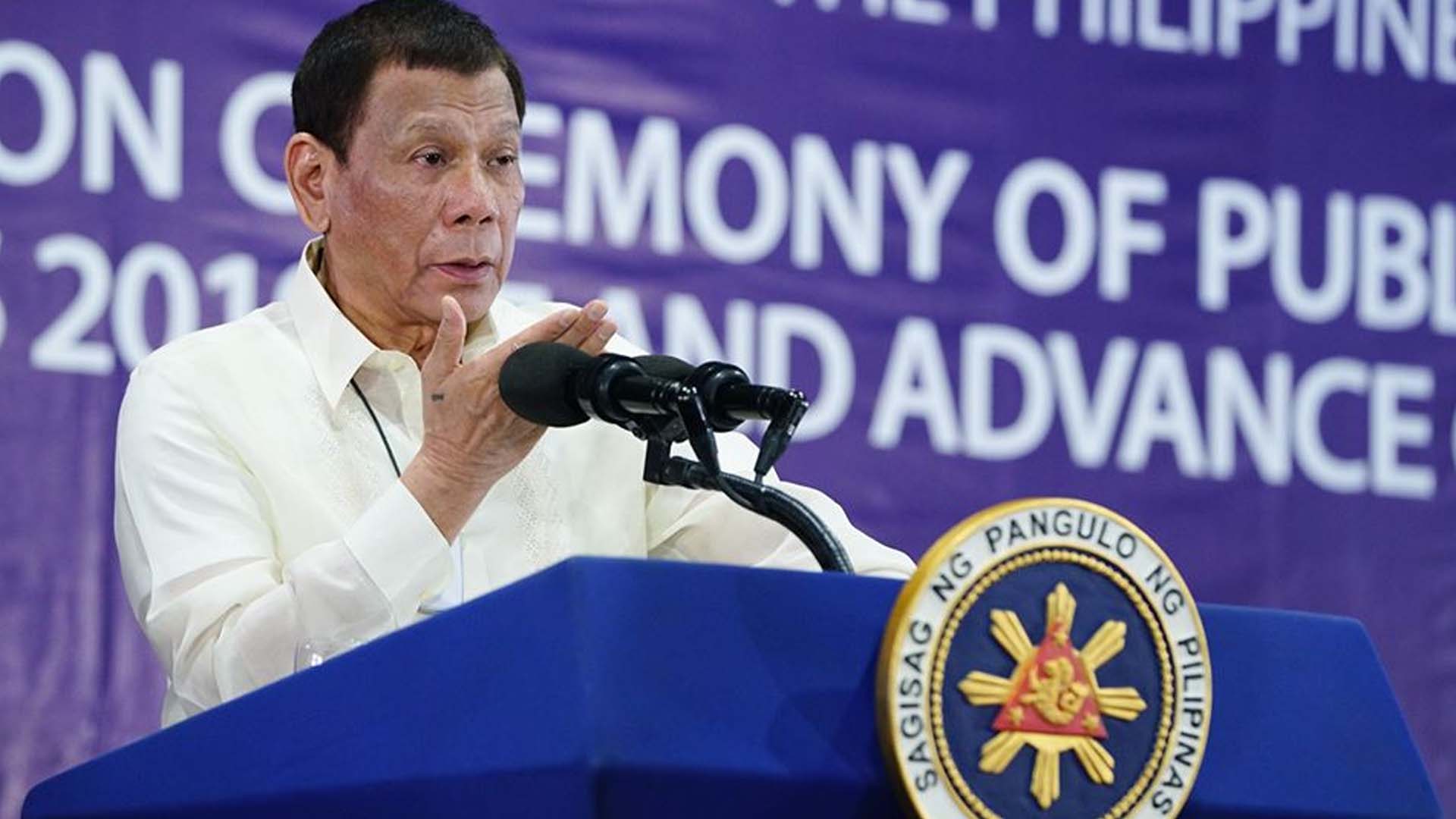






President Rodrigo Duterte said he may devote his time giving lectures on criminal law and other procedures to police officers after his term ends in 2022.
Speaking before public safety officer graduates in Davao City, Duterte, a former prosecutor, recalled the time he lectured about criminal law before he was elected Davao City mayor.
He said he wanted to lecture them on criminal law so they could do their job effectively but admitted that he was pressed for time.
“In a very clear and concise language, I can convey to you what criminal law, criminal procedure, and criminal evidence is,” Duterte said in his speech.
However, he said he may consider resuming his career as a lecturer once he steps down as the country’s top government official.
“Maybe in a few days, kung hindi na ako…lalo na hindi na ako Presidente (when I am no longer President), but two years from now I could devote my time lecturing,” he said.
He said he really wanted to lecture them because it would serve as a “guide” to becoming better police officers.
“Gusto ko talaga magturo sainyo. Hindi ko sinabi na pinaka bright ako pero pag nakuha mo ‘to, good ka na. ‘Yun na ang guide mo pagka pulis mo habang-buhay, hanggang sa kamatayan (I really want to teach you. I’m not saying I’m the brightest, but if you get this, you’re good. That will be your guide to being a cop in this lifetime, until death) I hope that I’d have the time to” he said.
In November 2018, Duterte also offered to teach cops criminal law so that they would be able to improve their performance of duty.
He vowed to protect police officers who may face legal problems in the performance of their duty.
“Lahat ng pulis na nagkakaso (All police officers who may face cases) in the performance of duty, tinulungan ko. Protektado kayo sa’kin (I help. I will protect you),” he said.
However, he warned them from committing police abuses and telling lies.
“Wag mo lang ako bigyan ng sinungaling na istorya. Ang gusto ko sabihin mo ang totoo. ‘Wag mo ako bigyan ng istorya na baluktot (Just don’t give me stories based on lies. I want you to tell me the truth. Don’t give me crooked stories),” he said.
He also took a swipe at human rights groups and former Senator Antonio “Sonny” Trillanes IV for criticizing his aggressive crackdown on illegal drugs and urged the public to avoid politicians who engaged in “grandstanding.”
“Yung mga ganun, iwasan ninyo (People like that, avoid them). Stay clear. Sisirain tayo (They will destroy us),” he said.
Trillanes, who returned to the country after speaking engagements abroad, posted bail for one count of conspiracy to commit sedition before the Quezon City Metropolitan Trial Court (MeTC) Branch 138.
<strong>Life partners</strong>
Meanwhile, Duterte also said he found it “problematic” that police officers to have a tendency to select life partners among their colleagues, stressing that it was unfair for their children.
He said he personally knew about three or four couples who were both police officers.
Children who grew up without their parents, he said, were at higher risk of being a “dysfunctional” family: “Yun ang ayaw ko dun (That’s what I dislike about it).”
As much as possible, he said he wanted female cops to be stationed near their homes.
“The embrace of a father and mother, hindi mabayaran ‘yan kahit isang milyon (cannot be replaced even by a million pesos),” he said.
He, however, admitted that it was difficult to “prevent love to blossom between a man and a woman” especially if they saw each other every day. (PNA)


