



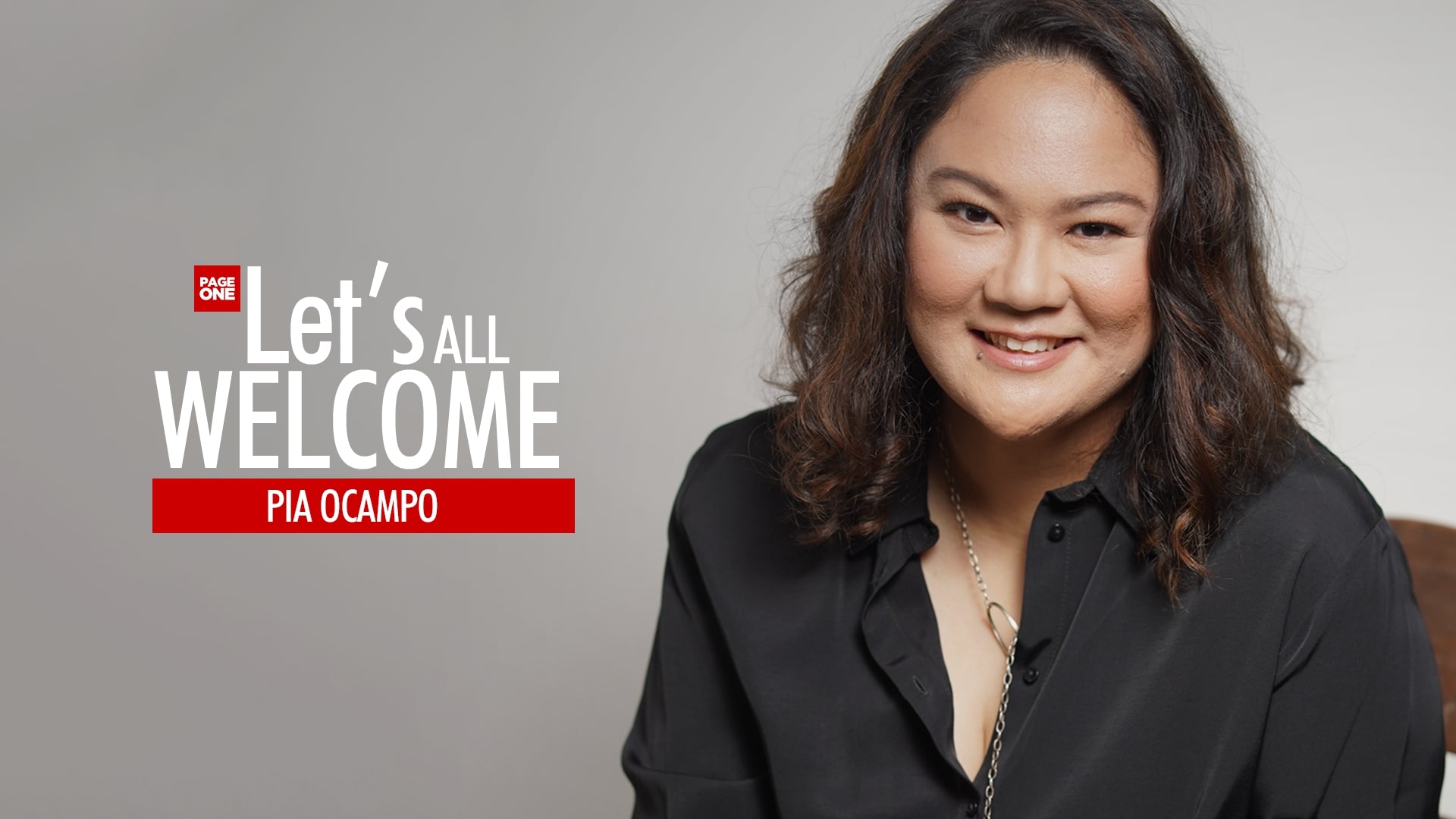







In a world grappling with climate change, biodiversity loss, and mounting waste, Pia Ocampo is not merely adding to the sustainability conversation—she’s reshaping it. Through Pure Oceans, a social enterprise she co-founded, Pia is creating space for communities to become central problem-solvers in the fight against marine plastic pollution and environmental degradation.
For Pia, sustainability is not a buzzword or a trending topic. It’s a “hyperconsciousness” that every action draws from shared, finite resources. Quoting the United Nations’ 1987 report Our Common Future, she defines sustainable development as ensuring that the needs of the present are met without compromising future generations. But Pia takes this further. “My hope is that we now keep in mind that there are many species on this planet other than human, and that there are more needs beyond the economic,” she says. Her expanded definition includes “ways and means of living and flourishing that ensure all needs of all species are met, for now and the future.”
This philosophy anchors her work at the intersection of design thinking, social innovation, and environmental conservation. Rather than imposing solutions, Pia co-develops them with communities. “It’s not about me developing solutions, but rather facilitating or co-developing solutions with the communities,” she clarifies. Her process begins with in-depth research—mapping out local realities, behaviors, and resources—then bringing together diverse stakeholders to collaboratively ideate practical, context-driven responses. When solutions are shaped by those who live with the problem, they’re more likely to be both innovative and sustainable.
At Pure Oceans, Pia’s team prioritizes action on plastic waste because of its urgent and visible threat to coral reefs. “Given the direct and immediate threat plastic waste is on reefs, we take the urgent actions needed to make sure it doesn’t reach them—this means last-mile recovery, diverting it to the circular economy, and, importantly, prevention,” she explains.
But what truly sets Pure Oceans apart is its identity as a social enterprise. Unlike traditional conservation NGOs, Pure Oceans embeds value generation into its projects, ensuring community participation isn’t just encouraged—it’s rewarded. “Is there a way that the actions required of them can also give them extra income?” Pia asks. “How can you engage communities for long-term resilience when their short-term subsistence hasn’t been met yet?”
Still, the journey hasn’t been without its struggles. Operating in remote island communities brings logistical and financial challenges. Pia openly acknowledges the economic constraints that come with staying true to their mission. “Honestly, we are mostly able to continue because of grants… and the few private entities that have given us revenue by paying for our services,” she shares. Yet the community enterprises they’ve built carry their own models for sustainability—proof that with the right approach, environmental and economic goals don’t have to be in conflict.
Her ongoing pursuit of a Master’s in the Anthropology of Global Futures and Sustainability has further shaped her vision. Her academic work offered the opportunity to step back from immediate challenges and see the bigger picture of climate resilience and global inequity. “My dissertation was on mapping the impacts of climate change in one of our communities, and they mentioned many impacts—even if they didn’t recognize it as Climate Change,” she says. The experience in London underscored the urgency for the Philippines to become a stronger voice in the global sustainability dialogue, and to invest more deeply in helping its islands adapt to climate realities.
In Pure Oceans’ work, technology plays a supporting but deliberate role. The team leans into frugal, community-run tools like plastic extruders and glass pulverizers—solutions that can be maintained locally. “We are always on the lookout for value-generating technologies that could make plastic waste recovery economically viable,” Pia notes. While many large-scale solutions like pyrolysis are still waiting for proof of scalability, innovations such as plyboard production from multilayer plastics show promise.
Ultimately, Pia Ocampo’s work is not about flashy solutions or catchphrases—it’s about rethinking how we live, how we value resources, and how we empower communities to take the lead in protecting their environment. Her message is simple but urgent: “We should be one of the strongest voices, and at the same time, we should have already been helping our islands deal with climate change impacts yesterday.”


