










The Philippine government has launched a new farm tourism roadmap that would push the national position as “leading destination for farm and gastronomy tourism in Asia” from 2026 to 2031, the Department of Tourism (DOT) said Wednesday.
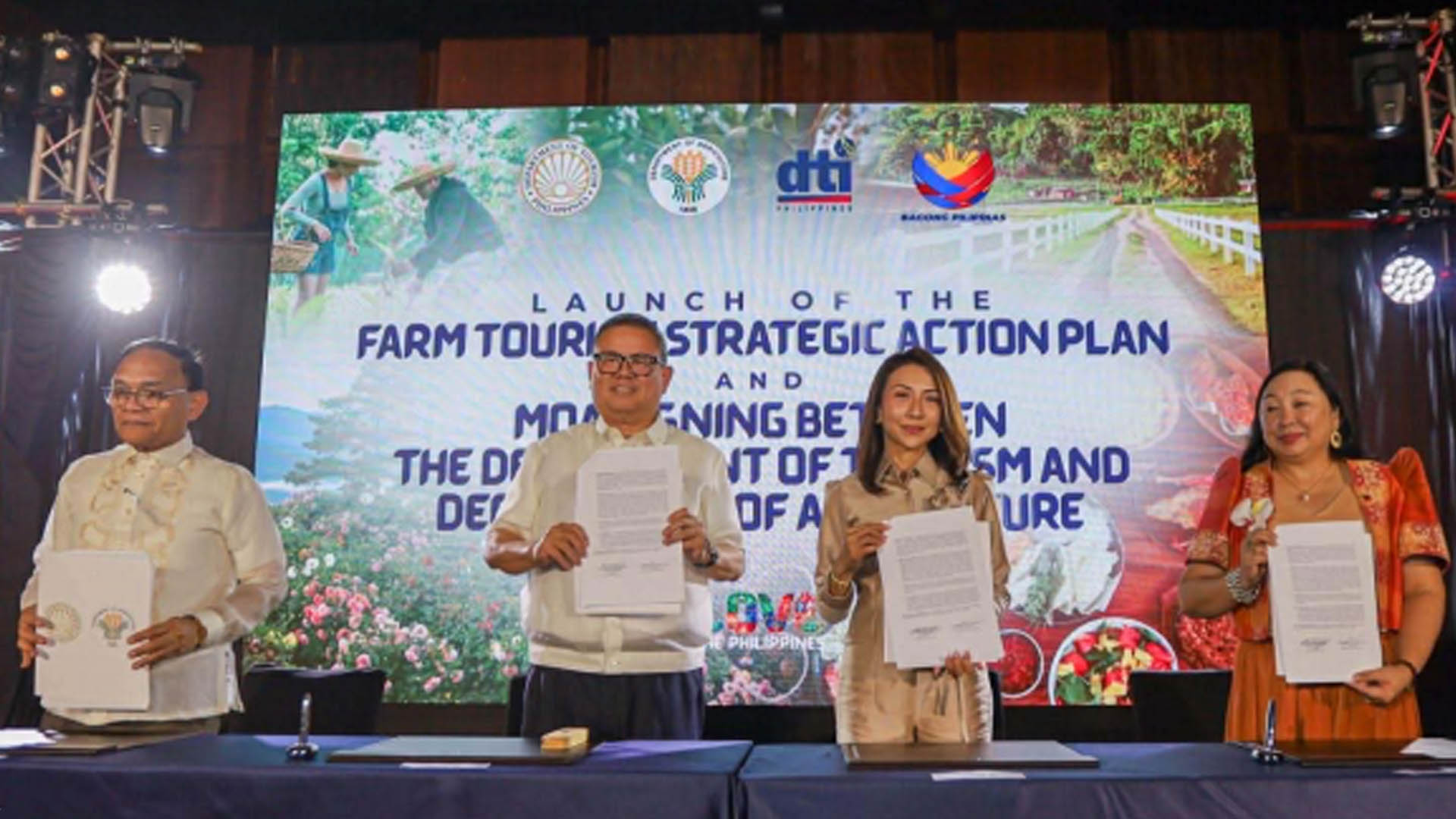
The Farm Tourism Strategic Action Plan (FTSAP) was launched on Feb. 16 during a ceremony led by the DOT, Department of Agriculture (DA), Department of Trade and Industry (DTI), and private sector members of the Farm Tourism Development Board (FTDB).
In a statement, the DOT said the new roadmap will deepen engagement at the grassroots level by directly linking farmers, rural enterprises and tourism establishments.
It will strengthen accreditation systems, integrate farm tourism sites into structured tourism circuits, and align infrastructure, enterprise development, and market access, among others.
Citing international projections, the DOT said agritourism is anticipated to expand from USD69 billion in 2019 to around USD197 billion by 2032.
DOT Secretary Christina Frasco said agritourism remains a government priority, seeing the sector as a “vital driver” of rural development.
“When tourism demand for food and culinary experiences is intentionally linked to Filipino farmers and rural enterprises, visitor spending strengthens local economies. Farm tourism allows agriculture to participate directly in this higher value tourism model,” she said.
The FTSAP builds on Republic Act No. 10816 or the Farm Tourism Act of 2016, and expands the government’s farm tourism strategy from policy framework to “full operational execution.”
On top of the FTSAP launch, Frasco and Agriculture Secretary Francisco Tiu Laurel Jr. signed a Memorandum of Agreement (MOA) on Farm, Food, and Gastronomy Tourism between the DOT and the DA.
The partnership, the DOT said, will support coordinated infrastructure development, including farm-to-market roads aligned with tourism circuits, and ensures sustained demand for local agricultural products.
“This is not simply about adding tourist spots to farms. It is about creating stable institutional demand for local produce. It is about encouraging value-adding, strengthening supply chains, and integrating agriculture into the broader service economy,” Tiu Laurel said.
“When hotels and restaurants consistently source from Filipino farmers, they stimulate rural investments, generate employment, and expand economic activity beyond primary production.” (PNA)


