



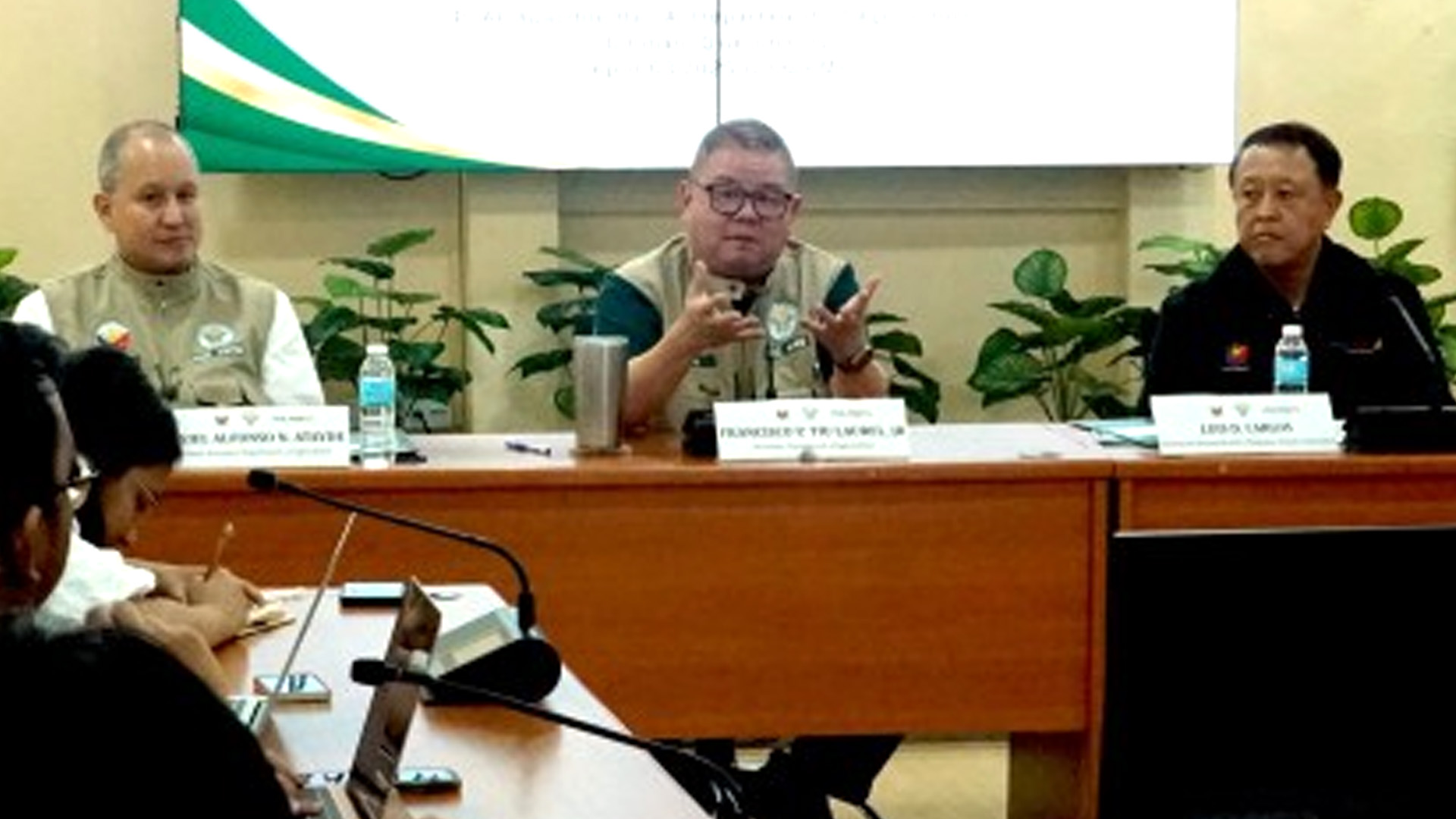






The Philippines can be more aggressive in its agricultural exports as United States President Donald Trump imposed a 17 percent tariff on Philippine goods bound for the US, Agriculture Secretary Francisco Tiu Laurel Jr. said Thursday.
The Trump administration’s duty is higher than the 10 percent baseline tariff rate worldwide.
In a press conference, Tiu Laurel said the country may take advantage of the generally “favorable” imposed duties compared to other competitor countries in Asia.
“Base sa nakita kong tariff rates, tayo pinakamababa. Isa sa pinakamababa (Based on the tally that I saw, we are the lowest. One of the lowest [tariffs]). So, it just means that we should put more sales into the US of our products,” he said.
“As far as agriculture is concerned, kasi technically, ang competitor natin is (our competitors are) basically Indonesia, Vietnam, Thailand, and other ASEAN countries to the US.”
Vietnam is slapped with 46 percent tariff; Thailand, 36 percent; Indonesia, 32 percent; other ASEAN members like Cambodia, 49 percent; and Malaysia, 24 percent.
Tiu Laurel said this may help boost the country’s exports of coconut, seaweeds, and other fish products, among others.
“I have given instructions to look at the whole product range na natin ng ini-export natin… (the product range being exported) but in general, I think it’s more positive than that,” he said.
He, however, expressed concern over another competitor country, particularly Ecuador, which only has a 10 percent tariff.
“Ecuador also produces a lot of tilapia, a lot of shrimp, and some products similar to ours. So that might be a concern. But of course, in the whole scheme of things, I believe that we are, I’ve been to Ecuador many times, and I know how they work. I think we are, we can be competitive in this,” Tiu Laurel said. (PNA)


