



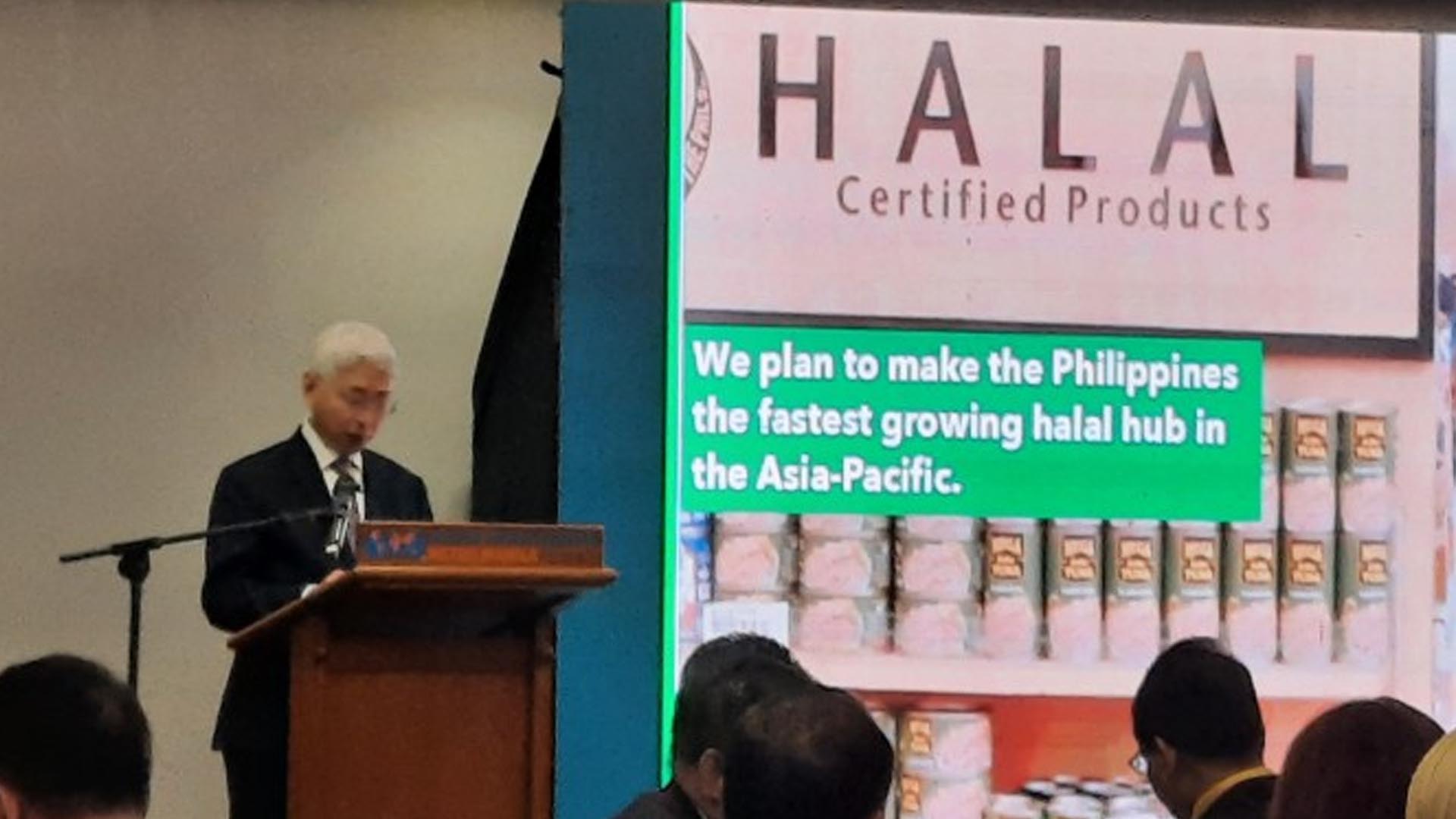







The Department of Trade and Industry (DTI) launched Tuesday the Philippine Halal Industry Development Strategic Plan, which aims to turn the Philippines into a premier halal hub in the Asia Pacific region by 2028.
At the launching of the halal industry development blueprint in Pasay City, DTI Secretary Alfredo Pascual said the agency targets to increase Philippine-made halal-certified products and services to 6,000 by 2028 from the current 3,000.
“We aim to enrich supermarket shelves in foreign countries with Philippine halal products. The execution of our Halal Strategic Plan will see a doubling of our current 3,000 halal-certified products and services to 6,000 catering to both the burgeoning domestic demand and global halal market,” he said.
To meet its target, Pascual said the Halal Board has passed a resolution to recognize foreign-accredited Philippine halal certification bodies to support the growth of halal exports.
Currently, only Philippine goods certified by Philippine-accredited halal certifying bodies are allowed to export.
By expanding the number of halal-certified products and services, the DTI aims to widen the country’s share in the global halal industry, which is expected to reach USD7.7 trillion by 2025, more than double its value in 2015 at USD3.2 trillion.
“Halal is a sunrise industry. Halal is the future, and we want to be part of that future,” Pascual said.
The DTI chief also urged companies to look into opportunities in the domestic halal market, which is the third-largest Muslim population in Southeast Asia.
However, Philippine halal products lag behind neighboring non-Muslim countries like Singapore and Thailand.
“Last year alone, we imported halal products worth USD120 million, indicating a substantial market we could satisfy domestically,” Pascual said.
Meanwhile, the trade chief also launched the country’s promotion campaign for halal sector, the “Halal-Friendly Philippines.”
Under the strategic plan, the DTI targets to generate PHP230 billion in investments for the domestic halal sector and create 120,000 new jobs. (PNA)


