







The Philippine government is pushing economies under the Asia-Pacific Economic Cooperation (APEC) to strengthen collaboration and finance physical infrastructure projects that address the digital divide.
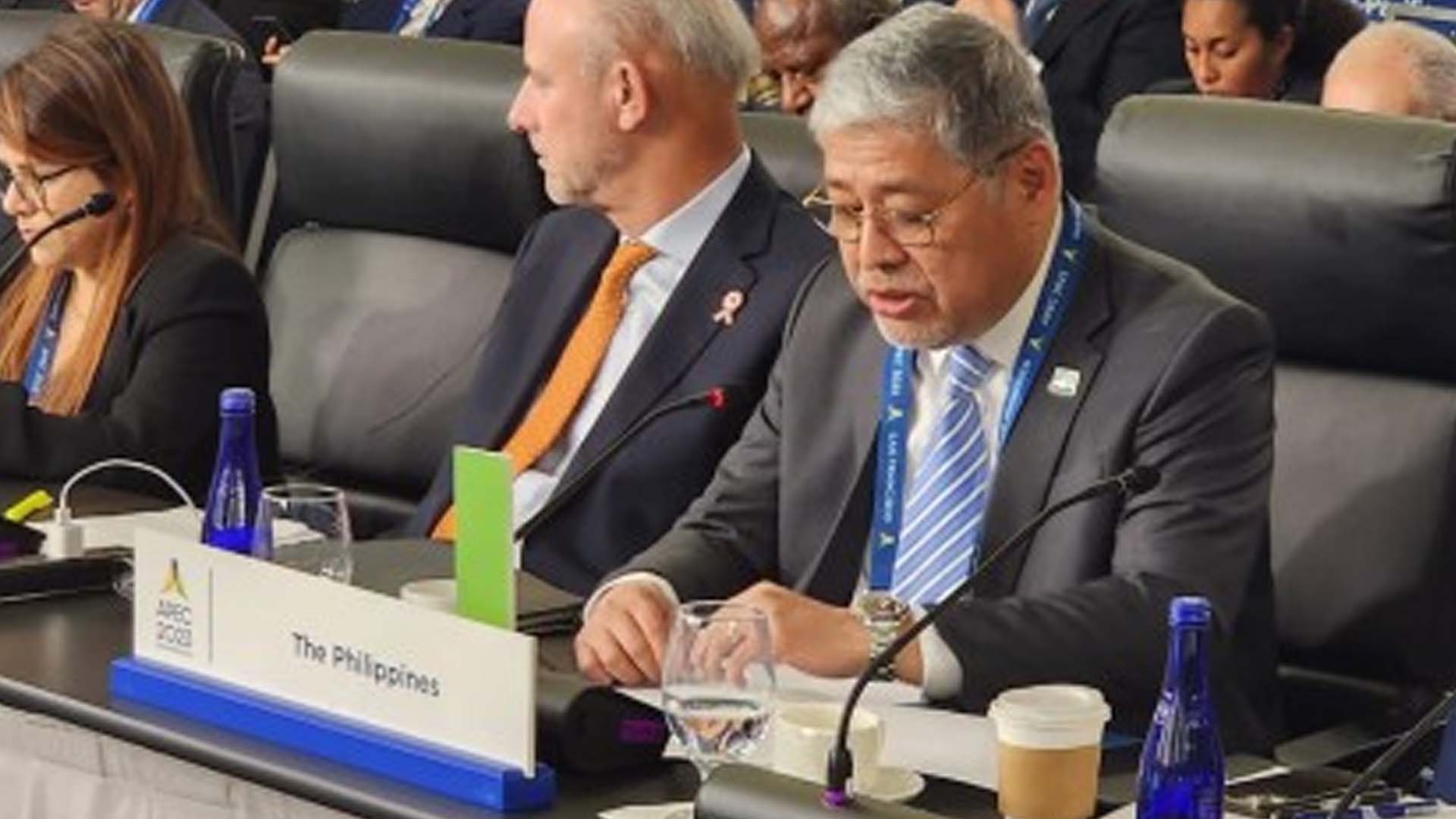
In his Nov. 14 intervention at the 34th APEC Ministerial Meeting (AMM), a copy of which was forwarded by the Department of Foreign Affairs (DFA) Friday, Secretary Enrique Manalo talked about economic recovery after the pandemic and highlighted the need for APEC to narrow gaps in development “at a much rapid pace”.
“Digitalization and innovation should complement and strengthen our efforts. We must ensure that the required physical infrastructure is in place to support the uptake and adoption of digital technologies,” he said.
“Members must strengthen cooperation in financing appropriate infrastructure, including smart and green technologies, to empower people and businesses to grow and participate in an interconnected global economy,” he added.
He also emphasized the importance of capacity building and knowledge sharing amid risks of “technology protectionism and alienation of economies who may face challenges in meeting higher standards” from the acceleration of digital transformation.
Since the start of the year, Manalo pointed out that the region has faced numerous challenges — from geopolitical events and tensions, food and energy insecurity, supply chain disruptions, natural disasters and climate change.
He said Manila continues to view APEC as an “effective platform for advancing outcomes to address these challenges”.
“The principles adopted for achieving food security and just energy transition, and the guidelines on logistics-related services are steps in the right direction,” he said.
“But our cooperation must deepen, to ensure, among others, that our economies remain open and connected,” he added.
Engaging partners
On the sidelines of the AMM, Manalo also met with his Canadian counterpart Foreign Minister Melanie Joly and discussed continuing cooperation in the maritime field.
In a bilateral meeting, Manalo and Joly also discussed avenues for enhanced economic ties, and defense and security engagement between the Philippines and Canada.
He also signed with State Minister Assisting the Papua New Guinea Prime Minister and National Events Justin Wayne Tkatchenko a memorandum of understanding on policy consultations.
Manalo said this deal would establish a bilateral dialogue mechanism between the two states’ foreign affairs departments to pave the way for “stronger cooperation” in addressing mutual concerns.
He also met with Japanese Foreign Minister Kamikawa Yoko and agreed to “steadily promote” the bilateral cooperation in areas such as security including Official Security Assistance, transfer of defense equipment and technology, maritime security capacity building including the provision of patrol vessels, and the commencement of negotiation of the Reciprocal Access Agreement.
They reaffirmed commitment to work closely on issues concerning the East and South China Seas, nuclear disarmament and non-proliferation and Women Peace Security. (PNA)


