



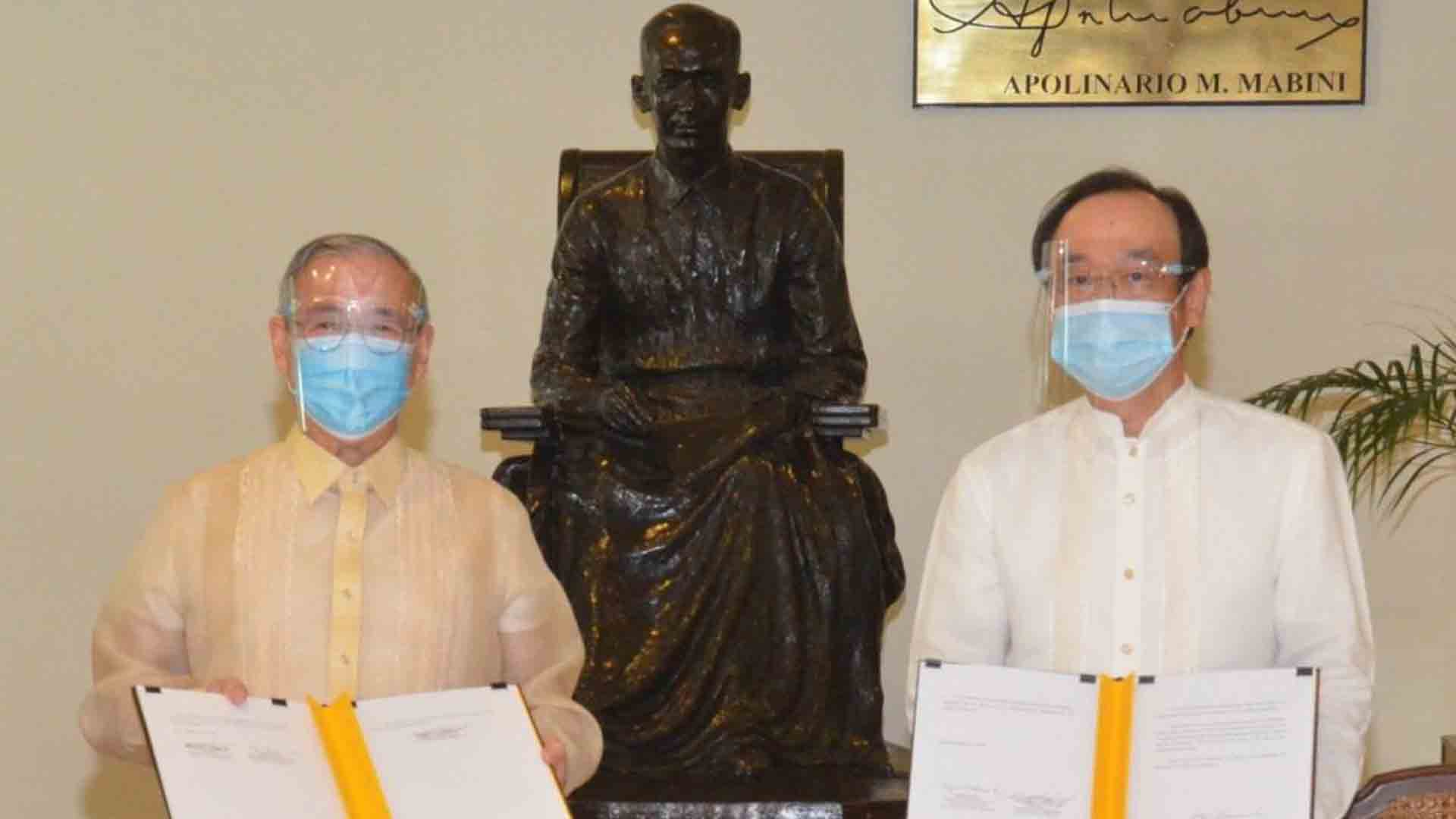






The Philippine and Japanese government on Tuesday signed a 50-billion yen (PHP22.93 billion) contingency fund to support the country’s early recovery after natural and health-related disasters.
Foreign Affairs Secretary Teodoro Locsin Jr. and Japanese Ambassador Koji Haneda signed and exchanged diplomatic notes on the Post Disaster Stand-by Loan Phase 2 (PDSL 2) at the Department of Foreign Affairs (DFA) on Tuesday.
The DFA said the fund would help the Philippines better manage its vulnerability to natural disasters, to combat the Covid-19 pandemic, and to mitigate the adverse effects of these risks on the country’s economy.
The loan would support technical cooperation projects that would strengthen the Philippines’ policy and institutional framework for disaster risk reduction and management, financial resilience to natural disasters and climate change, and public health emergency preparedness.
The loan’s repayment period is set to 30 years after a grace period of 10 years, with a fixed interest rate of 0.01 percent per annum.
This is the second time this special type of financing is extended to the Philippine government, with the first one made available only a few months following the onslaught of Typhoon Yolanda back in 2013.
According to the Japanese embassy in Manila, PDSL 2 is the biggest among the PDSL loans Japan has provided to developing countries.
“Japan will continue to be responsive to the needs of the Philippines in its bid to fight the Covid-19 crisis, beef up disaster risk management efforts and achieve a faster economic recovery,” the embassy said.
Earlier this year, Japan also contributed to the Philippine Covid-19 response program through an assistance package comprising of a 2-billion yen grant aid for the provision of medical equipment and establishment of laboratory surveillance sites, and another 50-billion yen budgetary support under the Covid-19 Crisis Response Emergency Support Loan. (PNA)


