



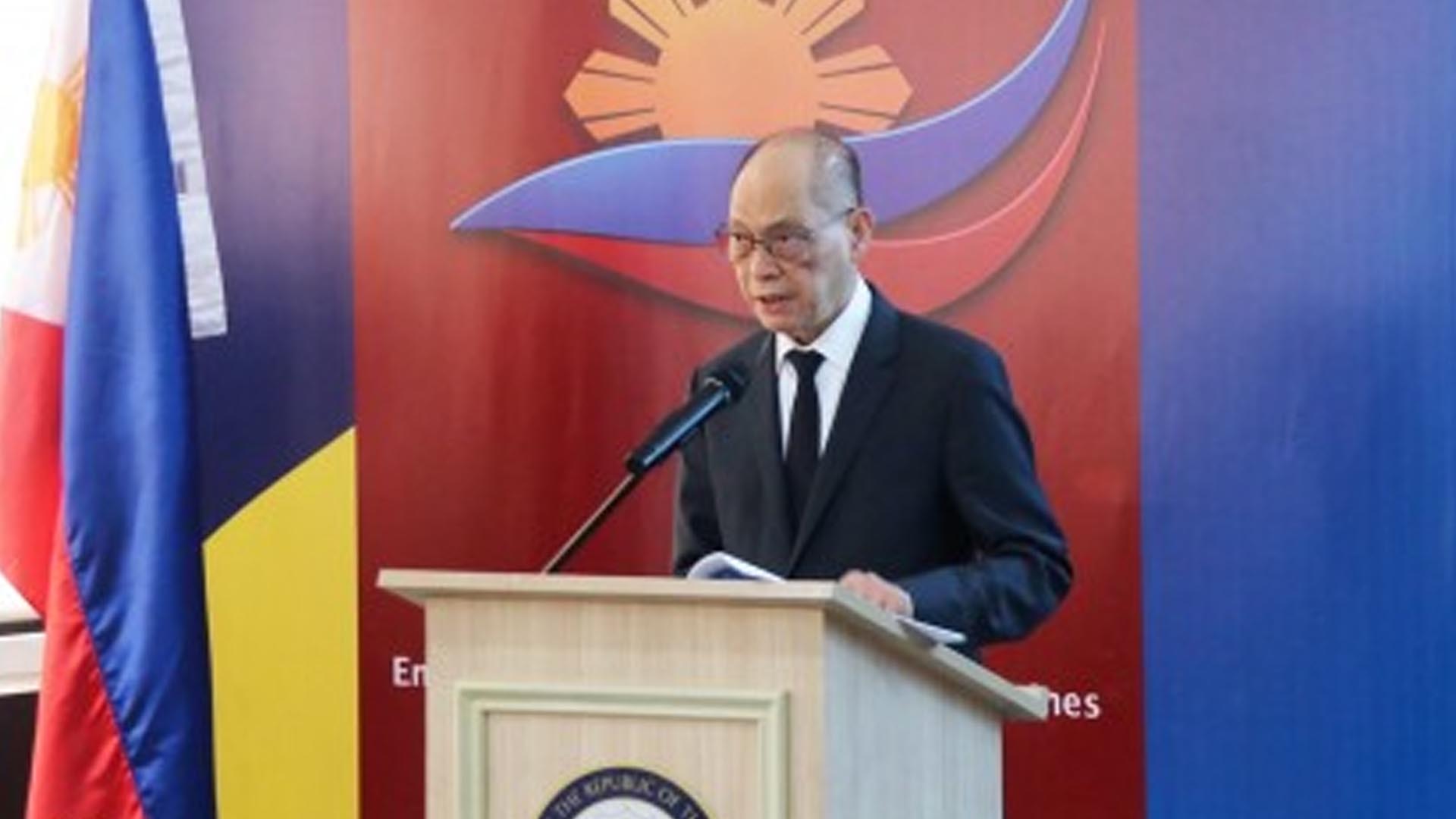







Finance Secretary Benjamin Diokno has assured the Indonesian business community that the Marcos administration is investing in public infrastructure, digitalization and human capital development for inclusive and sustainable economic growth.
In a statement on Thursday, the Department of Finance (DOF) said Diokno made the assurance during the Philippine Investment and Financial Briefing on Aug. 23 at the Philippine Embassy in Jakarta, Indonesia.
“To help foster the development of high quality, modern, and sustainable infrastructure in the country, we wasted no time in building a fertile business and investment ecosystem for private players,” Diokno said in his keynote message.
He said some of the government measures implemented to make the country’s policy environment conducive to public-private partnerships (PPPs) include revising the implementing rules and regulations (IRR) of the Build-Operate-Transfer (BOT) law to strengthen the financial viability and bankability of PPP projects; improving the Investment Coordination Committee (ICC) guidelines on PPP approvals to ensure faster processing and approval of PPPs; and enhancing the National Economic and Development Authority (NEDA) Joint Venture (JV) Guidelines to align with the revised IRR of the BOT law and the proposed PPP Act.
The PPP Act, which is currently pending in the Senate, consolidates all legal frameworks on PPP and creates a unified system for investors to refer to when engaging in PPP projects.
Diokno said aside from the amendments to the Retail Trade Liberalization Act, Foreign Investments Act and Public Service Act, as well as the opening of the renewable energy (RE) sector to full foreign ownership, the government also rationalized and redesigned the corporate income tax structure and incentives system.
The Corporate Recovery and Tax Incentives for Enterprises (CREATE) law offers qualified business activities and projects a menu of generous and flexible fiscal and non-fiscal incentives, while ensuring that the grant of these incentives is performance-based, time-bound, targeted and transparent.
During the discussion, Diokno also outlined the qualified industries and projects under the 2022 Strategic Investment Priority Plan (SIPP), which presents a tiered approach to incentives.
Tier 1 includes all activities under the 2020 Investment Priorities Plan (IPP); Tier 2 includes activities that fill the gaps in the value chain and are import-competing; and Tier 3 includes those that support the accelerated transformation of the economy through innovation.
Diokno said the Marcos administration rolled out the implementation of Green Lanes for Strategic Investments through Executive Order No. 18, expediting government processing of licenses and permits for critical investment projects aligned with the Philippine Development Plan (PDP) 2023-2028.
“This will directly improve the ease of doing business in the country by expediting and streamlining the processes and requirements for strategic investments,” he said.
After his keynote speech, Diokno joined Philippine Ambassador to Indonesia Gina Jamoralin in a moderated discussion before an audience of chambers of commerce and industry, diplomatic missions, and both Philippine and Indonesian businesses in Jakarta.
The event was organized by the Philippine Embassy in Indonesia led by Jamoralin. It was attended by Indonesian and Philippine private sector representatives and foreign embassies in Jakarta, including heads of the Indonesian Chamber of Commerce and Industry (KADIN) and the Philippine Business Club Indonesia (PBCI). (PNA)


