



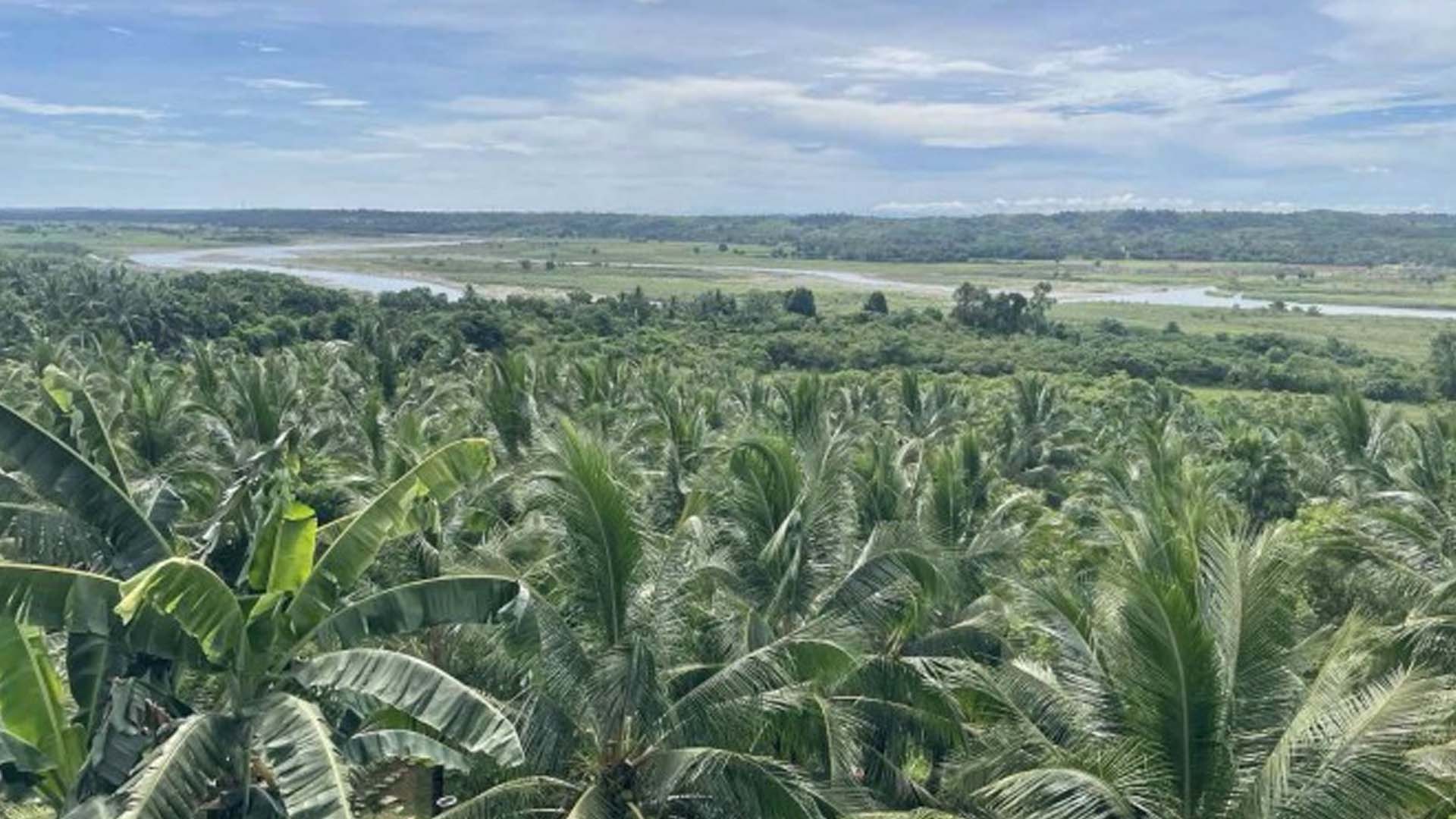







The Philippine Coconut Authority (PCA) on Friday further advanced its whole-of-nation approach to meet the target to plant 100 million coconut palms under the Marcos Administration.
This follows after the PCA led the ceremonial signing of the Memorandum of Agreement with Local Government Units (LGUs), State Universities and Colleges (SUCs), and farmer groups, along with the signing of contracts for the Massive Coconut Planting Program (MCPP) with Civil Society Organizations (CSOs).
Aligned with the Coconut Farmers and Industry Development Plan (CFIDP)’s Coconut Fertilization Program (CFP), the MCPP focuses on replacing senile and damaged coconut trees to improve productivity and ensure long-term sustainability of the industry
The MCPP, which operates with the Coconut Farmers and Industry Development Plan’s Coconut Fertilization Program, replaces senile and damaged coconut trees to ensure productivity and long-term sustainability.
In a statement, PCA Administrator Dexter Buted said the shared commitment among stakeholders will help “rehabilitate and nurture life” in support of the local coconut industry.
“When President Ferdinand R. Marcos Jr. laid down the vision to plant 100 million coconut palms by 2028, he was setting a national vision of revitalized farms, empowered farmers, and a sustainable agricultural economy,” he said.
Under the MOA, parties are expected to uphold adherence to agricultural standards, efficiency and transparency in the utilization of funds.
For its part, LGUs and SUCs will provide technical support and spearhead nurseries, while DA-accredited CSOs will manage the supply, handling, transport and delivery of quality coconut seedlings.
Buted, meanwhile, added that the Marcos administration’s flagship program aims to sustain a source of livelihood for the future generation.
The PCA chief, meanwhile, disclosed plans to reinforce the MCPP through “hybridization, enhanced seed production centers, and propagation of high-yielding and climate-resilient coconut varieties.”
To date, the PCA plans to increase planted coconut seedlings to 15.3 million by the end of 2025, higher than last year’s 8.6 million.
Moving forward, the Marcos administration aims to achieve an annual target of 25.4 million planted seeds from 2026 to 2028. (PNA)


