



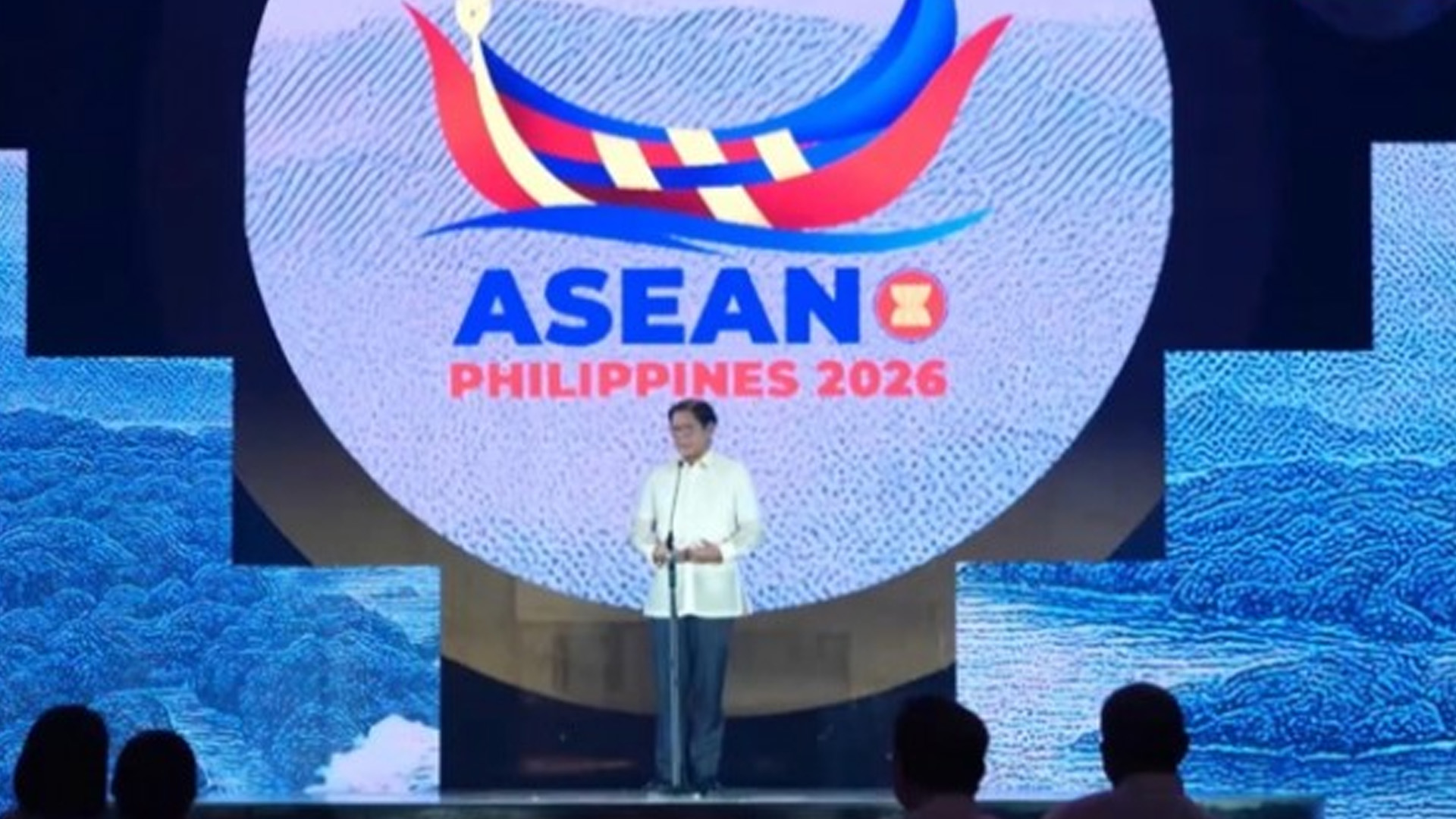






President Ferdinand R. Marcos Jr. on Tuesday underscored the Philippines’ commitment to ASEAN centrality, stressing that the regional bloc must work collectively to reclaim its status as a global economic driver.
Speaking at the ASEAN Editors and Economic Opinion Leaders Forum, Marcos recalled that the region last reached its global economic peak in 2019 and stressed that member states share the aspiration to return to that role.
“That happened in 2019… And we need to return to that,” he said, adding that unity does not mean uniformity.
“We all have different conditions. We all are economically different… The only thing perhaps we have in common is that we’re maritime countries, except for Lao PDR.”
Achieving that, according to the President, “will be done in many different ways depending on which country you are talking about.”
“But we have to do it in consonance with one another so that we achieve our own national goals and at the same time, achieve the goals that we have for ASEAN,” he added.
Strengthening intra-ASEAN trade, supply chains
Marcos highlighted the need for more robust regional supply chains in the wake of Covid-19 disruptions.
He outlined ongoing efforts to harmonize import procedures and coordinate policies across member states, including initiatives like the proposed common ASEAN grid, to enhance regional resilience and competitiveness.
“The way we do business with one another should be strengthened… We understand the laws, we understand what part each country will play… as we try to achieve what we aspire for which is to return as a global force in the global economy,” he said.
As the Philippines prepares to chair ASEAN in 2026, Marcos said national economic strategies must align with broader regional objectives to ensure shared growth and stability. (PNA)


