


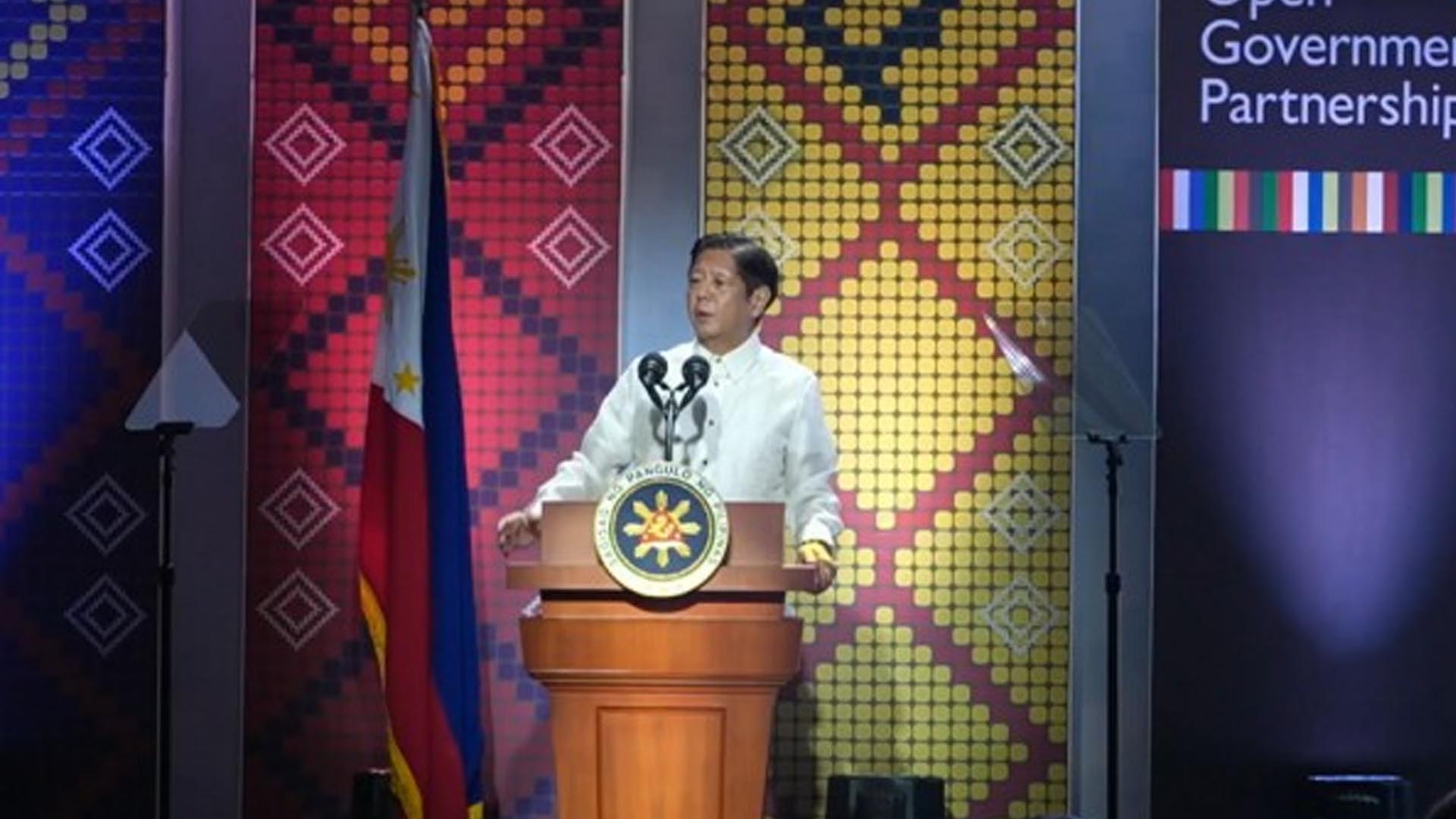






Open governance is key to attaining prosperity, stability and security, President Ferdinand R. Marcos Jr. said on Thursday, as he called for strong collaboration through “impactful dialogues, concrete action, and genuine support.”
During the opening of the 2025 Open Government Partnership (OGP) Asia and the Pacific Regional Meeting (APRM), Marcos urged the stakeholders to become “advocates of accountability” by being part of the global commitment to open governance.
“So, as we chart our course to a more open and dynamic Asia-Pacific, let us be reminded of the powerful role of collaboration, especially in addressing complex challenges of governance in this 21st century,” Marcos said in a speech delivered at the Grand Hyatt Hotel in Bonifacio Global City, Taguig City.
“May we see the grand opportunity we have today and use it to send a powerful message to the world: that open governance is fundamental to prosperity, to stability, and to security in a rapidly transforming world,” he added.
The 2025 OGP-APRM, which is hosted by the Philippines and will run until Friday, brings together over 800 high-level government representatives, civil society leaders, and policy makers from over 40 countries to exchange experiences, best practices and progress on open government initiatives and implementation on key issues.
The agenda includes three high-level and ministerial sessions, more than 20 interactive breakout sessions, 35 side events and countless networking opportunities.
The meeting aims to invigorate participating nations to pursue open government commitments, encourage a greater response to the Open Government Challenge, and strengthen the relationships between governments and civil society organizations towards becoming true Partners or Prosperity.
Marcos expressed optimism that the Philippines would learn from the participants’ best practices on fiscal transparency, digital governance, and climate resilience, among the other open government challenge areas.
“Beyond our variances in our approaches, our shared vision is clear-cut: we want every budget allocation, policy decision, and program implementation to involve public participation—all in pursuit to the empowerment and to the upliftment of our people,” he said.
Marcos said the Philippine Development Plan 2023-2028, the country’s socioeconomic transformation blueprint, identifies OGP as a “key mechanism to deepen participatory governance”.
He stressed that active citizens’ participation in the decision-making process is crucial on policy development, noting that the Philippines also pursued the Citizen Participatory Audit Program, Grassroots Participatory Budgeting, and Open Data Portal.
Marcos called on all government agencies, local government units, and civil society organizations in the country, as well as the Philippines’ international friends and partners to continue working together to foster deeper trust among each other.
“However, our people can only truly participate in governance if they have access to information. This access is made possible by government transparency, digitalization, and the institutionalization of freedom of information through legislation—which is a constitutionally recognized principle,” Marcos said.
“This momentous occasion testifies to how we have embraced open governance as part of our national identity under a Bagong Pilipinas (New Philippines). This is complemented by our sincerest efforts to make government processes more responsive, inclusive, and transparent,” he added. (PNA)


