



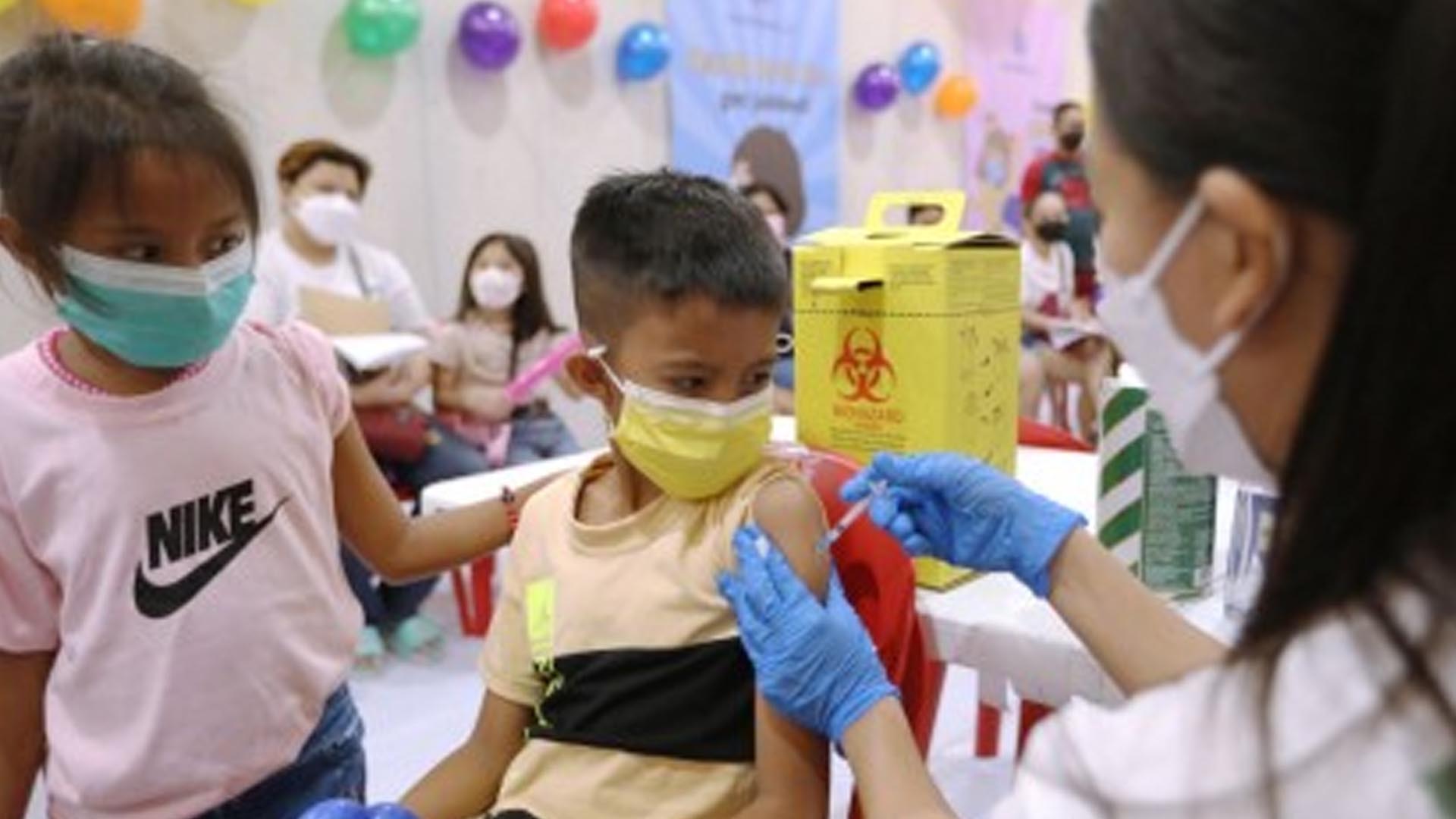






President Ferdinand R. Marcos Jr. has approved the allotment of PHP7.9 billion for the Department of Health’s (DOH) national immunization program, Health Secretary Teodoro Herbosa announced on Tuesday.
Marcos gave the approval during a sectoral meeting with DOH officials led by Herbosa at Malacañan Palace in Manila on Tuesday morning.
In a Palace press briefing after the sectoral meeting, Herbosa said the approved budget was higher than the previous PHP6.4 billion budget allotted for the DOH’s immunization program.
“Naibigay ni Presidente ‘yung aking ni-request na full budget. First time po ito. Lagi pong 60 to 70 percent lang nang hinihingi (The President granted my request for a full budget. This is a first because usually, only 60 to 70 percent of our request is granted). But this is the first time our President really allocated PHP7.9 billion para sa mga pambili lang ng mga bakuna lamang po iyan (just for the acquisition of vaccines),” he said.
Herbosa said the DOH, in partnership with the Department of Education (DepEd), would also launch the nationwide “Bakuna Eskuwela” campaign on Oct. 7, in an effort to strengthen the national immunization program and address the decreasing immunization rate in the country.
He said the Balik Eskuwela Program covers Grades 1, 4, and 7 students in all public schools nationwide.
Under the school-based immunization program, vaccines for human papillomaviruses (HPV), measles, rubella, tetanus, and diphtheria will be administered to the students, Malacañang Press Briefer Daphne Oseña-Paez said.
Herbosa clarified that the vaccination is not mandatory and still needs parents’ consent.
“Kailangan pa rin ng parental consent. Of course, right of refusal pa rin (Parental consent is still required. Of course, there is still a right of refusal),” he said.
“And then, ang usual process naming, pag may nagrefuse na parents, ‘yung health workers na naming ang pumupunta at ini-interview, tinatanong bakit ayaw magpabakuna. And then we try to convince them, baka maling information, maraming nababasa sa social media (when there are parents who refuse, our health workers go to them and interview them, asking why they don’t want to be vaccinated. And then we try to convince them, maybe they get the wrong information on social media).”
Herbosa said students from private schools may also avail of the vaccination drive, stressing he would make sure that “the program will not refuse any child.”
‘Big catch-up’
Herbosa said the DOH is also implementing a “big catch-up plan” to restore the country’s immunization rate.
This, as he acknowledged the DOH’s failure to reach its goal of vaccinating at least 95 percent of Filipino children in the country.
Herbosa said the coronavirus disease 2019 pandemic caused a delay in the immunization of vaccines among Filipino children.
To date, only 71 percent of children nationwide are fully immunized, he said.
“We’re hoping every year, nakaka-95 percent tayo (we’re reaching 95 percent). Seventy-one lang ang nakukuha natin. With these two programs, ‘yung (the) schools-based at saka (and) big catch-up, we’re hoping to increase that by the end of the year by December,” Herbosa said.
“Ganito iyan, after ma-catch up mo siya to 95 every year, may natitirang 5 percent so hinahabol namin ulit iyan. Every three years, nagkakaroon nang tinatawag na (It’s like this, after you catch up to 95 every year, there is a remaining 5 percent so we have to address the backlog. Every three years, there is a so-called) supplemental immunization activity.”
Herbosa said the government would also address several challenges in vaccinating children, including logistics and supply management.
Herbosa said he is also eyeing the mandatory submission of vaccination data from private pediatricians, noting it could help increase the number of vaccinated children by 10 percent.
“Sa national immunization program, when we present data, hindi kasama yung data ng mga pediatrician sa private. Hindi ‘yun nirereport (That’s not being reported). So, we miss the data by 10 to 15 percent. So, I’m trying to find a way to make it mandatory or online para madali lang mareport yung ilang mga batang binakunahan niyo para maka-count namin (so they could easily report the number of vaccinated children and we can count them). I’m sure our figures will increase by 10 percent,” he said.
Massive info drive
Herbosa also sought the media’s help to raise public awareness on the importance of vaccines.
He said the massive information drive is vital in educating Filipinos, especially those from lower socioeconomic classes who listen and believe in rumors that contribute to vaccine apprehension.
“He (Marcos) was asking for a massive campaign so I do hope matulungan niyo ang (you help) Department of Health in that aspect,” Herbosa said. “Our lower socioeconomic classes, nakikinig sa (listen to) rumor and then naniniwala sa (believe in) rumor. So, we hope [to correct that] with valid information,” he added. (PNA)


