



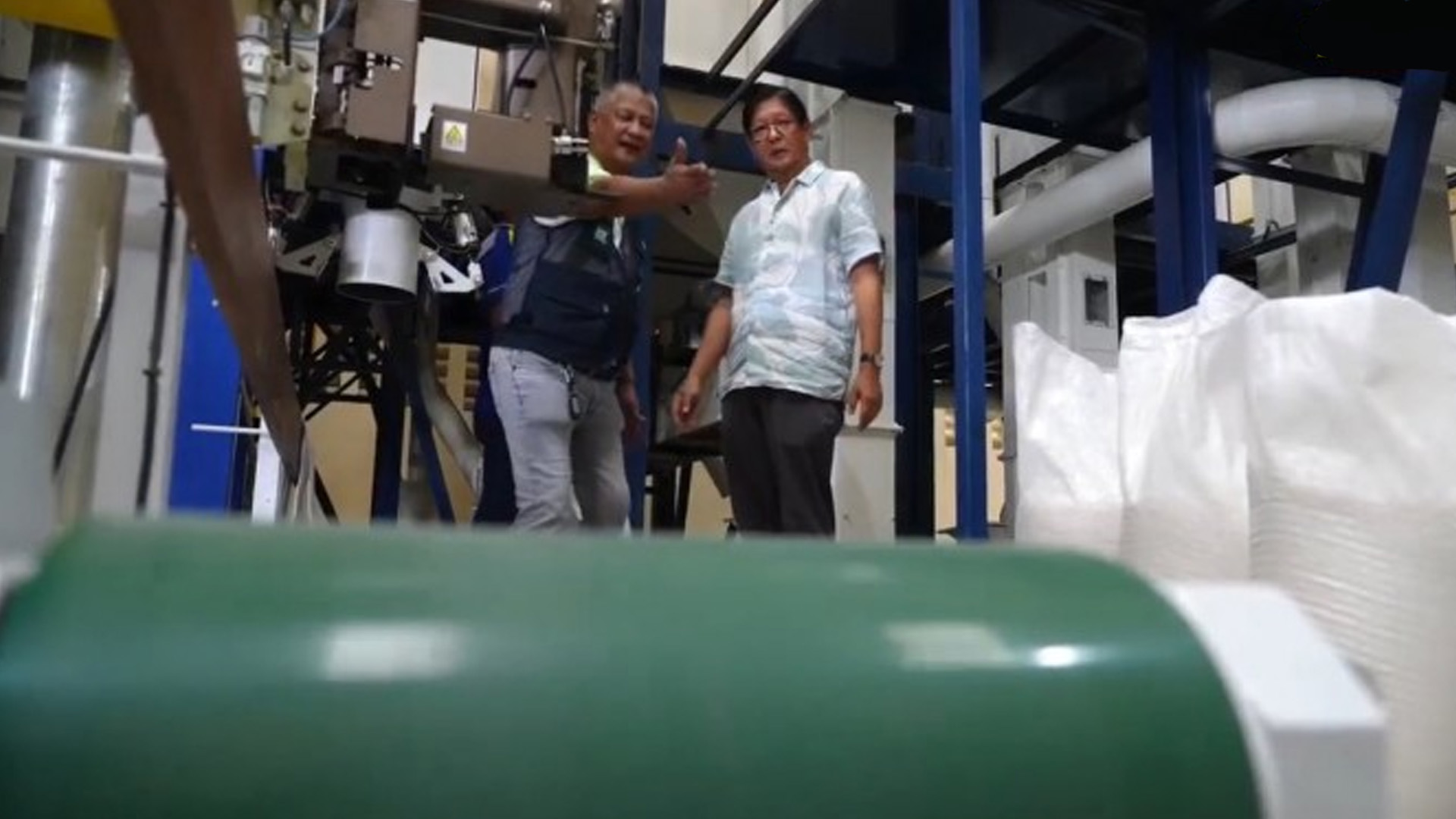






President Ferdinand R. Marcos Jr. on Friday led the inauguration of the state-of-the-art Rice Processing System (RPS) II facility, which features a multi-stage rice mill and two recirculating dryers, in Guagua, Pampanga.
Marcos, accompanied by Agriculture Secretary Francisco Tiu Laurel Jr., toured the RPS II facility during the inauguration rites.
Spearheaded by the Philippine Center for Postharvest Development and Mechanization (PhilMech), funded through the Rice Competitiveness and Enhancement Fund (RCEF) Mechanization Program, the multi-state rice mill can handle two to three metric tons of palay (unhusked rice) per hour.
The rice mill, valued at PHP53.6 million, includes essential components such as a pre-cleaner, de-stoner, huller, mist polisher, length grader, color sorter, blending tank, automatic packing machine for milled rice, rice hull bin, dust collection system, and an air-conditioned control room.
Meantime, the postharvest facility, valued at PHP8.12 million, is equipped with two recirculating dryers, each with a 12-ton-per-batch drying capacity, made of stainless steel and includes dual heating systems, a generator set, tools, and other accessories.
The facility is designed to boost farm productivity and profitability by enhancing access to and utilization of advanced production and post-production technologies.
With the RPS II, PhilMech projects a reduction in production costs for farmer-users by PHP2 to 3 per kg. through a fully mechanized production system, and a decrease in post-production losses by 3 to 5 percent through efficient postharvest technologies.
The project is also expected to bring several benefits to the agriculture sector, including increased local manufacturing of agricultural machinery and wider adoption of mechanization technologies.
It also aims to boost crop yields, enable greater cropping intensity, ensure more timely farm operations, reduce labor requirements, and generate potential additional income through machinery use.
Pampanga, one of the country’s top rice-producing provinces, has been selected as a qualified beneficiary of the project through its provincial local government.
The province, which primarily focuses on rice cultivation, is home to 36,060 farmers who are expected to directly benefit from the project. Together, they manage a total of 59,903 hectares of farmland.
The initiative aims to significantly enhance their agricultural productivity and efficiency through the provision of advanced machinery and postharvest facilities, thereby enhancing farmers’ livelihoods and promoting sustainable economic growth.
During the event, Marcos also turned over five units of rice combine harvesters, valued at PHP8.9 million, to leaders of farmers’ cooperatives, associations, and the local government unit. (PNA)


