



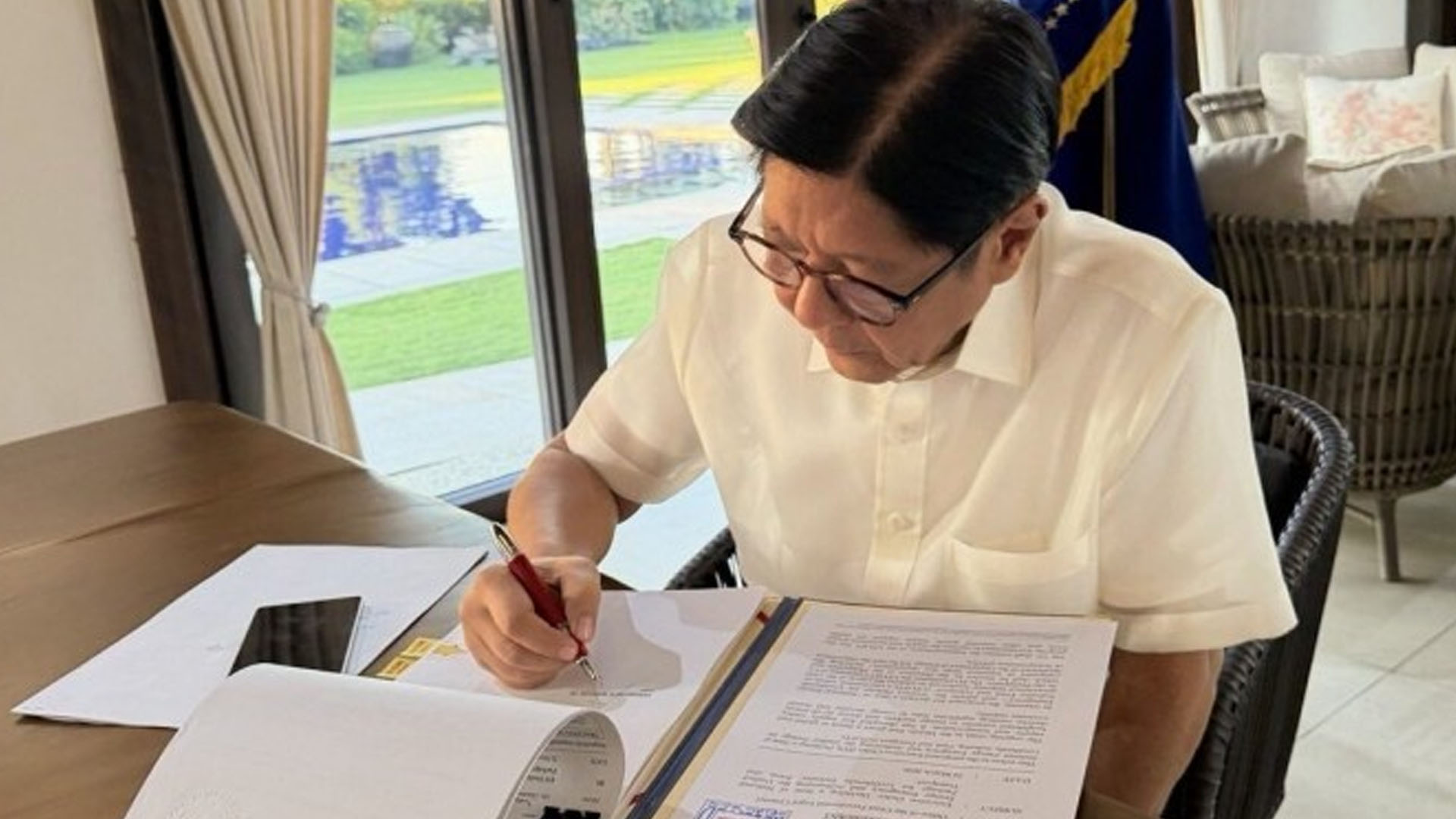






President Ferdinand R. Marcos Jr. has declared a state of national emergency to address potential disruption in fuel supply and stabilize the country’s energy sector.
Under Executive Order (EO) 110 signed on Tuesday, Marcos cited the escalating tensions in the Middle East as a key factor threatening global oil production and transportation, which could affect the Philippines as a net importer of petroleum products.
Disruptions in critical supply routes, including the Strait of Hormuz, may constrain global fuel supply and trigger price volatility, posing risks to the country’s energy security, according to EO 110.
Marcos stressed the need to declare a state of national energy emergency to enable the government, through the Department of Energy (DOE) and other concerned agencies, to implement coordinated measures to ensure stable and adequate energy supply while mitigating the impact on the economy.
“As a net importer of petroleum products, the Philippines remains highly dependent on external sources of fuel supply and is therefore vulnerable to disruptions in global oil production and transportation, which may affect the availability and timely delivery of petroleum products necessary to sustain domestic energy requirements,” the order read.
“The Secretary of Energy has determined that the foregoing circumstances pose an imminent danger of a critically low energy supply and that urgent measures are necessary to ensure the stability and adequacy of the country’s energy supply,” it added.
Coordinated, whole-of-government response
EO 110 orders the adoption of the Unified Package for Livelihoods, Industry, Food, and Transport (UPLIFT) to safeguard national interest.
The framework aims to ensure the availability of domestic energy supply, uninterrupted delivery of essential services, continuity of economic activity and protection of vulnerable sectors.
An UPLIFT Committee, chaired by the President, will oversee the implementation of the framework to mitigate the impact of the ongoing conflict in the Middle East.
Committee members include the Executive Secretary and the secretaries of the Departments of Energy, Transportation, Social Welfare, Agriculture, Finance, Budget and Economy.
The committee is tasked to monitor the supply and distribution of fuel, food, medicines and other essential goods, as well as ensure the continued operation of public transportation, utilities, and healthcare services.
It will also coordinate efforts to maintain economic stability, streamline government processes for permits and licenses, and develop long-term strategies to reduce dependence on petroleum products.
Energy conservation, transition
The DOE is directed to roll out energy supply management measures, including fuel optimization plans, load adjustments, and stricter enforcement of conservation efforts.
EO 110 also seeks to accelerate the transition to renewable energy, promote the use of electric vehicles in public transport, and integrate clean energy solutions across key sectors such as agriculture and manufacturing.
Public awareness encouraging energy efficiency and behavioral change will also be intensified.
Other measures include the implementation of the fuel and energy optimization plans, as well as the adoption and enforcement of appropriate energy conservation measures.
EO 110 orders coordination among relevant government agencies to ensure stable energy supply; appropriate action against hoarding, profiteering and supply manipulation; exercise of powers authorized in times of energy; and adoption and implementation of a resource conservation and prioritization mechanism.
The DOE, Philippine National Oil Company (PNOC) and PNOC Exploration Corporation are authorized to undertake the procurement of required fuel and petroleum products and when deemed necessary as certified by the Energy Secretary, to make advance payment of an amount exceeding 15 percent of the contract amount.
Complementary measures
Concerned agencies are directed to implement the necessary response measures to cushion the impact of the Middle East crisis on the country.
Local government units (LGUs) are enjoined to support the national government by undertaking measures within their respective jurisdictions that support, facilitate, and complement the national policies and agency directives.
EO 110 urges the private sector, civil society organizations and other stakeholders to partner with government agencies and LGUs to provide logistical support, interventions, and critical services to affected sectors and vulnerable communities.
The funding requirements for the implementation of the order will come from existing appropriations of the concerned agencies and other sources that may be identified by the Department of Budget and Management.
Legal basis
The declaration is anchored on Republic Act 7638 or the Department of Energy Act, which authorizes the President to declare a state of emergency in cases of imminent energy supply shortages.
It also draws authority from constitutional provisions granting the President control over executive departments and supervision over local governments. (PNA)


