



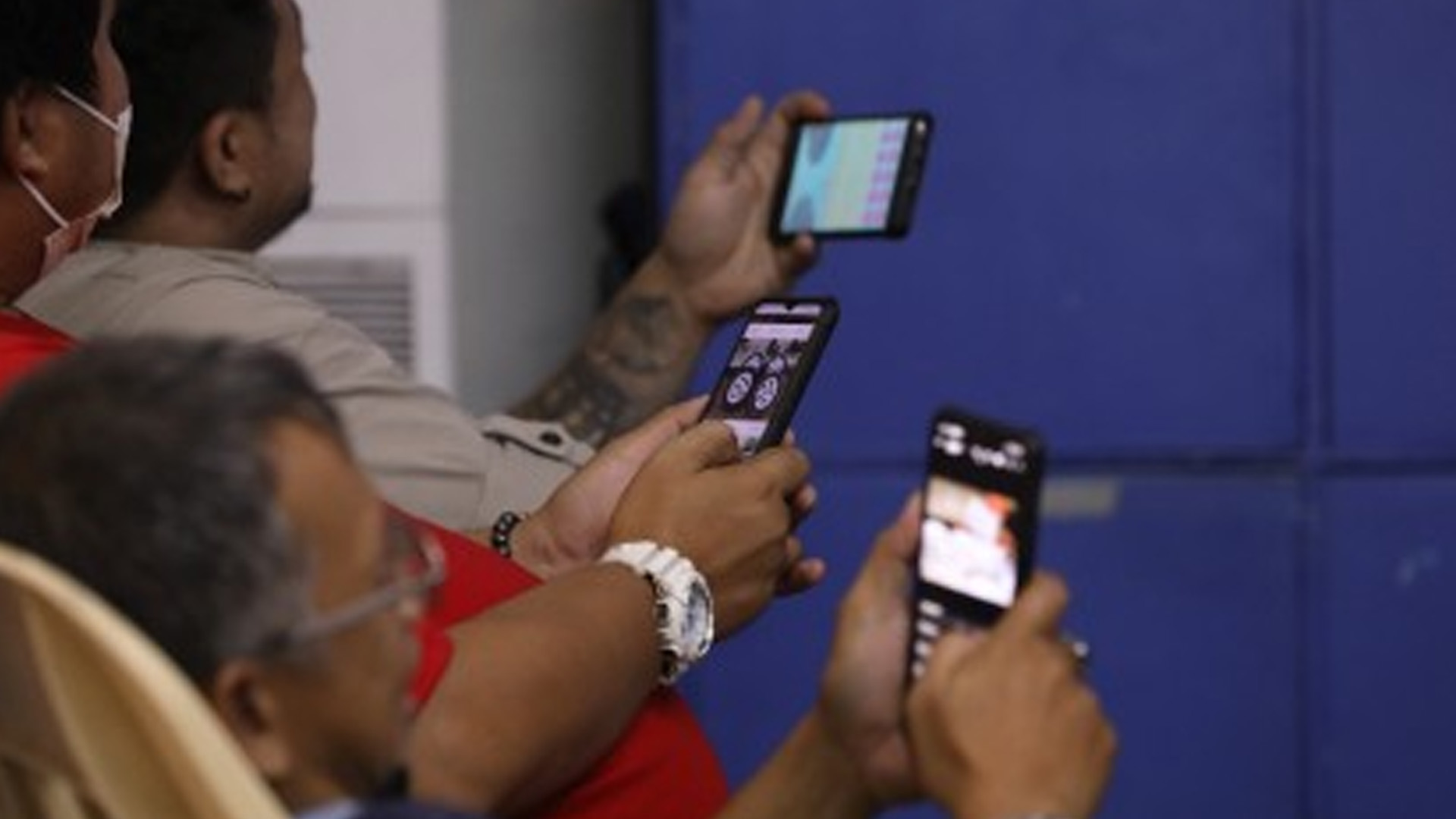







Patient health records can now be accessed through mobile phones even in the most remote communities, following the rollout of an integrated electronic health record system developed by the University of the Philippines (UP) Manila and Microcircuits Corporation (MCC).
In a news release on Wednesday, UP Manila said the initiative, powered by the e-MED Primary Care Health Information System, aims to strengthen primary care delivery and advance the implementation of Universal Health Care (UHC) by digitally linking patients, frontline health workers, and medical specialists nationwide.
Dr. Jose Rafael Marfori, co-inventor of e-MED, said the system helps address persistent shortages of doctors in geographically isolated and disadvantaged areas.
“It enables a central doctor to coordinate real-time care with peripheral nurses and midwives,” Marfori said.
He said the digital referrals and teleconsultations allow specialists to review patient records more quickly.
Developed under the Philippine Primary Care Studies (PPCS) of UP Manila, e-MED has been deployed in more than 300 health facilities across 11 regions since 2021. These include Bataan, La Union, and Pasig City.
It currently supports data-driven care for over 4.4 million patients, including beneficiaries of PhilHealth’s Yaman ng Kalusugan or YAKAP primary care benefit package.
UP Professor Emeritus Dr. Antonio Miguel Dans said the platform reinforces both service delivery and capacity-building.
“This unfolds in real-time, doubling as on-the-job training via feedback loops,” Dans said.
As principal investigator of the program that created e-MED, he added that doctor-level guidance provided through the system helps decongest central clinics while ensuring that only approved prescriptions are honored in accredited laboratories and pharmacies.
The platform also tracks and bills patient transport —an added advantage for underserved areas where logistical hurdles often delay access to care.
According to the developers, e-MED supports seamless and confidential routing of patient records to specialists, facilities, or departments.
“It’s like having a phone with a directory of your network’s doctors that you don’t need to memorize,” Marfori said.
Designed as a flexible web-based system for computers, tablets, and mobile phones, e-MED follows the “one patient, one record” principle.
It integrates primary care teams, pharmacies, and diagnostic centers under Primary Care Provider Networks (PCPNs), and partner hospitals and clinics.
“It’s inherently UHC- and primary care-compatible,” Dans said. “It tackles doctor shortages by transforming solo providers into integrated PCPNs and HCPNs.”
The system’s design is rooted in patient journeys and real-world workflows of health teams, aligning with the broader PPCS goal of fortifying the country’s primary care system.
On Nov. 3, UP Manila and MCC formalized their partnership through an intellectual property commercialization agreement, paving the way for expanded adoption by local government units and national agencies. (PNA)


