



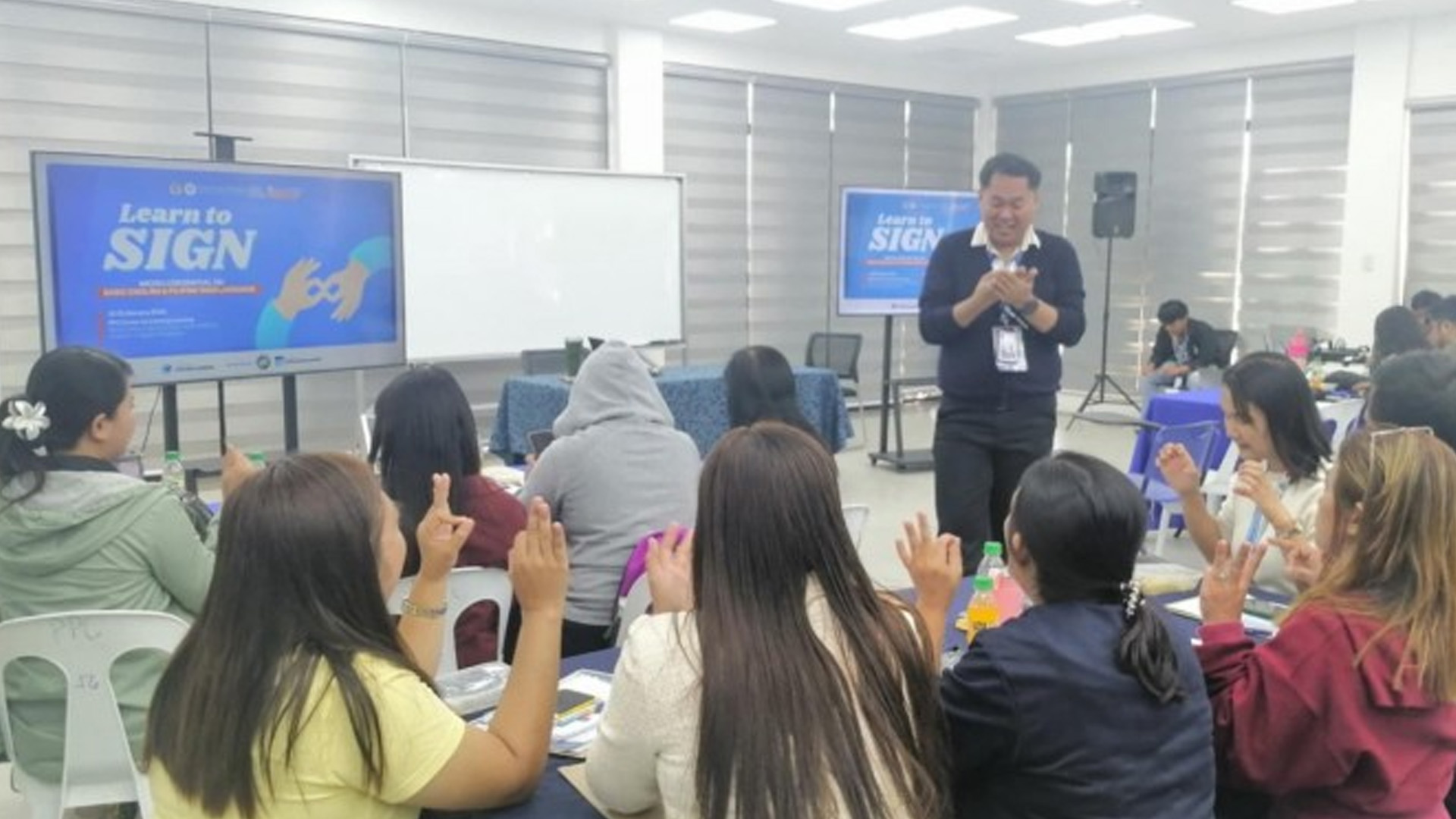






Personnel of the provincial government of Pangasinan are undergoing basic sign language training course so that they can better serve the deaf and mute community.
In an interview on Wednesday, Jennifer Garcia, head of the Provincial Disability Affairs Office for Pangasinan, said this is part of the effort to craft and implement strategies and innovations for the province to become inclusive.
“Even if they can’t speak, they can be heard through sign language. Communication is very important, it is essential in connecting services to the deaf community,” she said.
She said the provincial government has been advocating for inclusivity and equal opportunity for Pangasinenses.
“I think the deaf community still experiences discrimination because they are unable to communicate and the community itself cannot communicate with them because of lack of knowledge about sign language. This is very timely,” she said.
Garcia said the series of trainings, done by batch, would involve personnel who will be part of the pool of interpreters later on.
Among the first batch that underwent the Micro-Credential Course for Basic Filipino Sign Language and American Sign Language training course on Jan. 12 and 13 were more than 50 participants from the Provincial Social Welfare and Development Office, local government frontliners especially from the municipal or city social welfare and development office, focal persons from the Persons with Disability Affairs Offices, from the academe and Special Needs Education (SNEd) students.
The next batch’s schedule will be announced later.
Jesse Ordoñez Jr., an Associate Professor at Pangasinan Polytechnic College and Program Chair for the School of Human Development Inclusivity, said the basic sign language course is part of PPC’s curriculum for Special Needs Education (SNEd course), which is offered on the third year.
“But since PPC is offering this micro credential, it is an additional opportunity for our students. It is difficult to learn, but it needs practice, effort and dedication since it is not developed overnight. It takes getting used to especially memorizing hand shapes, common words,” he said.
Monika Aliguas Labaupa, PPC planning officer, said there are more than 200 students enrolled in SNEd. (PNA)