



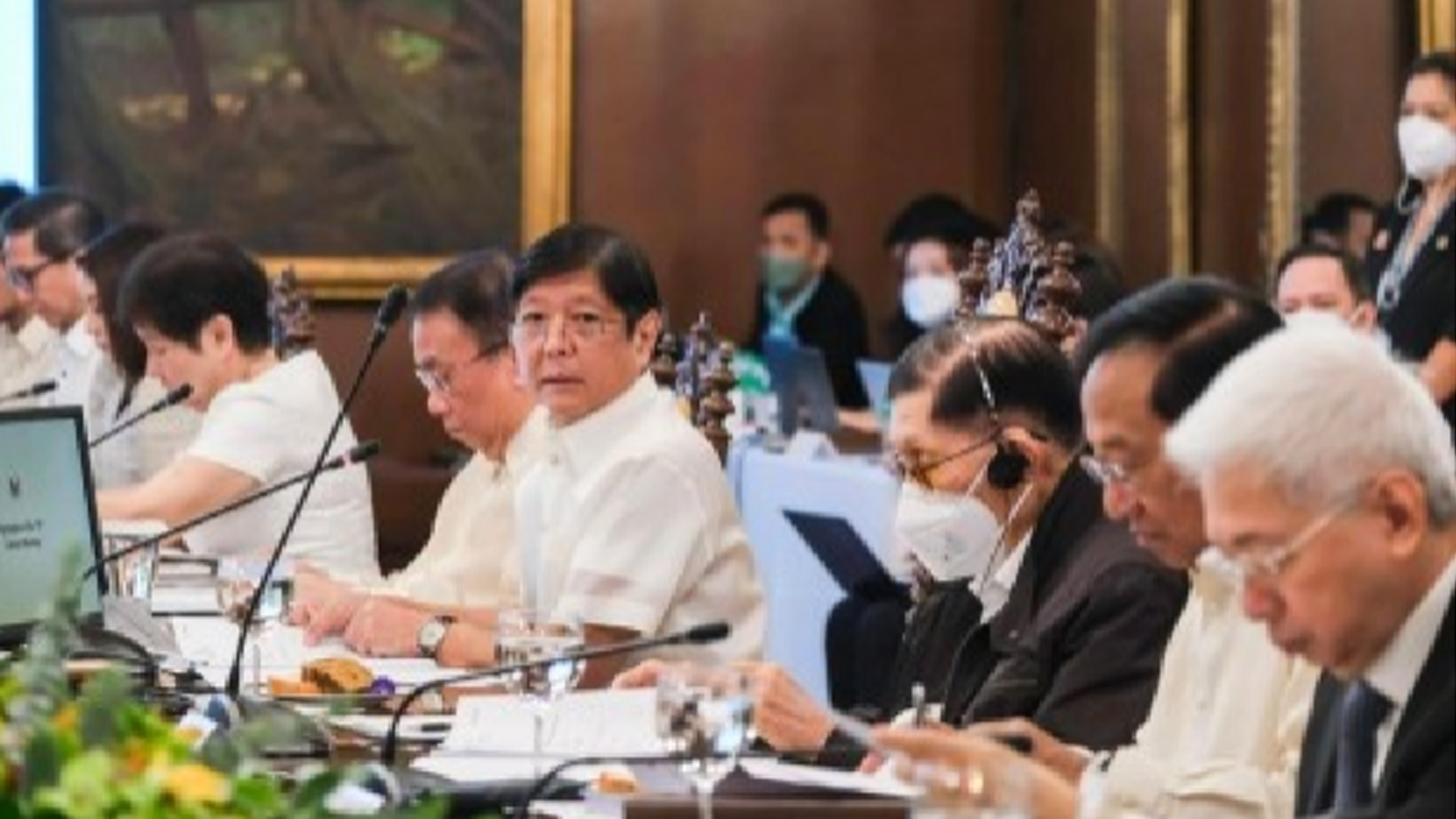






Malacañang has reorganized the Economy and Development (ED) Council and its committees, giving the Office of the Special Assistant to the President for Investment and Economic Affairs (SAPIEA) a stronger hand in economic decision-making.
The changes, aimed at ensuring greater coherence in the government’s economic planning and policymaking, are contained in Administrative Order (AO) No. 37, signed by Executive Secretary Lucas Bersamin on Aug. 13 and released to the public on Monday.
The order takes effect retroactively from April 27, 2025.
AO 37 follows the passage of Republic Act 12145, or the “Economy, Planning, and Development Act,” which renamed the National Economic and Development Authority (NEDA) as the Department of Economy, Planning, and Development (DEPDev) and reconstituted the NEDA Board as the ED Council.
The law authorizes the President to reorganize the ED Council and its committees whenever necessary to improve performance.
Under the new configuration, the Office of the SAPIEA will play a larger role in economic governance.
The SAPIEA will sit as a member of the ED Council and represent the Office of the President — including the Executive Secretary — in the Development Budget Coordination Committee (DBCC), Investment Coordination Committee (ICC), Infrastructure Committee, and Social Development Committee (SDC).
The SAPIEA has also been designated chairperson of the Economic Development Committee, with the DEPDev Secretary and the Finance Secretary serving as vice chairpersons.
Other key adjustments include the designation of the Finance Secretary as co-chair of the DBCC alongside the Budget Secretary.
Membership of the SDC has been expanded to include the Secretaries of Agrarian Reform, the Director General of the Technical Education and Skills Development Authority, and the Lead Convenor of the National Anti-Poverty Commission.
The Tariff and Related Matters Committee (TRMC) will now also include the Secretaries of Agrarian Reform and Environment and Natural Resources.
Malacañang said the reorganization will help ensure “continuity in the integration, coordination, and implementation of various socioeconomic policies and programs of the government,” in line with the President’s constitutional mandate to ensure the faithful execution of laws. (PNA)


