



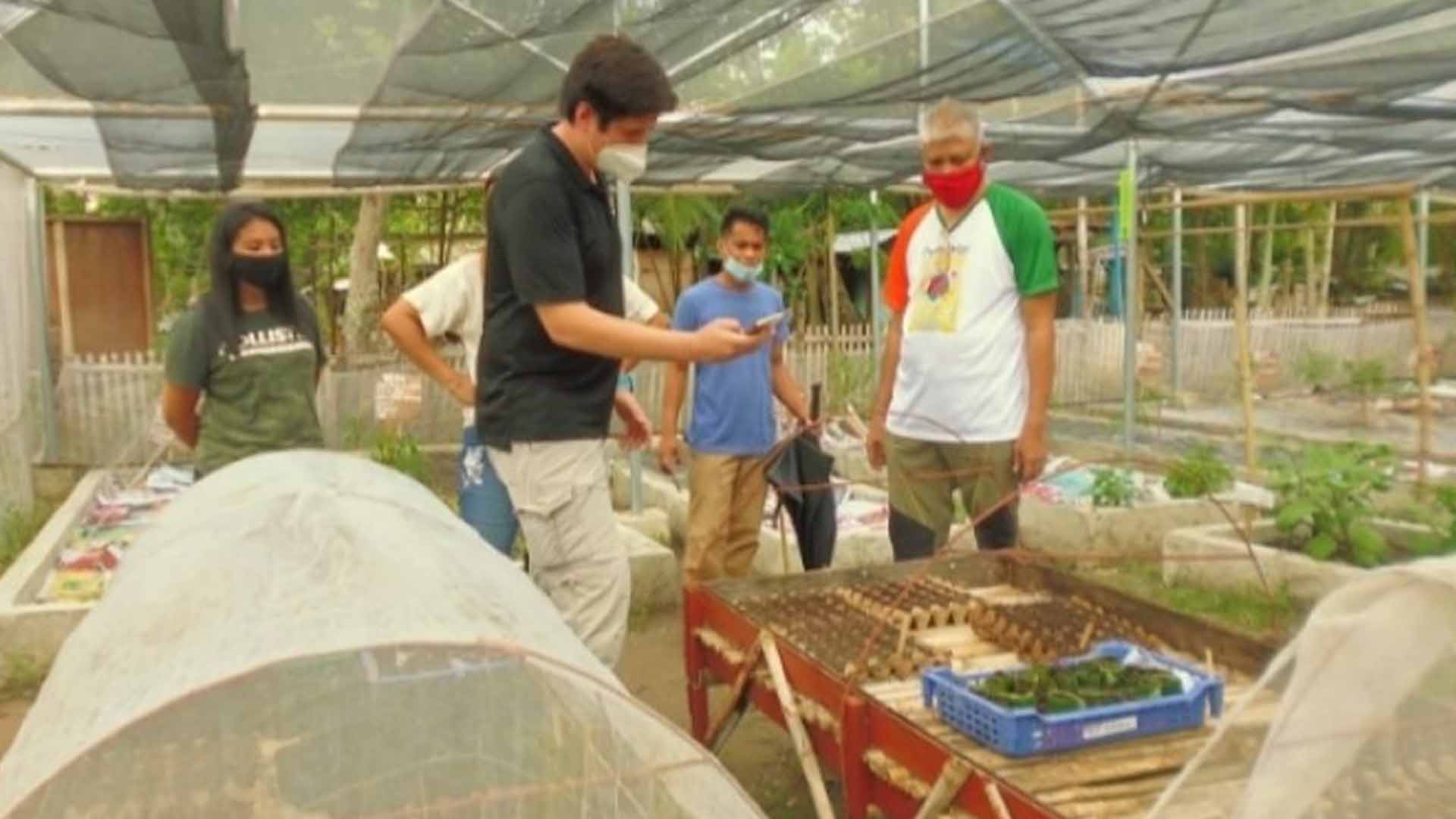






The organic agriculture sector in Negros Occidental expects better business for farmers under the amended Republic Act 10068, or the Organic Agriculture Act of 2010, signed recently by President Rodrigo Duterte.
The now RA 11511 seeks to make certification of organic produce by farmers and fishermen more accessible and affordable.
“This is a very encouraging development particularly for small farmers and environment advocates…We are expecting that there will be more Negros organic products in the local market,” Negrense organic farmer Jesus Antonio “Jet” Orbida, director of the National Organic Agriculture Board (NOAB), said in a statement on Tuesday.
RA 11511 establishes a Participatory Guarantee System (PGS), which refers to a locally-focused quality assurance system that is developed and practiced by people actually engaged in organic agriculture.
Orbida, who represents the small farmers in the Visayas in the board, said many Negrense small farmers have switched back to conventional farming because of the organic certification issue.
Certification has been a major hindrance, preventing some farmers from going organic because their products cannot be labeled as organic without it.
“Farmers have to spend PHP100,000 to PHP130,000 per product for organic certification,” Orbida said.
Meanwhile, through the PGS, which was already introduced in the province several years back, small farmers can have their products certified as organically grown in line with Agriculture Secretary William Dar’s challenge for organic farming to be sustainable for them.
“I believe the Department of Agriculture’s Regional Field Office Organic Division already has plans of reactivating the efforts of consolidating small farmers organizations for PGS,” Orbida said.
Provincial agriculturist Japhet Masculino also welcomed the new measure because the previous law resulted in a sky-high cost of accreditation for organic farmers.
The PGS is “certainly a cheaper alternative” to the present certification system, he added.
Under the new law, producers and farmers can now be certified as actual and active practitioners of organic agriculture.
It also creates the National Organic Agriculture Program-National Program Coordinating Office (NOAP-NPCO) to manage the effective implementation of the National Organic Agriculture Program, which will be in charge of the planning and administrative secretariat of the NOAB and as the coordinating office of the program.
The new law also restructures, strengthens, and empowers the Bureau of Agriculture and Fisheries Standards, which will provide technical assistance to the NOAB and the NOAP-NPCO.
Negros Occidental, a leader in organic agriculture, has a least 17,000 organic farming practitioners planting various crops in 16,000 hectares of farmlands. (PNA)


