



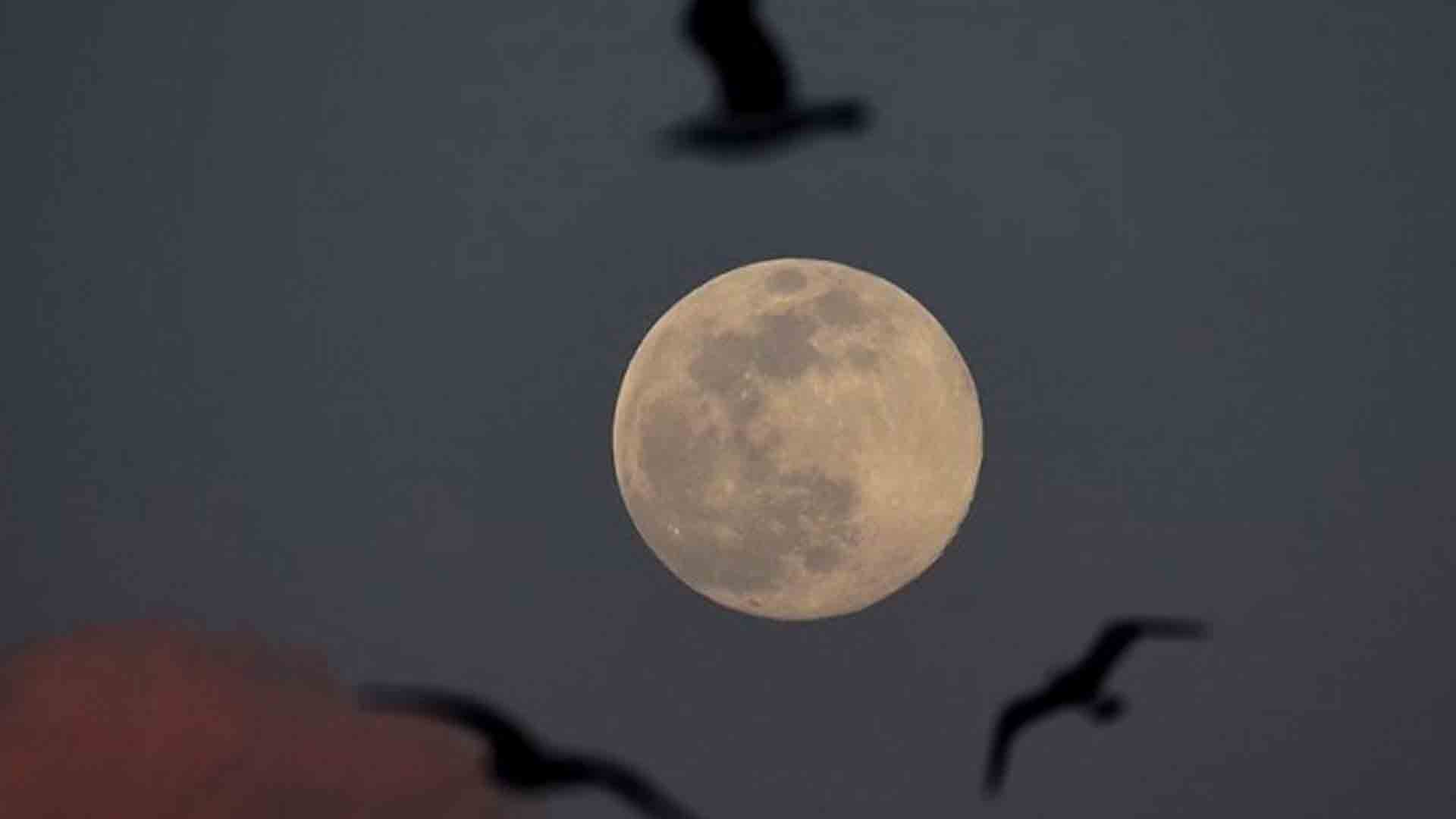






NASA announced Monday it has confirmed the presence of water on the sunlit surface of the moon, marking a historic discovery with potential implications for US plans to send a manned crew to Mars.
The discovery was made with SOFIA, NASA’s airborne observatory run in conjunction with the German Aerospace Center. The flying observatory discovered a small amount of water in Clavius Crater, which is one of the largest craters seen from the Earth.
Paul Hertz, NASA’s Astrophysics Division Director, said the discovery has undone prior assumptions that water on the sunlit surface would not survive the lunar day.
“This discovery reveals that water might be distributed across the lunar surface, and not limited to the cold shadowed places near the lunar poles where we have previously discovered water ice,” he told reporters on a conference call. “This discovery raises new questions about how water is created, and how it can persist in the harsh, air-less conditions of the sunlit lunar surface.”
NASA said in a statement issued shortly after the virtual news conference that is currently unclear if the recently-discovered water can be used as a resource, but noted that the Artemis program, the space agency’s planned manned Mars mission, hopes to quickly learn all there is to know about it before sending a crew to the moon in 2024.
The plan is to then establish a permanent presence on the moon’s surface by the end of the decade, and then send a crew to Mars using that experience.
NASA is planning to use SOFIA to scan additional sunlit portions of the moon to “learn more about how the water is produced, stored, and moved across the moon,” the space agency said.
“The data will add to the work of future Moon missions, such as NASA’s Volatiles Investigating Polar Exploration Rover (VIPER), to create the first water resource maps of the moon for future human space exploration,” it said. (PNA)


