



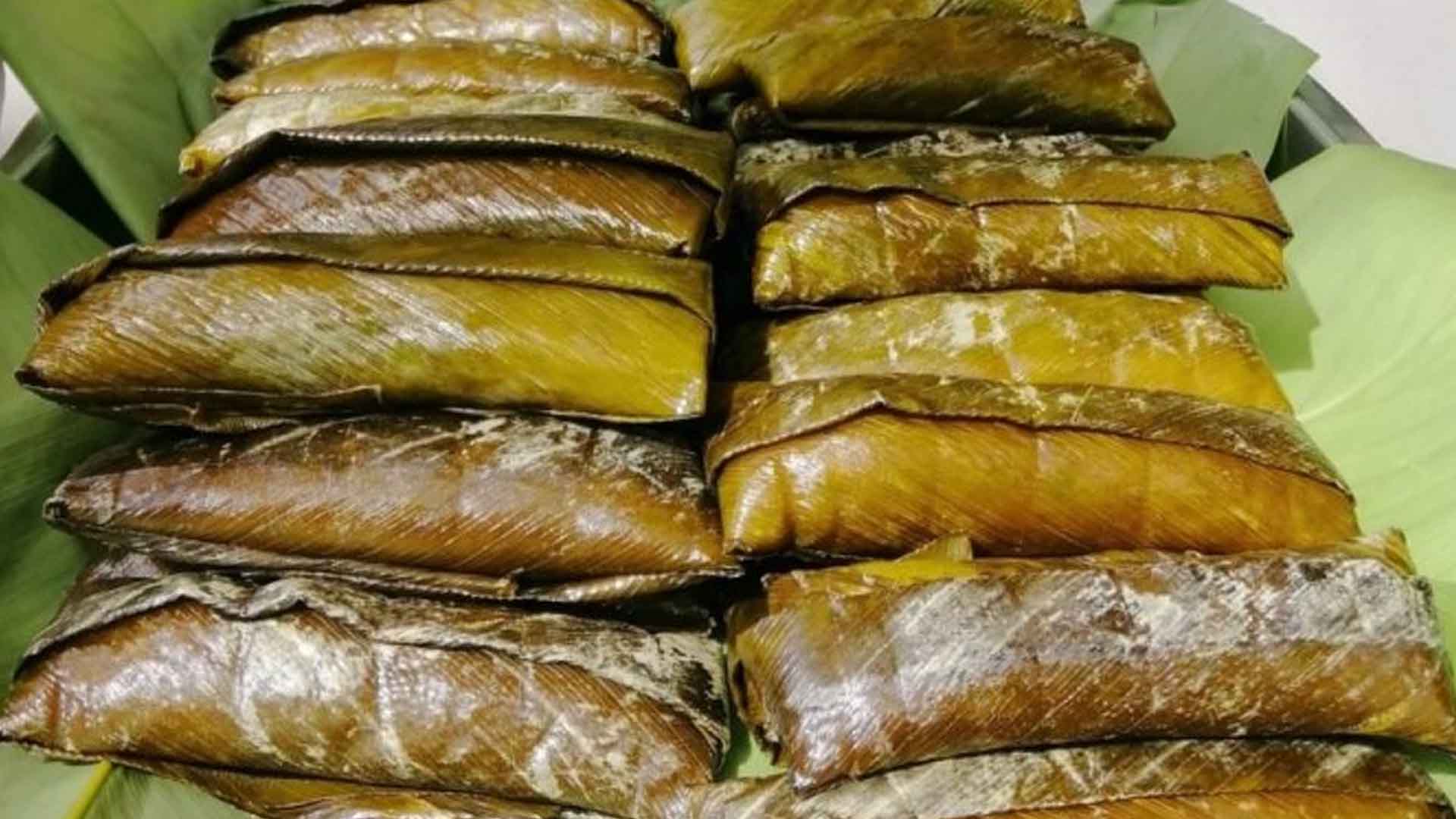






The local government unit is encouraging producers here of suman (sticky rice), a native delicacy, to innovate and prolong its shelf life to raise their earnings and expand the product’s market nationwide and abroad.
“By improving the shelf life of this highly perishable product though improved processing and packaging, it will become more competitive and sustainable,” said Palo Mayor Remedios Petilla in an interview on Tuesday.
Suman is a traditional Filipino food made of glutinous rice, sugar, and coconut milk as its main ingredients and wrapped in banana or coconut leaves before being cooked by steaming.
The delicacy spoils in two days if stored at room temperature and lasts for a week if refrigerated.
Petilla asked the Department of Science and Technology (DOST), Department of Trade and Industry, and Department of Agriculture, among others, to help realize this plan.
Responding to the local government’s proposal, DOST Leyte provincial director John Glenn Ocaña informed the mayor of the possible adoption of retort technology developed and designed by the agency to extend the shelf life of the native delicacy.
Retorting is one of the major techniques used for the thermal processing of food products packed either in semi-rigid flexible laminates or in metal or alloy cans, according to a food processing website.
Ocaña said a technical team of experts from DOST’s Industrial Technology Development Institute is currently in Leyte to conduct thermal distribution and penetration tests for moron, the most famous delicacy in Leyte, which is a mix of sticky rice and cocoa wrapped in banana leaves.
The technology aims to extend the shelf life of moron from six months to a year without the need for refrigeration, allowing the marketing and exportation of the product to other parts of the country and overseas. (PNA)


