



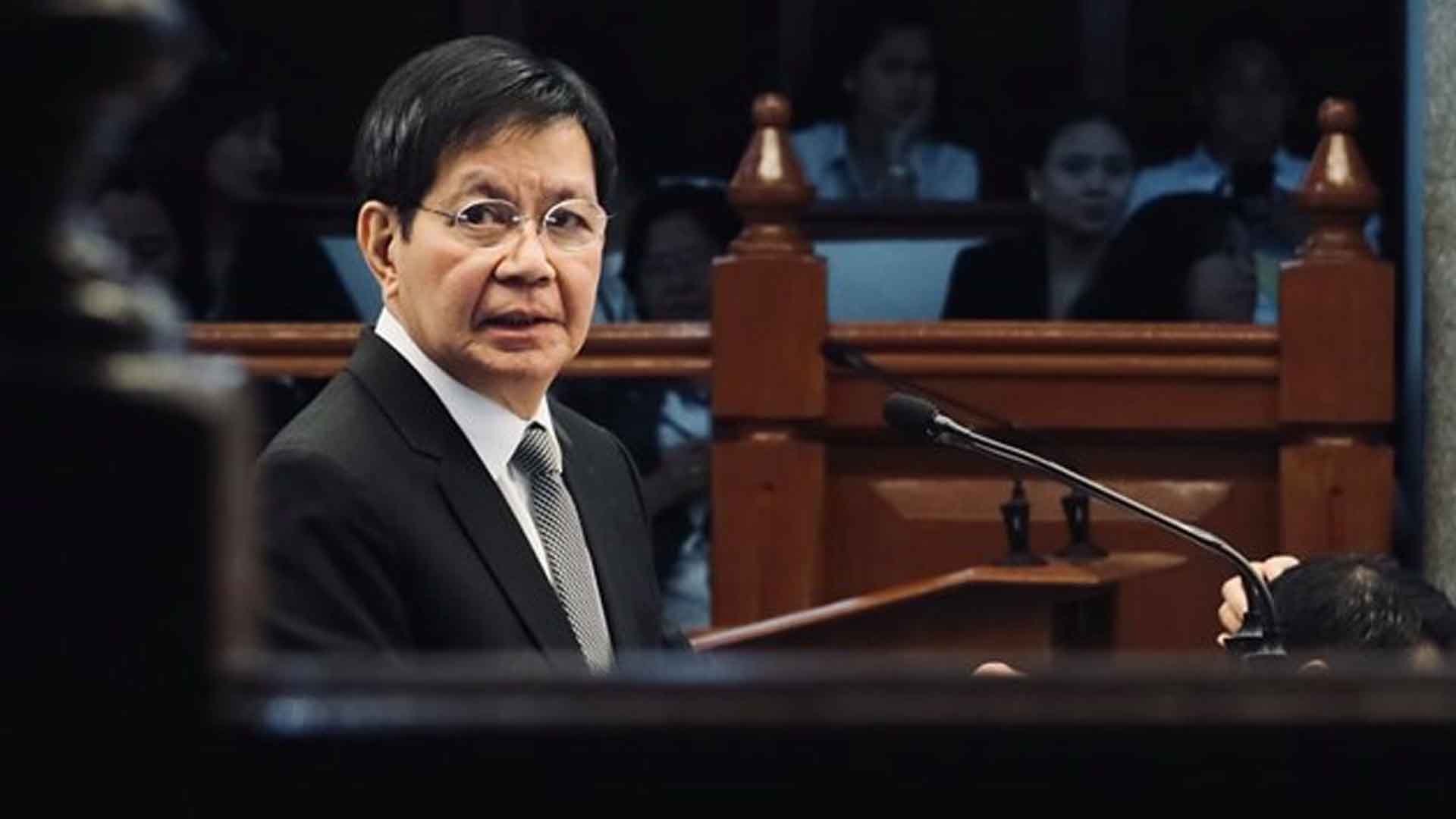






Senator Panfilo Lacson on Wednesday said there is a need to download resources directly to local government units (LGUs) to prevent lawmakers from making insertions in the budget and provide for a more equitable distribution of resources.
In a televised interview, Lacson pointed out that congressmen and district representatives, especially those at loggerheads with their governors and mayors, would rather insert budgetary appropriations for their districts when the National Expenditure Program is submitted to the House of Representatives.
“Whereas the more practical, and I think this is a wiser solution, sa (in) budget appropriations, is bottom-up,” he said.
Lacson said downloading resources to LGUs would address the “disconnect” in budget appropriations.
The vice-chair of the Senate Committee on Finance pointed out that projects endorsed or initiated by the Regional Development Councils (RDCs) constitute only 20 percent to 25 percent of the appropriations law, whereas agency-initiated proposals constitute the remaining 75 percent to 80 percent.
“Who would know better the needs and priorities of the communities than LGUs? So when the local development councils – from barangay, municipal, city and provincial – submit their local development plans all the way to RDC to be incorporated, pag nagkaroon ng budget call, yan dapat ang priorities because yan ang pinag-aralan sa baba (these should be the priorities during the budget call because these were evaluated on the ground),” he said.
“Sa implementation ang nangyayari, there are local projects na devolved ang function sa mga LGUs. And yet the implementing agencies, national government. So why don’t we just download the resources to the provincial, municipal, city? Sila nakakaalam ng pangangailangan sa baba (They are the ones who know what they needed),” Lacson said.
Lacson said he has filed a bill called Budget Reform Advocacy for Village Empowerment (BRAVE) that would reverse the distribution of resources from national to local.
He said the measure is in line with President Rodrigo Duterte’s objective in eyeing a federal form of government but without the need for a Charter change.
“All we need to do is download and have a more equitable distribution of resources to make the LGUs compete with each other in terms of development,” the senator said.
“Right now, LGUs can only utilize 20 percent of their internal revenue allotment (IRA) for development. But if we download resources for their development, sila na mag-implement (they will be the ones to implement it),” Lacson said. (PNA)


