



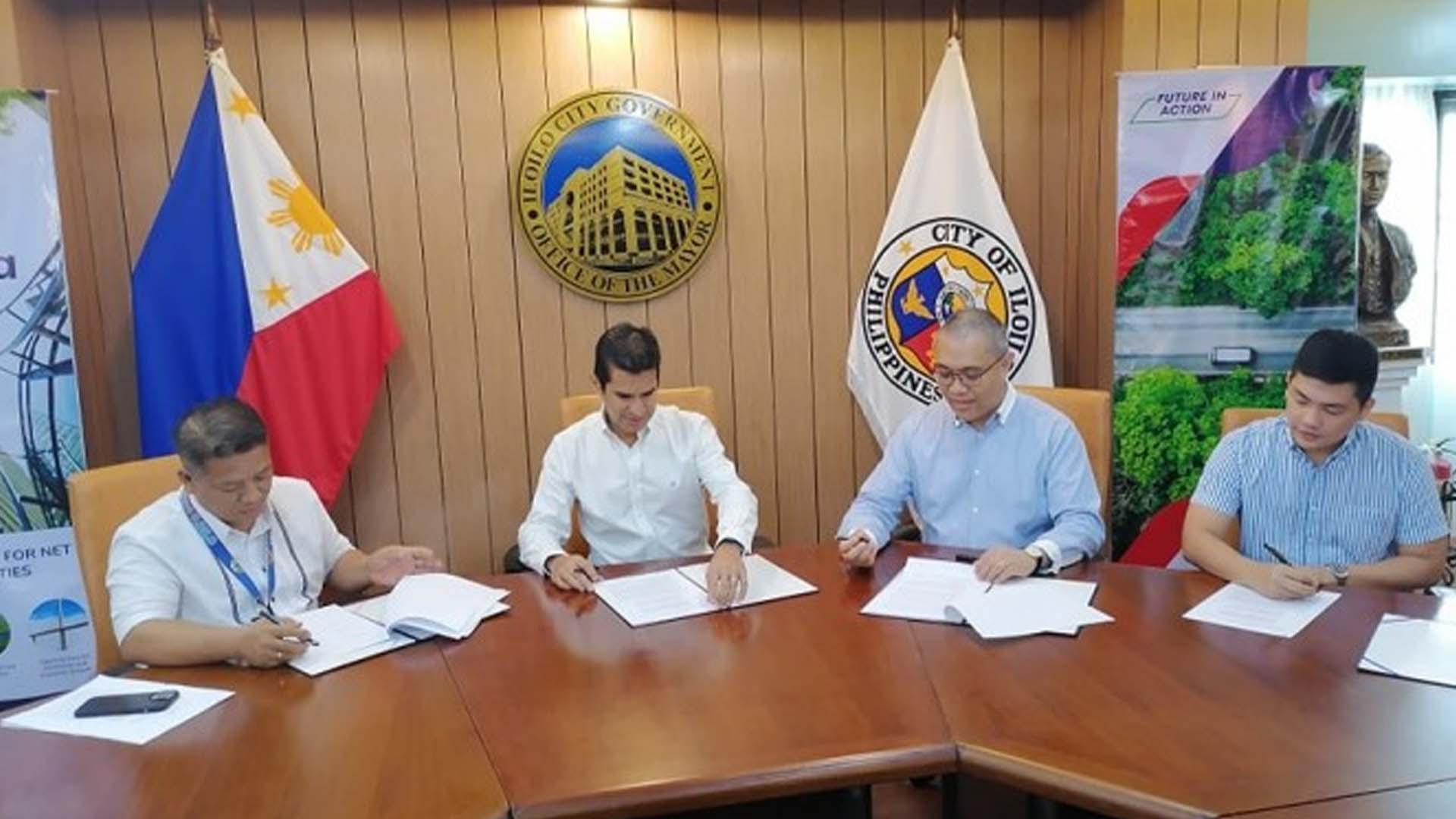







The Iloilo City government on Tuesday entered into an agreement with a supplier of construction materials to turn waste materials into fuel.
City Environment and Natural Resources Office (CENRO) head Engr. Neil Ravena said in an interview that under the agreed waste diversion program, Cemex Holding Philippines, Inc. will process the city’s low-density plastic waste into a power source for their factory.
Ravena and Luis Franco Carillo, Cemex president and chief executive officer, led the ceremonial signing of the deal at the city hall witnessed by Councilor Miguel Treñas and Cemex director for sustainability and public affairs, lawyer Christer Gaudiano.
Ravena said plastic constitutes about 90 tons of the 400 tons of waste generated daily in Iloilo City.
He said without the waste diversion program, 90 tons of waste would end up at the sanitary landfill, diminishing the lifespan of the facility.
“It is good. Cemex can significantly help us. They will get our plastic, the process is called co-processing. They will use them as fuel in their cement factory,” he said.
Ravena said they will reorganize the Uswag Calahunan Livelihood Association (UCLA) composed of waste pickers who will sort out waste at the materials recovery facility (MRF) in the Calahunan dumpsite located in Mandurriao district.
“All the proceeds and sales of recyclable materials and those coming from Cemex equivalent to the plastic we deliver to them will go to our waste pickers,” he noted.
Carillo, in a follow-up interview, said waste pickers can receive PHP1 for every kilogram of waste.
“This project is a very good example of circular economy. So for us, it is very good to receive this waste and I think for the city as well, it’s great to have a way to dispose of this waste in a sustainable manner; send this waste to our plant, and we co-process and use these waste as fuel,” he said.
On Monday, the city government also received a skid loader equipment from the United States United States Agency for International Development (USAID) through Clean Cities Blue Ocean (CCBO), its flagship program in combating ocean plastic pollution.
The sorting of recyclable and non-recyclable materials and low-density plastics will be faster, and waste diversion will be improved using the skid loader.
In a day, they expect to process eight to 10 trucks of waste at the MRF from the existing four trucks weighing 15 to 16 tons.
USAID-CCBO provided CENRO with technical assistance such as Solid Waste Competency Index assessment and Cost of Service Analysis for solid waste management and facilitated the city government’s partnership with Cemex.
Ravena said municipalities under the Metro Iloilo Guimaras Economic Development Council (MIGEDC) also expressed interest in partnering with Cemex. (PNA)


