



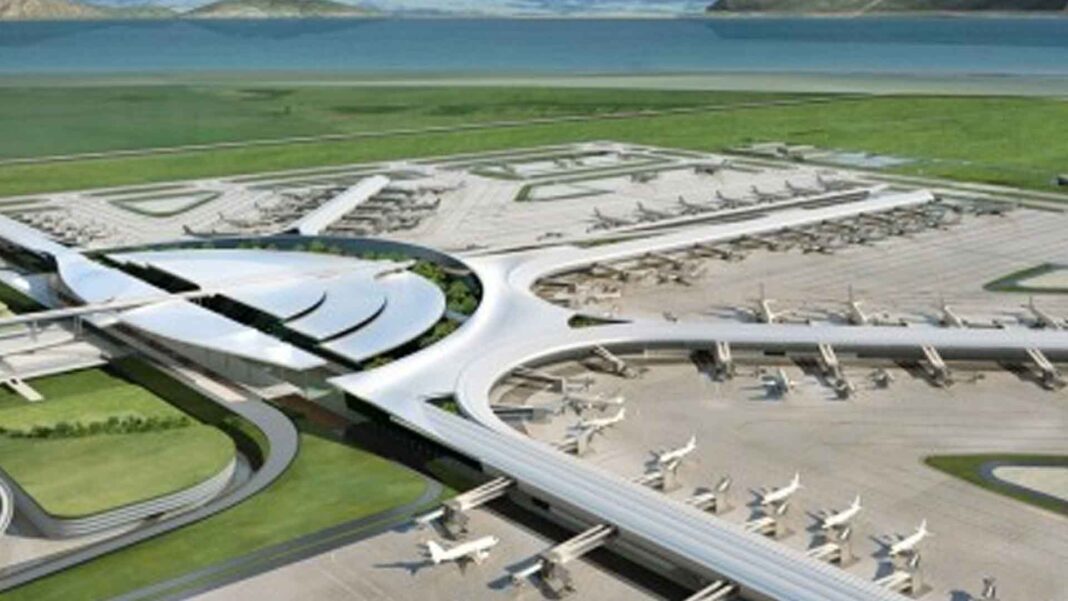






Groups of migrant workers have lauded the plan of San Miguel Corporation (SMC) to construct an international airport in Bulacan saying it as a potential source of employment and livelihood opportunities for local and overseas workers displaced by the coronavirus disease 2019 (Covid-19) pandemic.
“This bold move of San Miguel Corporation to push through with the airport project amid the uncertainty caused by Covid-19 has become the biggest ray of hope not only for the people of Bulacan but also for our OFWs and other displaced workers,” said Susan Ople, president of the Blas F. Ople Policy Center,
Ople, a resident of Hagonoy, Bulacan, added that aside from providing jobs and livelihood, the project would address the perennial flooding problem in coastal areas of the province.
“It doesn’t make sense to build an airport in a place where planes can’t even land because of constant flooding, so definitely this problem will be addressed by SMAI (a subsidiary of SMC) in partnership with the provincial government,” she added.
Danny Ricohermoso of the Integrated Seafarers of the Philippines (ISP) said the maritime sector is supporting the construction of a new airport in Bulacan because it will create new jobs and help stimulate the economy.
He added that the new airport project, once completed, would put the Philippines firmly on the map as an investment and tourism destination, and a key player in the global market.
For his part, Luther Calderon, founder of the Kabalikat ng Migranteng Pilipino, Inc. (KAMPI), a non-profit organization that assists distressed OFWs, said the building of a new airport and airport city is a long-term solution to the aspiration of OFWs to return home and find local employment.
“With the sharp economic downturn affecting traditional labor markets, many of our OFWs yearn to come home and be reunited with their families. Massive infrastructure projects such as the building of a world-class airport in Bulacan gives them hope for the future,” Calderon said.
OFW leader Venecio Legaspi, in his capacity as the director-general of the OFW Council of Leaders in Jeddah, Saudi Arabia, said the new airport would be a source of pride for OFWs who are tired of the airport congestion at the Ninoy Aquino International Airport.
“We have always dreamed of coming home to a world-class airport with multiple runways so we don’t need to be circling in the air for so long because of too much air traffic. We also long for an airport where our families can send us off or welcome us home with greater dignity and comfort,” he added.
According to the Department of Labor and Employment, at least 346,555 OFWs have been adversely affected by the global pandemic. (PNA)


