









After the dismal results of the Philippines in the Southeast Asia Primary Learning Metrics (SEA-PLM) in 2019 and the Programme for International Student Assessment (PISA) in 2018, another global assessment shows that the country’s basic education learners have failed.
Results of ‘The Trends in International Mathematics and Science Study (TIMSS) 2019′ showed that Grade 4 Filipino learners are lagging behind their peers when it comes to Science and Math. They garnered average scores of 297 in Mathematics and 249 in Science. With these scores, the country got the lowest among all 58 participating countries for both tests.
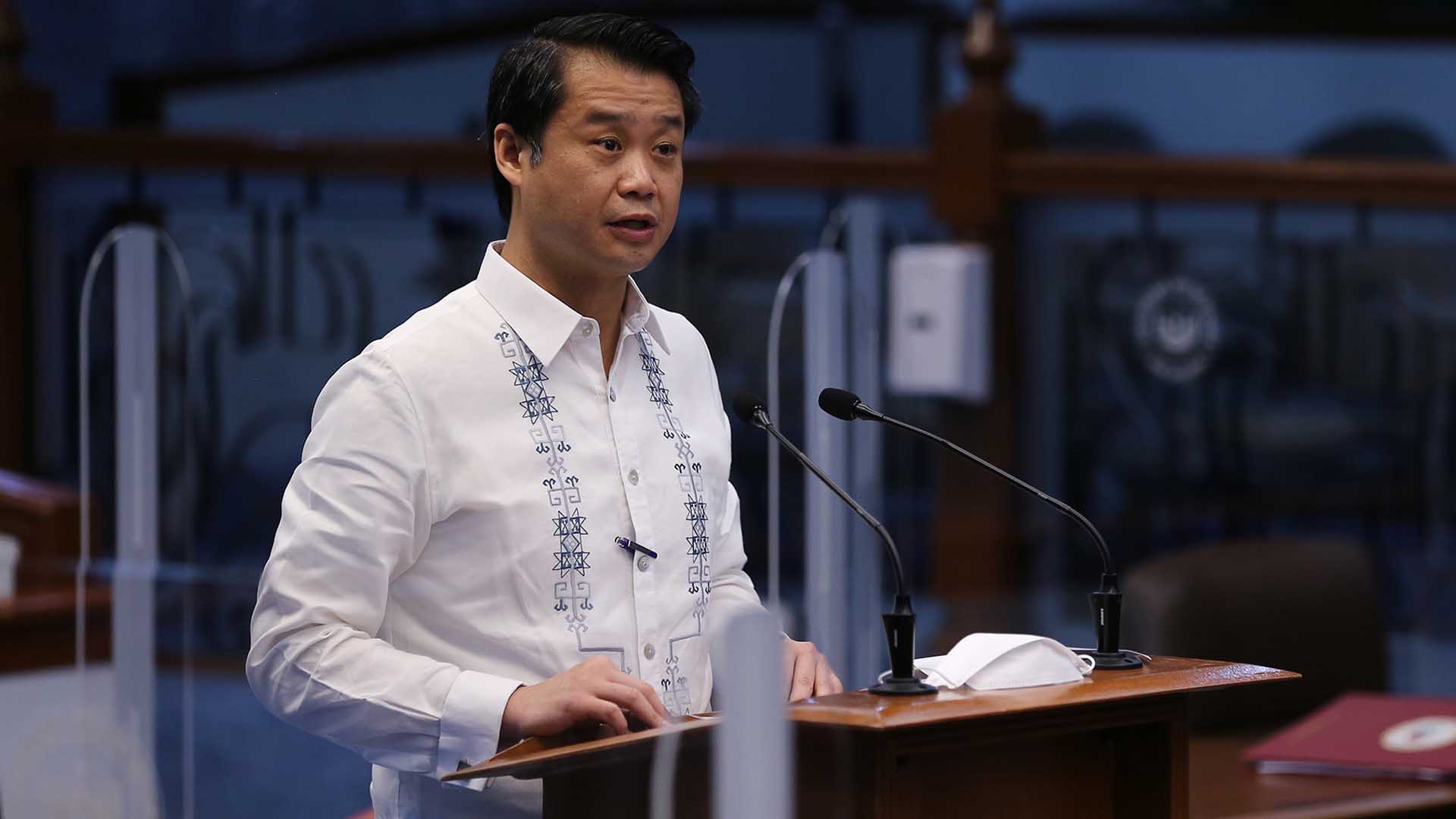
For Senator Win Gatchalian, this study points to a major crisis in the country’s basic education system that will not be resolved by “business as usual.”
“This is a major crisis. The country has been participating in global assessments as an additional tool to measure the effectiveness of the basic education curriculum. The dismal result for the third time is so depressing and should serve as a wake-up call,” Gatchalian said.
Among the Filipino learners who participated in the TIMSS, zero percent achieved scores within the highest tier or “Advanced International Benchmark” (625 average score) for both Mathematics and Science.
Learners who scored in the “Advanced International Benchmark” in Mathematics can explain their reasoning and apply their understanding and knowledge of relatively complex situations. In Science, this means being able to demonstrate knowledge of the scientific inquiry’s process and communicating understanding of life, physical, and Earth sciences.
Gatchalian flagged that this report shows a pattern of Filipino learners failing to master basic competencies and underperforming among their peers in regional and global assessments. The lawmaker warned that the failure to implement reforms would only aggravate this learning crisis.
The lawmaker reiterated the need to decongest the K to 12 curriculum and ensure its focus on boosting learners’ basic competencies in Reading, Writing, Math, and Science. The Department of Education (DepEd) is eyeing the results of its curriculum review by 2021.
Gatchalian also emphasized the need to ensure that teachers are capable of teaching the K to 12 curriculum. He recently filed Senate Bill No. 1887 or the Teacher Education Council Act, which aims to reform teacher education and training in the country. The proposed measure seeks to strengthen the collaboration among the DepEd, the Commission on Higher Education (CHED), and the Professional Regulation Commission (PRC) to improve teacher education in the country.
The said assessment is a flagship study by the International Association for the Evaluation of Educational Achievement (IEA) measuring the Science and Mathematics achievements of Grade 4 and Grade 8 learners. For 2019, the country only participated in the assessment of Grade 4 learners.
“Kailangan nating ituring na nasa ilalim na ng isang malawakang krisis ang ating sistema ng edukasyon. Hindi na natin kailangang patagalin pa ang pagsulong sa mga reporma dahil kung hindi, patuloy na mahuhuli at mapag-iiwanan ang ating mga mag-aaral,” said the Chairman of the Senate Committee on Basic Education, Arts and Culture.


