



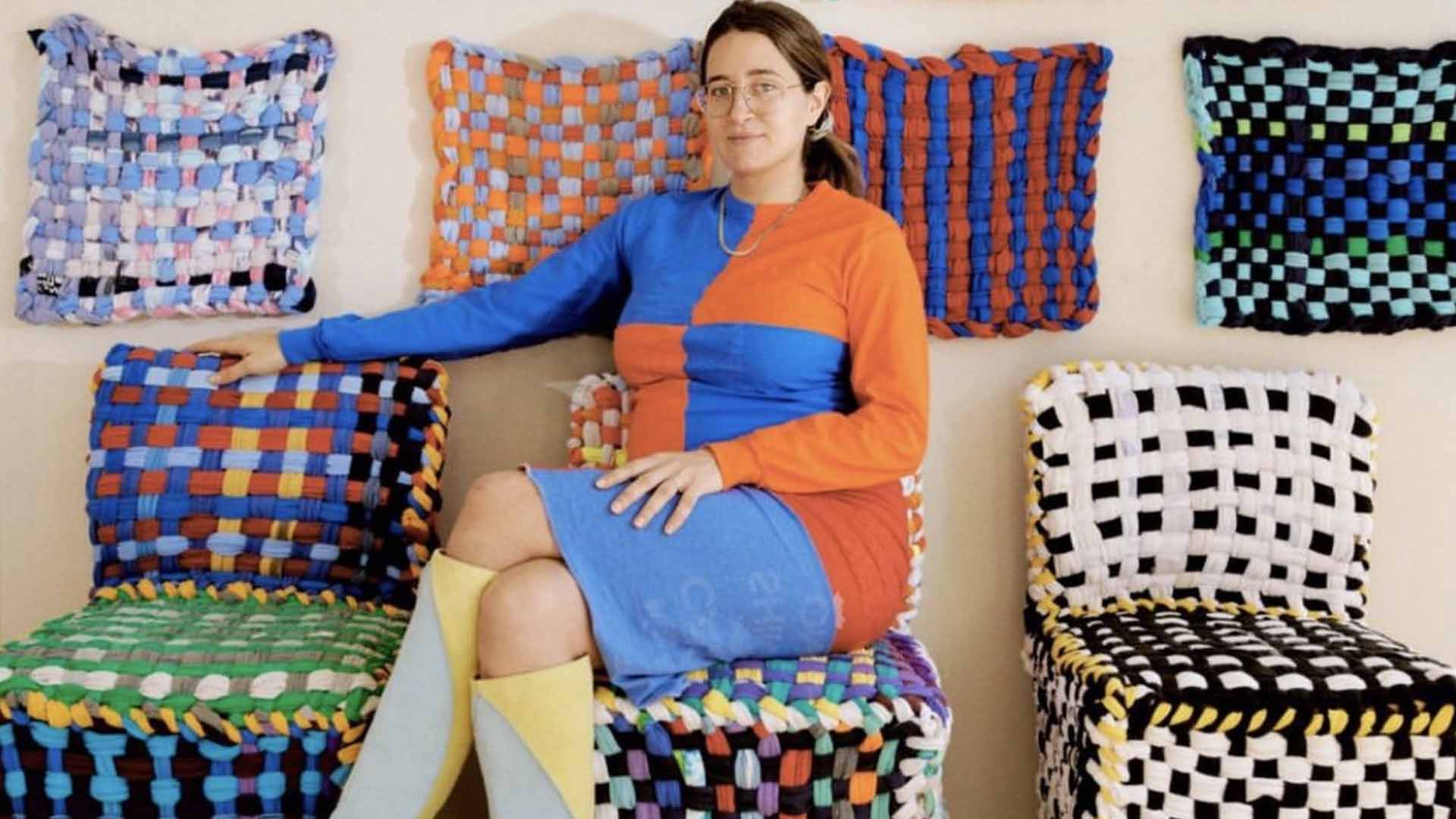







Vogue published an article about woven t-shirts designed by Elise McMahon, a Hudson, New York-based furniture designer on February 3.
McMahon is the founder of LikeMindedObjects, which created a line of throw pillows made from fast-fashion textiles. She has also researched recycling systems in the United States and discovered where all secondhand clothes end up.
She realized that those who produce such waste should be held accountable for recycling and reusing it, so she decided to contact her friend Francesca Capone, a textile artist, in November 2020.
They ended up making circular strips of fabric that can be woven on the loom. McMahon made a supersized loom out of scraps in her studio and ended up with an 18 inch by 18 inch woven textile made of the T-shirts, creating a bulky, lumpy material similar to patterned fabrics or heavily skewed blankets. The loom is now available for $200 from LikeMindedObjects, along with a tutorial on how to weave t-shirts.
People reacted quickly when the Vogue article was made public online, and they commented on McMahon’s Instagram post.
Filipino netizens gave feedback and reminded McMahon that she is earning something from an Asian culture that needs to be addressed and understood by all.
hey vogue, we’ve been upcycling fabrics in the philippines. these are literally called basahan. it’d be great to feature the amazing filipinos doing these colorful designs for decades. pic.twitter.com/ZMrqEq80Sm
— ???⁷☀️ (@TATAMOCHII) February 8, 2022
In the ??, this is a 'basahan' or a doormat handwoven from scrap fabrics. This is considered as a major livelihood in most communities as well.
I read up about Elise McMahon, founder of Like Minded Objects, and the vision is the same – to upcycle items from discarded materials. https://t.co/WzYhJVMBDr pic.twitter.com/IF1HySUZXS
— ASHLEY⁷ ?? (@AlyssaAshleyC) February 8, 2022
Filipinos also emphasized the culture of making woven t-shirts, or basahans, and pointed out that McMahon’s price is too high when woven t-shirts in the Philippines cost only $2 or PHP 100. Netizens in Indonesia also reacted, noting similarities between McMahon’s woven t-shirts and their own.
The Philippines is well-known for weaving worn-out shirts, which are then used as basahan or doormats at home. Filipino elders have passed on this tradition over the years, and schools in elementary and high school have preserved it by requiring students to complete a project using basahans.
McMahon addressed the concern and released a statement on her Instagram post.
Because of the reactions to Vogue’s article, Vogue revised it and added that there is a lengthy, global precedent for creative approaches to processing dumped garments through weaving in the Philippines, where unused fabrics are woven into doormats known as basahan, which are found in most homes.
They also mentioned Rags2Riches, a fashion and design house that empowers community artisans while promoting style and sustainability through the creation of woven products, in their updated article.
Source: https://www.instagram.com/likemindedobjects/, https://www.instagram.com/voguemagazine/


