



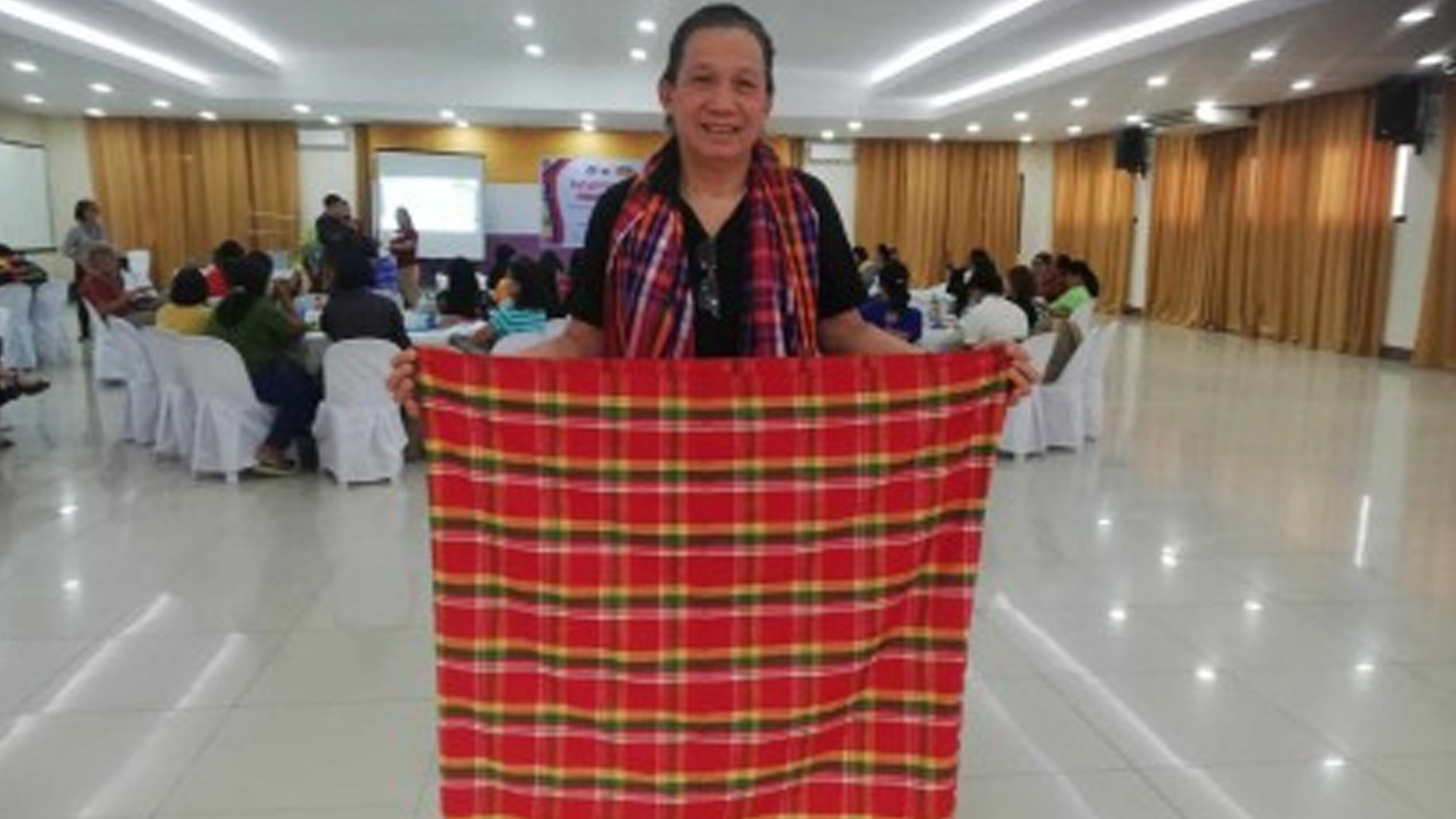







Antiqueños are encouraged to patronize the handwoven “patadyong” (wraparound garment) because it gives them a sense of identity.
The Antique handwoven fabric is distinct from that of other places, according to PJ Arañador, Department of Trade and Industry (DTI) consultant and resource person, during the two-day Fiesta Haraya: Patadyong Design Trends Conference that culminated here Friday.
“Patadyong is being considered as the soul of Antiqueños, being an indigenous textile,” he said.
He said the patadyong dates back to the pre-Hispanic time when Antique peasant women would wear it as their everyday clothing.
He also said that Antique’s textile is distinct because it is plaid or checkered and is colorful.
“Patadyong from a peasants’ fabric used to have a subdued color. Now it evolved to have a tropical festive color worn during special occasions,” he said.
He said that through time, the patadyong that came from the Hiligaynon term “tadlong” or straight as a tubular wrap-around now has contemporary designs for streetwear and bags.
He said that the fabric should be sustained through the support of locals.
“The artisans (loom weavers) should also be able to translate their effort to earn a living and to make their lives better,” Arañador said.
He said that in India and other countries, people use their locally made textiles to support the artisans and sustain their indigenous craft.
He also mentioned that as part of sustainability, the Department of Science and Trade (DOST) has put up a natural dye hub in San Remigio for the handwoven fabric.
The DTI trains weavers in design and marketing.
The Bagtason Loom Weaving Center in Bugasong, meanwhile, serves as a production center of handwoven fabric, providing livelihood for the locals. (PNA)


