



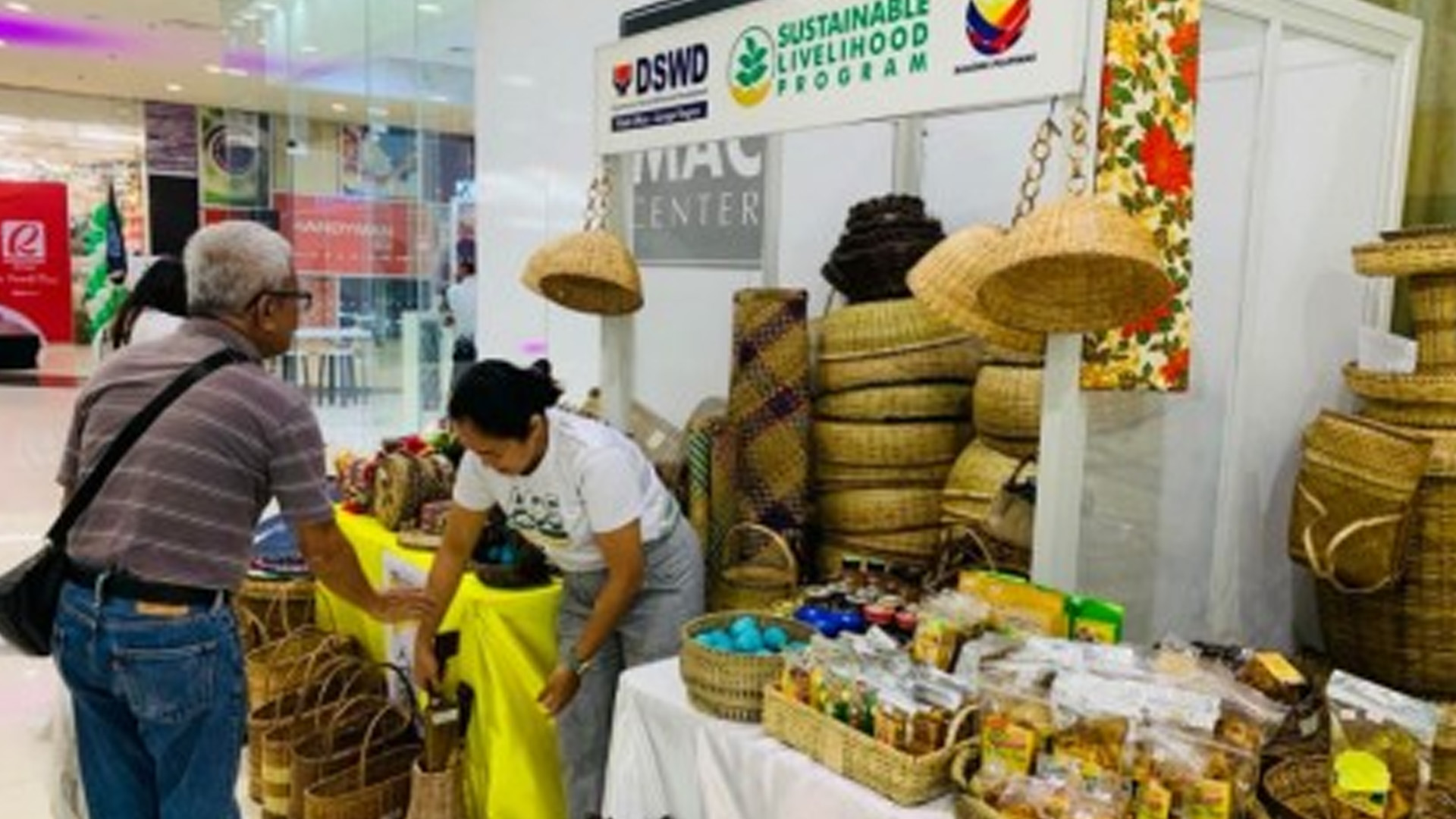






The Sustainable Livelihood Program (SLP), one of the core development initiatives of the Department of Social Welfare and Development (DSWD), has provided livelihood opportunities to 235,074 beneficiaries as of Nov. 30, 2025.
The program helps provide livelihood opportunities to qualified vulnerable and disadvantaged sectors in Philippine society, supporting the DSWD’s mandate to bring development to those who need it most.
“The Sustainable Livelihood Program (SLP) is among the primary programs of the department, addressing its mandate to provide development, hindi lang puro welfare or ayuda (not just welfare or assistance),” Assistant Secretary Irene Dumlao said in a statement on Tuesday.
“Ang SLP ang matibay nating programa na nagsusuporta sa ating kagustuhang mabigyan ng development opportunities ang ating mga kababayang nasa sektor na vulnerable (The SLP is a solid program that supports our desire to bring development opportunities to the vulnerable sectors of society).”
Dumlao said the SLP provides two primary tracks for beneficiaries, such as the Microenterprise Development (MD) track, which supports the start-up and growth of small businesses.
Last year, 200,704 beneficiaries were served under the pathway.
The second pathway is the Employment Facilitation (EF) track, wherein beneficiaries are provided with training and the necessary logistical assistance to help find jobs.
With the two tracks, the SLP is implemented in strategic phases to ensure that beneficiaries are prepared for long-term livelihood assistance and are not given just a token one-time aid.
The five-year Livelihood Sustainability Plan is a five-phase approach that aims to provide a ladderized and systematic series of interventions for program participants toward resilient livelihood activities.
This approach begins with “Punla/Seeding,” wherein program participants are capacitated with basic skills and knowledge in business management and building rapport in workplaces.
This is followed by “Usbong/Sprout” and “Sibol/Budding,” which are focused on close provision of capacity-building and partnership linkages.
In the last phase of the strategic approach, “Yabong/Fruition” and “Ani/Harvesting,” the program participants are expected to manage their projects with minimal assistance.
“The five-phase approach is also important to us, as livelihood beneficiaries are continuously monitored and provided with technical assistance so that we ensure that their livelihood projects become sustainable. Hindi po natin sila iniiwan pag naibigay na ang assistance. Patuloy po ang ating pag-monitor sa kanila (We don’t leave them upon the provision of assistance. We continue to monitor them),” Dumlao said. (PNA)


