









The Department of Social Welfare and Development (DSWD) in the Cordillera region on Tuesday pushed for the institutionalization of the Community-Driven Development (CDD) approach in government projects to ensure transparency and accountability.
In an interview, Maria Aplaten, DSWD-Cordillera director, said the CDD approach would also ensure quality projects, the full use of funds, and the participation of communities that would directly benefit from the project.
“Kung sana ganito ang approach natin, maganda ang ating social preparation (Our social preparation would be better if only we use this approach). That is the part where the technical assistance (and) capability building would come in,” Aplaten said.
According to the DSWD, the CDD approach provides communities with the opportunity to actively identify, plan, budget, implement, and monitor their own development projects to achieve inclusive growth and poverty reduction.
“Maayos na maipapaliwanag sa community and the community, developing ownership of the project, babantayan na magagawa nang maayos (The project will be clearly explained to the community, and the community, as they develop ownership of the project, will ensure the quality of the project),” Aplaten said.
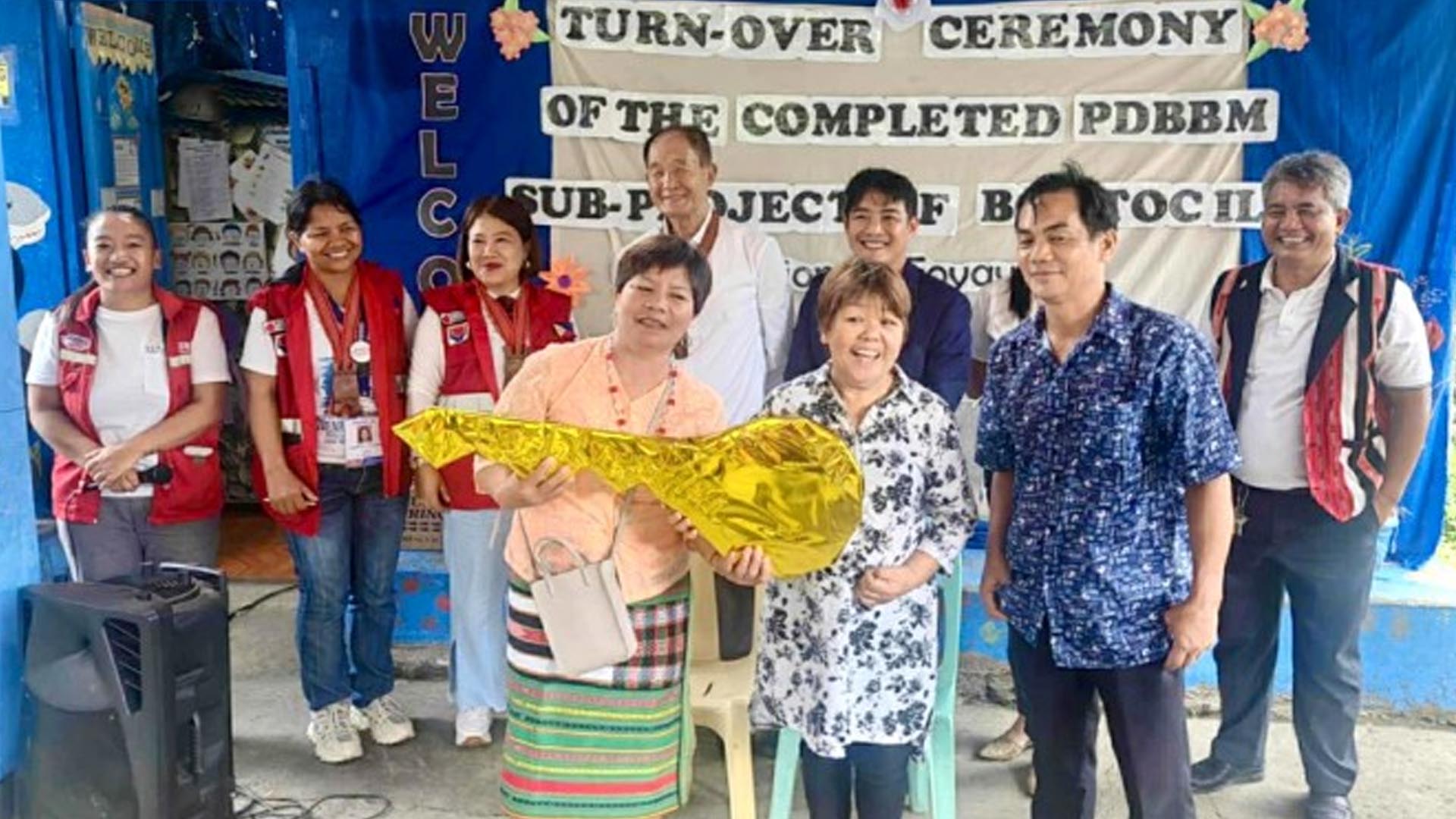
A recent project in the region that used the CDD approach was the construction of a drainage canal and pathway in Barangay Bontoc Ili, Bontoc, Mountain Province.
The project, completed on Aug. 27 and turned over to residents on Sept. 1, was implemented under Kapit-Bisig Laban sa Kahirapan – Comprehensive and Integrated Delivery of Social Services (KALAHI-CIDSS), a poverty alleviation program of the DSWD.
KALAHI-CIDSS has been using the CDD approach since 2003, the year the program was rolled out.
Aplaten said the DSWD has been urging Congress to pass a law that will institutionalize both the KALAHI-CIDSS and the CDD to guarantee their continuation.
Manuel Ocana Jr., deputy regional program manager for KALAHI-CIDSS, said projects under the program are strictly monitored for transparency.
“In CDD projects, we highlight the element of barangay-level implementation and community participation where the utilization of up to the last centavo is reported,” he said.
He added that before they can access the funds, there is a need to ensure that all the necessary permits, documents, proposals, and computations are in place and known to all the parties involved.
“With this system, the chance that the project will not proceed or will be substandard is less, except if all parties connive to bungle the project, which is unlikely,” Ocana said.
He noted that during KALAHI-CIDSS’ decades-long existence, they have never been called to explain about a substandard or a missing project. (PNA)


