



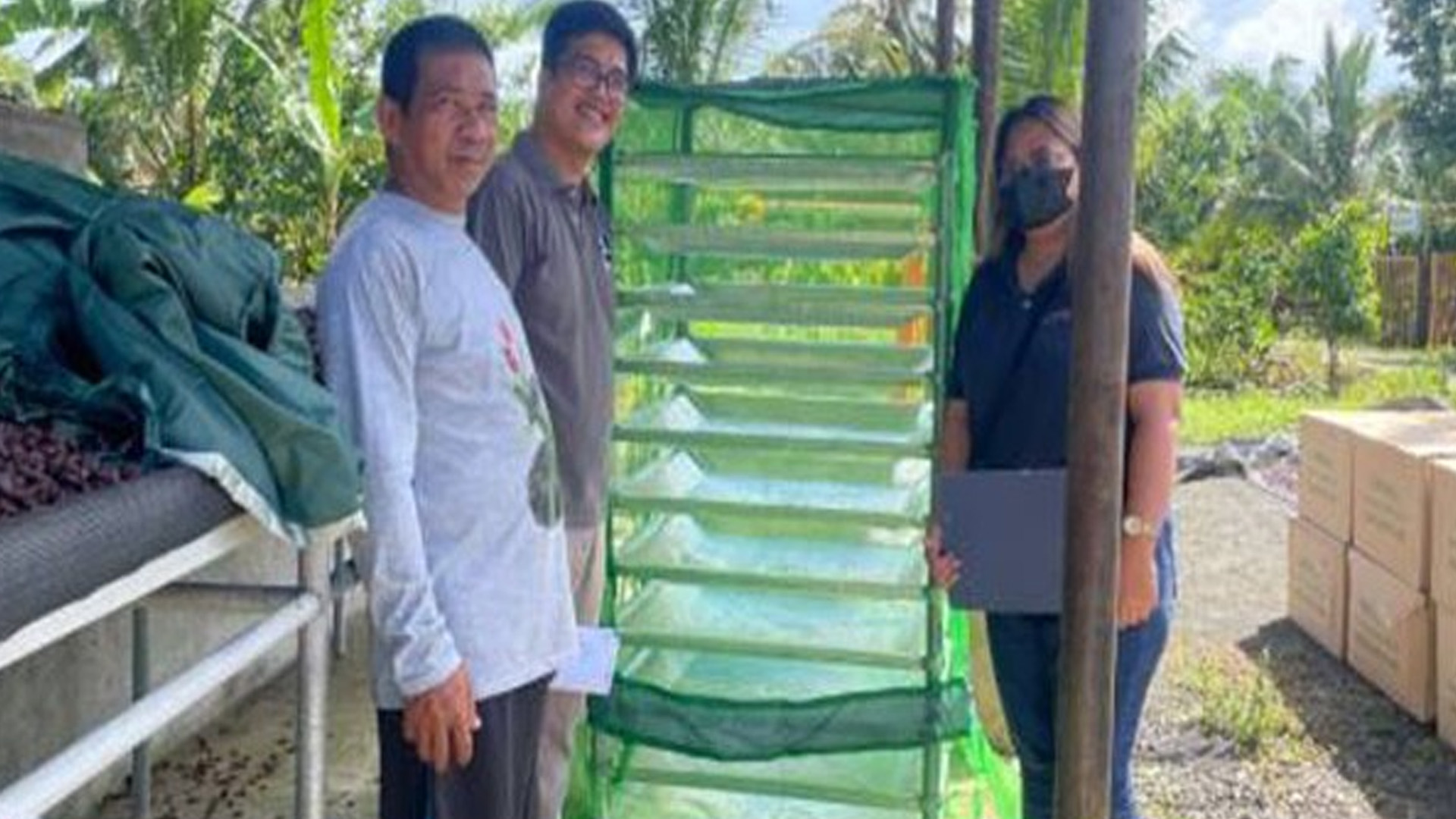







The Department of Science and Technology (DOST) has distributed 20 units of multi-purpose solar speed drying trays, known as Portasol, to the Samahan sa Industriya ng Cacao na Pangkabuhayan (SICAP) Quezon Agricultural Cooperative to boost the production of local farmers by enhancing their cacao drying efficiency.
Aldwin Royena, Science Research Specialist II and focal person of DOST-Quezon’s Community-Based Project, said in a phone interview Friday that the SICAP cooperative represents cacao farmers from 38 municipalities and two cities across Quezon province and envisions cacao production as a viable means to uplift the livelihoods of its members.
Currently, SICAP produces more than 1,700 kg. of dried fermented cacao beans, a key product for the province’s growing cacao industry.
Royena said each Portasol unit features 12-tiered trays, a pyramid roof rack, a protective hood, and an instructional manual.
The unit is designed for ventilation and multi-level stacking, an innovative technology that reduces common drying challenges such as mildew, rot, and pest infestations.
It also ensures faster and cleaner drying processes, even in overcast weather, while maximizing storage efficiency.
“The use of Portasol trays is expected to significantly improve drying practices, eliminating issues caused by drying on open grounds exposed to road dust and other contaminants,” Royena said. “With these tools, cacao farmers can look forward to increased productivity and product quality, enabling them to compete more effectively in the market.” (PNA)


