



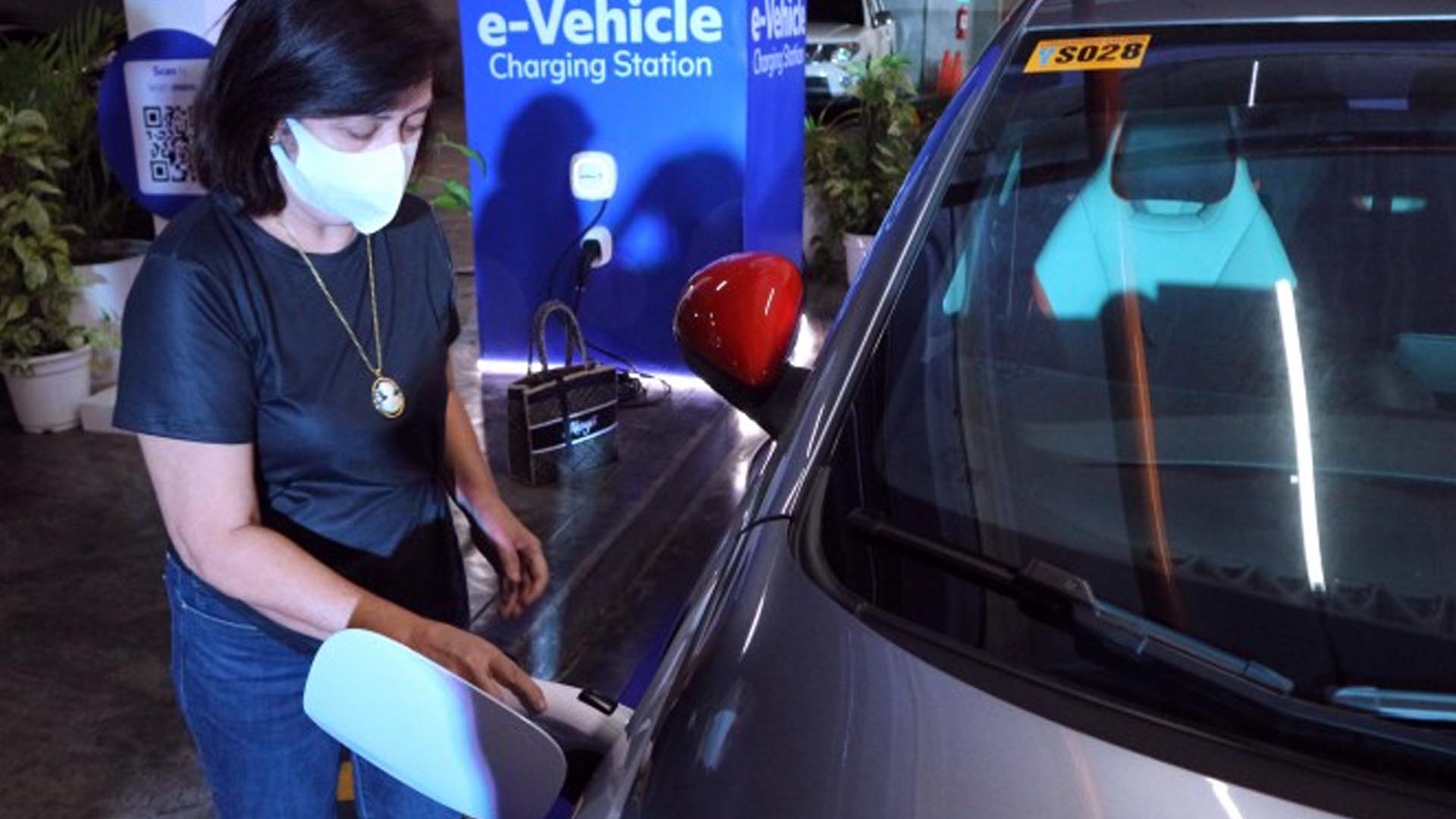







The Department of Energy (DOE) will introduce new regulatory initiatives and public consultations to ensure a safe, efficient, and sustainable electric vehicle (EV) charging network.
In a statement Tuesday, the DOE said the country currently has 912 publicly accessible EV charging stations operational nationwide as of March 31 this year, mostly in the National Capital Region.
The Implementing Guidelines on Obligations of Electric Vehicle Charging Station (EVCS) Providers and EVCS Requirements, Specifications, and Interconnectivity (IG-ORSI) will be published this month, the DOE said.
The IG-ORSI will provide installation requirements for charging stations, particularly for mode 4 chargers, which use direct current to deliver energy rapidly to EV batteries.
The issuance will also include comprehensive safety standards designed to streamline the deployment process and encourage investment in charging infrastructure.
The DOE will conduct public consultations within this quarter on key initiatives, such as strategic placement of EVCS in gasoline stations to enhance accessibility and convenience for EV users, integration of the Charging Infrastructure Development Plan with the Distribution Development Plan to optimize grid capacity, prevent strain on the power system, and ensure reliable charging services, and installation of EVCS in dedicated parking areas and related facilities to expand charging access and reduce range anxiety among potential EV owners.
The approach aims to establish a comprehensive and accessible EV charging network across the Philippines.
The DOE said the comprehensive roadmap for the electric vehicle industry outlines a short-term goal of deploying 7,300 EV charging stations by 2028.
“Our goal of deploying over 7,000 EV charging stations by 2028 is ambitious but achievable. By combining infrastructure development with public engagement, we can accelerate the transition to EVs and build a cleaner, more sustainable transportation sector,” said Energy Utilization Management Bureau Director Patrick Aquino. (PNA)


