



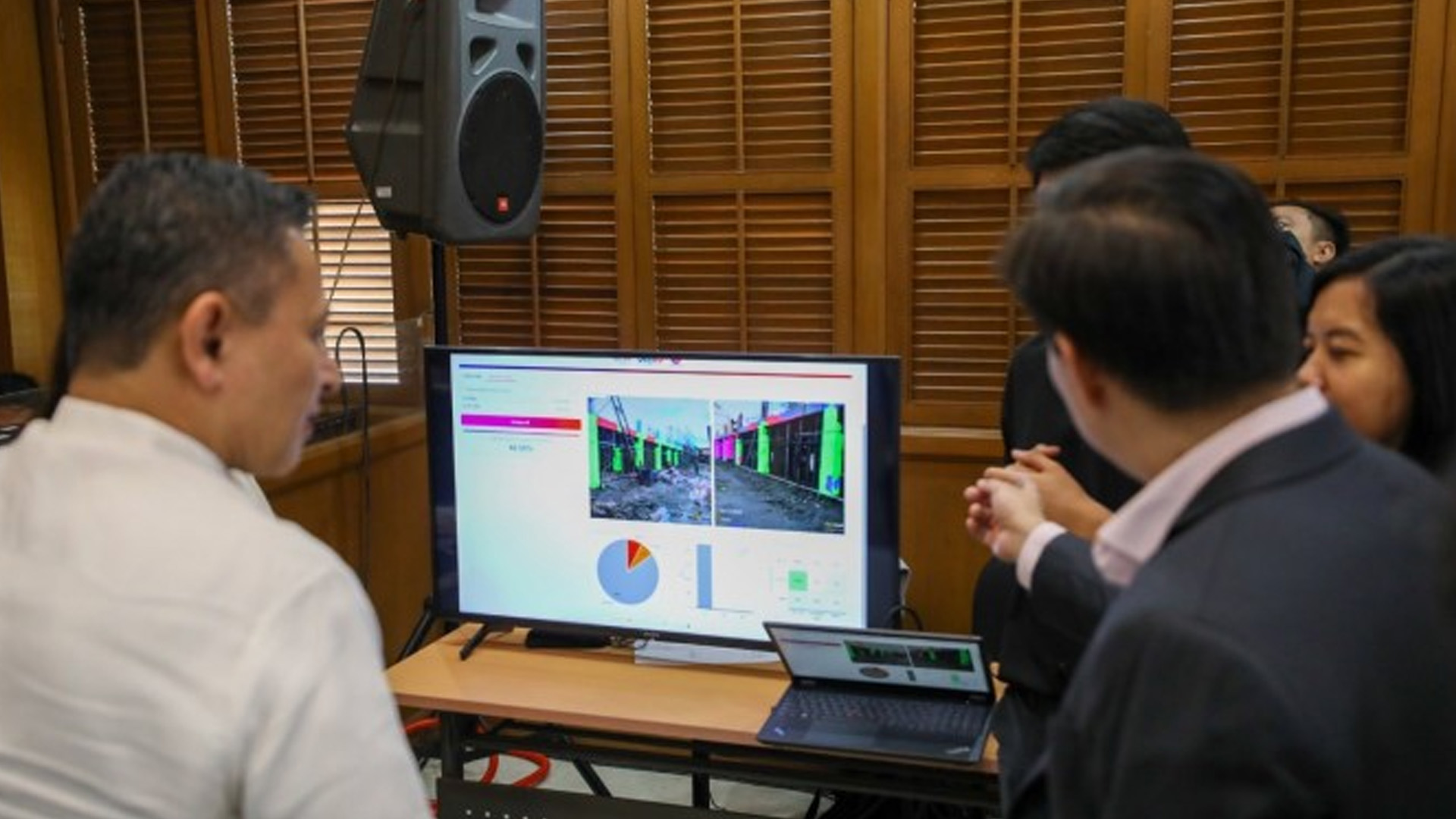







Education Secretary Sonny Angara on Friday highlighted the benefits of artificial intelligence (AI) in improving data within the education sector.
In a statement, Angara lauded the reforms almost a year after the Department of Education (DepEd) launched the Education Center for Artificial Intelligence Research (ECAIR).
Under ECAIR, the use of AI is integrated into education governance, with focus on data quality, decision-making, and operations.
“If you look at the quality of data a year ago versus now, there is a marked improvement. But there is still a long way to go,” he said.
The education chief cited how the agency is now advancing in efficiency and data-driven organization.
“ECAIR helps us make decisions more accurately, something that is long-awaited, being the biggest bureaucracy with the biggest budget, hopefully,” Angara said.
To date, the ECAIR has covered several projects pertaining to appointments of school heads, management of learners’ data, and resource allocation.
Among these are Project Dashboard for Understanding NASH Outcomes and National Grade-generation (DUNONG); Project System for Intelligent Growth and Learner Anthropometry (SIGLA); and Project Tracking Adoption Locations and Infrastructure Network Operations (TALINO).
With the faster leadership selection process, 4,410 aspiring principals passed the National Qualifying Examination for School Heads in 2025, resulting in an estimated PHP5 million in savings for proper consolidation of records under clearer standards.
In terms of data encoding of learners’ health, the time spent by teachers has been reduced to 1.87 hours from about 3.75 hours per year.
For proper resource allocation, real-time visibility on school infrastructure and operation updates has also been developed to ensure transparency. (PNA)


