



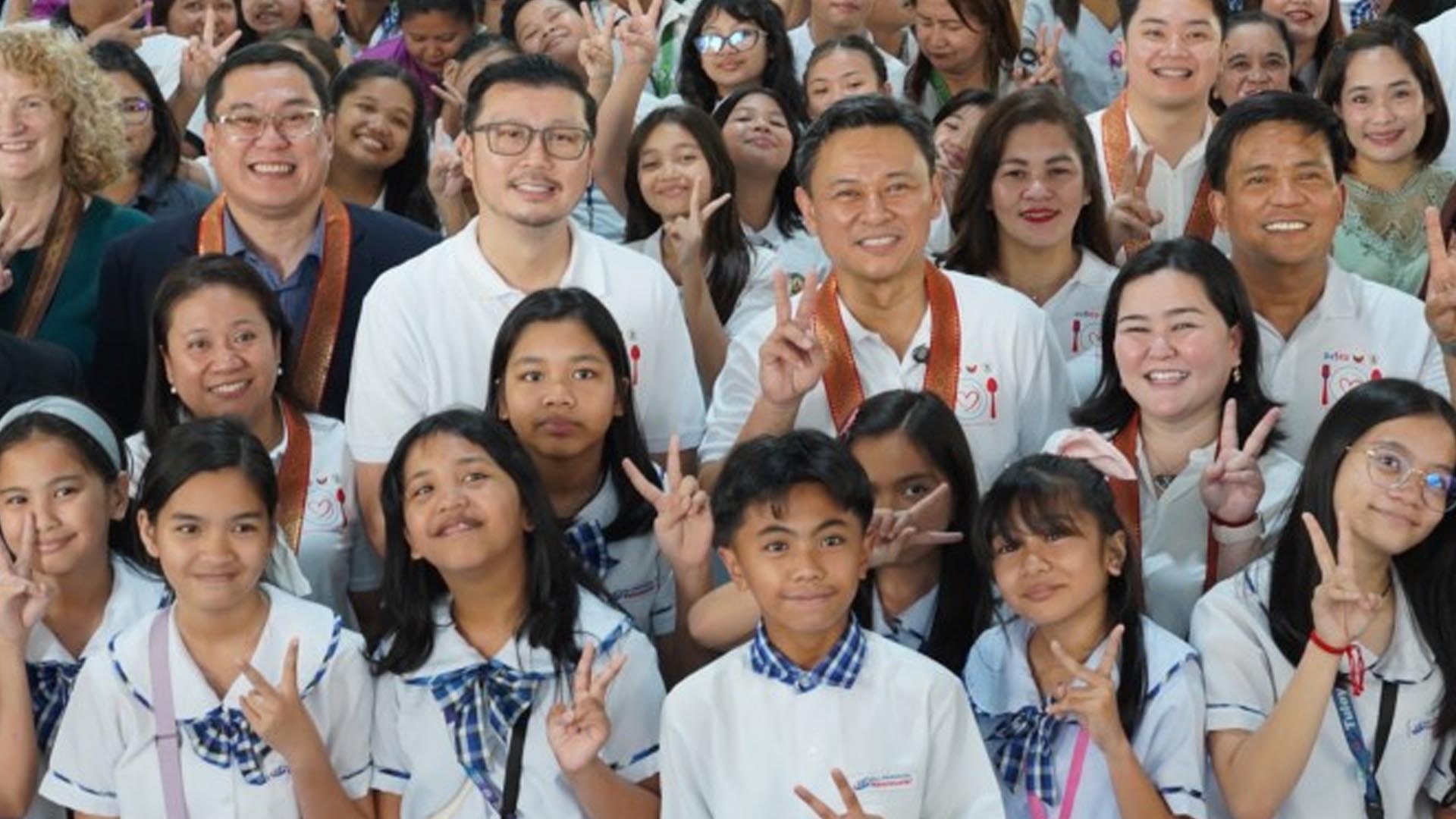







The Department of Education (DepEd) on Wednesday said the use of artificial intelligence (AI) will be allowed in public schools following the issuance of Department Order No. 003, series of 2026, or the Foundational Guidelines on Artificial Intelligence (AI) in Basic Education.
In an ambush interview, DepEd Secretary Sonny Angara said AI will be used as a support tool in learning and teaching.
“May (There’s an) ethical use of AI. Tapos hindi naman natin ipagbabawal ang (We will not prohibit the use of) AI,” he told the Philippine News Agency.
Under the general guidelines issued on Feb. 20, all teaching and non-teaching personnel, as well as learners, will be allowed to explore new tools and methods as long as they align with “ethical, pedagogical, and human-centered standards” to ensure the overall safety of users.
AI must “strictly function” as an auxiliary tool, and not “replace” the essential role of teachers in the evaluation of learners; and human judgment must remain “paramount” in all educational matters in public schools.
AI tools may also be utilized for the creation and enhancement of educators’ instructional materials, and serve as an ancillary support for analyzing data, grammar check and citation verification in research and data gathering.
It can also be used in the development of assessment tools for examinations, quizzes, activities and other evaluations, subject to strict supervision, validation and judgment of public school teachers.
In terms of classification, AI applications used for grading, admissions, scholarship, and disciplinary actions are considered “high-risk” and must only be permitted under strict safeguards and human oversight.
AI applications with learners and staff interaction, such as chatbots for administrative queries, and AI tools for spam filters, grammar correction and IT automation, are considered limited to minimal risk AI, respectively.
Responsible use
Angara said the direction would entail a more responsible use for both learners and teachers.
“We just need the students to disclose how they use AI para ma-integrate siya (so that it can be integrated) into their learning,” he said.
As a result, learners must submit their outputs alongside citations of AI tools and how they were used in their brainstorming, writing, research, creation of presentations, and even homework support.
Some of these applications are ChatGPT, Google Gemini, Grammarly, Quillbot, Canva, Tome and Khanmigo, among others.
“It’s a graduated policy; the more independent learners will be given greater latitude,” Angara said.
The DepEd, however, imposes a prohibition against the use of AI applications that pose significant risks to the rights, safety, and well-being of learners and education stakeholders.
Among the prohibited applications are AI systems using biometric or emotion recognition, biometric categorization, manipulative chatbots for minors, social scoring, and untargeted facial recognition scraping or the indiscriminate collection and use of facial images from public and private sources.
Overall, the DepEd deems it inappropriate if AI tools are used as a substitute for human participation and decision-making, as a sole source of data, and as a mechanism for biometric emotion recognition and other related features that might compromise the safety and privacy of learners.
In January, the DepEd launched the Project AGAP.AI (Accelerating Governance and Adaptive Pedagogy through Artificial Intelligence) to raise awareness and advanced AI literacy for its integration in basic education.
At least 1.05 million learners, 300,000 teachers, and 150,000 parents in the country are targeted to be reached for a funded AI skills training program in partnership with the ASEAN Foundation and Google.org. (PNA)


