



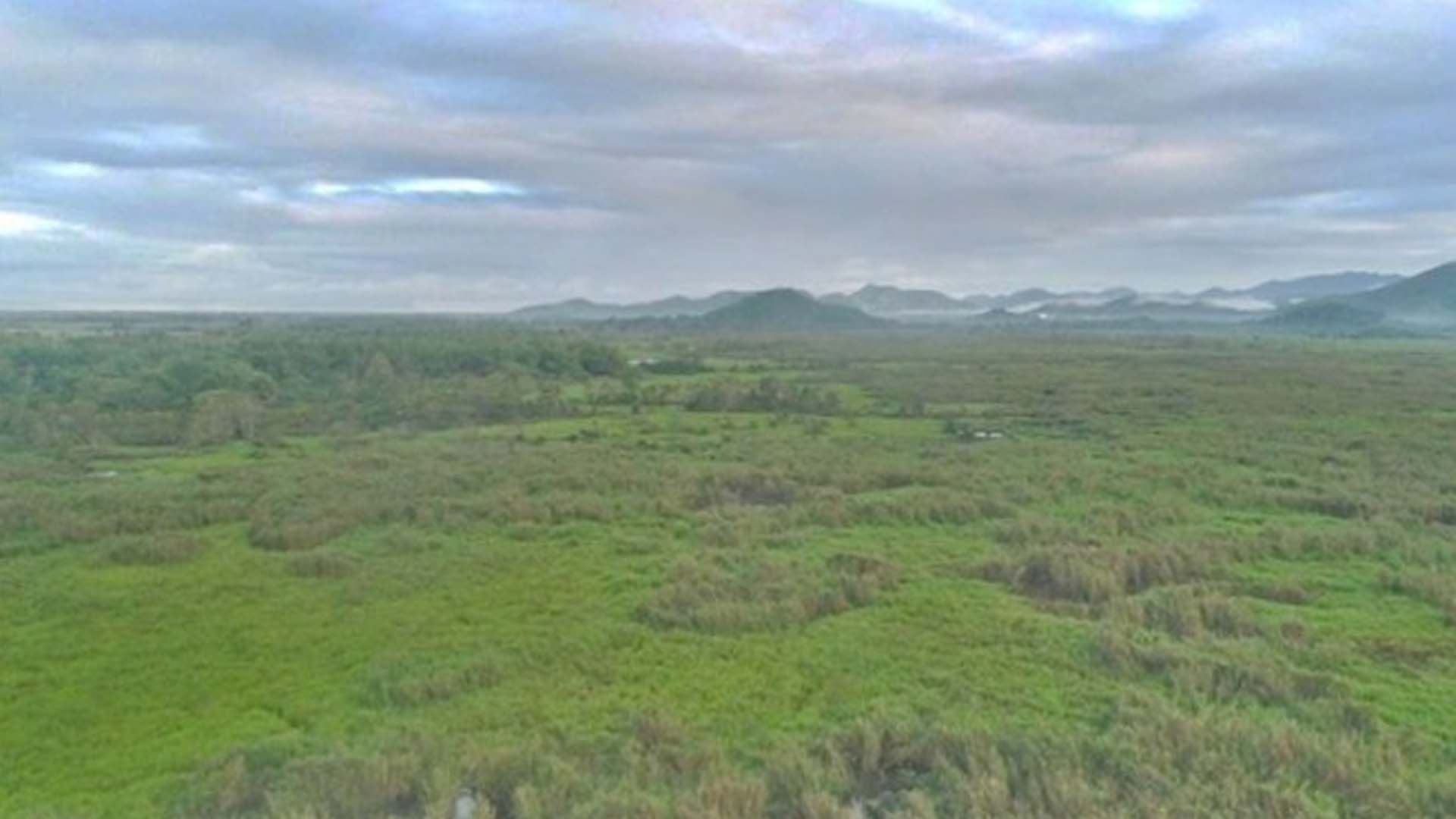






Concerned with the expansion of farming activities, the Department of Environment and Natural Resources (DENR) has outlined measures to preserve the 3,088-hectare Leyte Sab-a Basin Peatland, the largest water catchment in Leyte Island.
In a statement on Monday, the DENR said good water management techniques, such as controlled flooding, are needed to prevent peat degradation and maintain high water tables in the peatland, thus preventing peat degradation and carbon emissions.”
It also encouraged organic farming techniques to minimize environmental impacts and reduce reliance on synthetic chemicals in farming.
“Education and awareness-raising for the peatland-dependent communities on the risks of the ways they do things in the peatland are also very effective to protect not only the present but also the future generations of these communities and their neighbors,” the DENR added.
The DENR said community involvement is crucial in the decision-making process and is a better strategy to collaborate with farmers, stakeholders, and other networks.
Monitoring and conducting research will also develop new ways to assess the development and effectiveness of the practices within the area.
Leyte Sab-a Basin Peatland is one of the two confirmed peatlands in the Philippines threatened by land conversion and degradation, according to DENR.
In 2020, the International Institute of Rural Reconstruction (IIRR) said agriculture development claimed more than half of the peatland.
Studies showed that peatland degraded due to lack of maintenance, waste pollution, human abuse, and agriculture development.
“The expansion of commercial agriculture can be a challenge to the peatland. Draining the peatland by building water canals for planting may lead to the oxidation of peats, making it more vulnerable to peat fires, which can take time, and the burning of peatlands makes the peat a carbon emitter instead of carbon storage,” the DENR said.
From 2018 to 2021, the IIRR and Forest Foundation implemented the four-year Leyte Sab-a Peatland Forest Restoration Initiative.
The project aimed to protect, restore, and manage the Leyte Sab-a Basin Peatland area in the towns of Palo, Alang-alang, Sta. Fe and San Miguel to sustain ecosystem services.
It produced legal and scientific studies, came up with a comprehensive map of the forest, and raised the awareness of community and local leaders of the importance of peatland forests.
Leyte’s Sab-a Basin exhibits diverse vegetation, having a wetland forest, boggy areas, sedge and grasslands, and a diversity of endemic flora and fauna, as well as threatened animals and freshwater fish species found mostly in the wetland forest ecotype.
The basin absorbs and holds water during the rainy season, releasing it slowly to maintain base flows in the outflow rivers, according to the Forest Foundation.
Peatlands are vital features of the local ecosystem as they help regulate water flow, minimizing the risk of flooding and drought in low-lying areas.
They also play an important role in long-term climate change mitigation by moderating atmospheric carbon dioxide concentrations. (PNA)


