



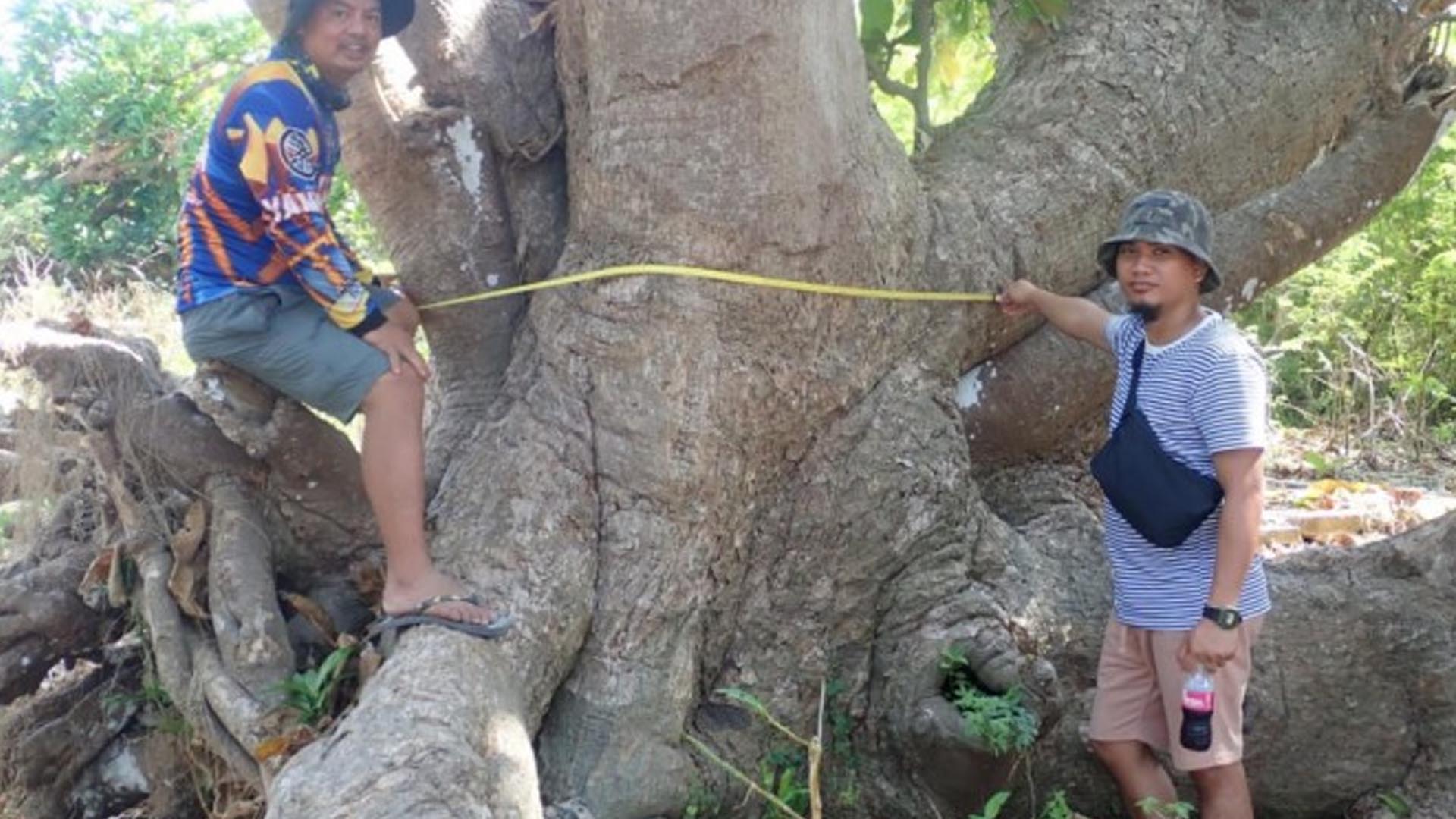







Researchers have uncovered the hidden carbon storage potential of Pag-asa Island’s small and remote beach forest, revealing its ability to store nearly 10,000 tons of carbon dioxide (CO₂), equivalent to the annual emissions of about 2,000 cars.
A study by the Department of Environment and Natural Resources’ (DENR’s) Ecosystems Research and Development Bureau (ERDB) published in the August 2025 issue of the Philippine Journal of Science showed that the 32-hectare Pag-asa Island, located in the West Philippine Sea and within the Kalayaan Group of Islands, is a quiet yet powerful ecosystem at work.
The findings highlight the crucial role of beach forests in carbon sequestration, biodiversity conservation, and shoreline protection in one of the country’s most remote territories.
The island’s beach forest has the capacity to capture carbon from the atmosphere while sustaining coastal biodiversity, making it a major carbon sink.
A carbon sink is anything that absorbs more CO₂ from the atmosphere than it releases, serving as nature’s storage system for carbon that helps reduce the amount of greenhouse gases that trap heat and cause climate change.
“Pag-asa’s beach forest may be small, but its ecological value is immense,” Jose Alan Castillo, co-author and head of the Mangrove and Beach Forest Research team of the ERDB, said.
“These large coastal trees are nature’s living carbon vaults and serve as the first line of defense against storms and rising seas,” he added
The research team identified 20 plant species from 19 families, including resilient native trees such as Barringtonia asiatica, commonly known as botong and sea poison tree, Calophyllum inophyllum, also known as bitaog, and Terminalia catappa or talisay.
Findings showed that B. asiatica alone accounts for 85 percent of Pag-asa’s total carbon stock, while C. inophyllum contributes about 9 percent.
These species are not only efficient in absorbing carbon but also provide natural coastal protection, making them ideal for future reforestation and climate adaptation programs.
“Each tree lost is not only a loss of carbon storage but also a loss of coastal protection and biodiversity,” lead author of the study Alvin Gestiada said.
Stronger coastal forest research, conservation
The DENR ERDB study also found that Pag-asa’s beach forest cover has since declined to less than 7 hectares in 2023 from 11 hectares in 2017.
With this data, researchers underscored the urgent need for conservation measures and the prioritization of beach forest ecosystems in climate change mitigation and coastal management efforts.
Castillo noted that beach forests deserve the same level of attention as mangroves and coral reefs.
“Beach forests, though often overlooked compared to mangroves and coral reefs, play an equally crucial role in stabilizing shorelines and regulating the climate,” he said.
The DENR-ERDB team recommended that beach forest conservation be integrated into the National Greening Program and national climate adaptation strategies to safeguard small island ecosystems like Pag-asa.
“Pag-asa’s beach forest reminds us that even our smallest islands can make a big impact on climate action. Through ERDB’s continuing research on coastal forest ecosystems, notably mangrove and beach forest, we see how nature itself contributes to carbon neutrality and community resilience,” Castillo said. (PNA)


