



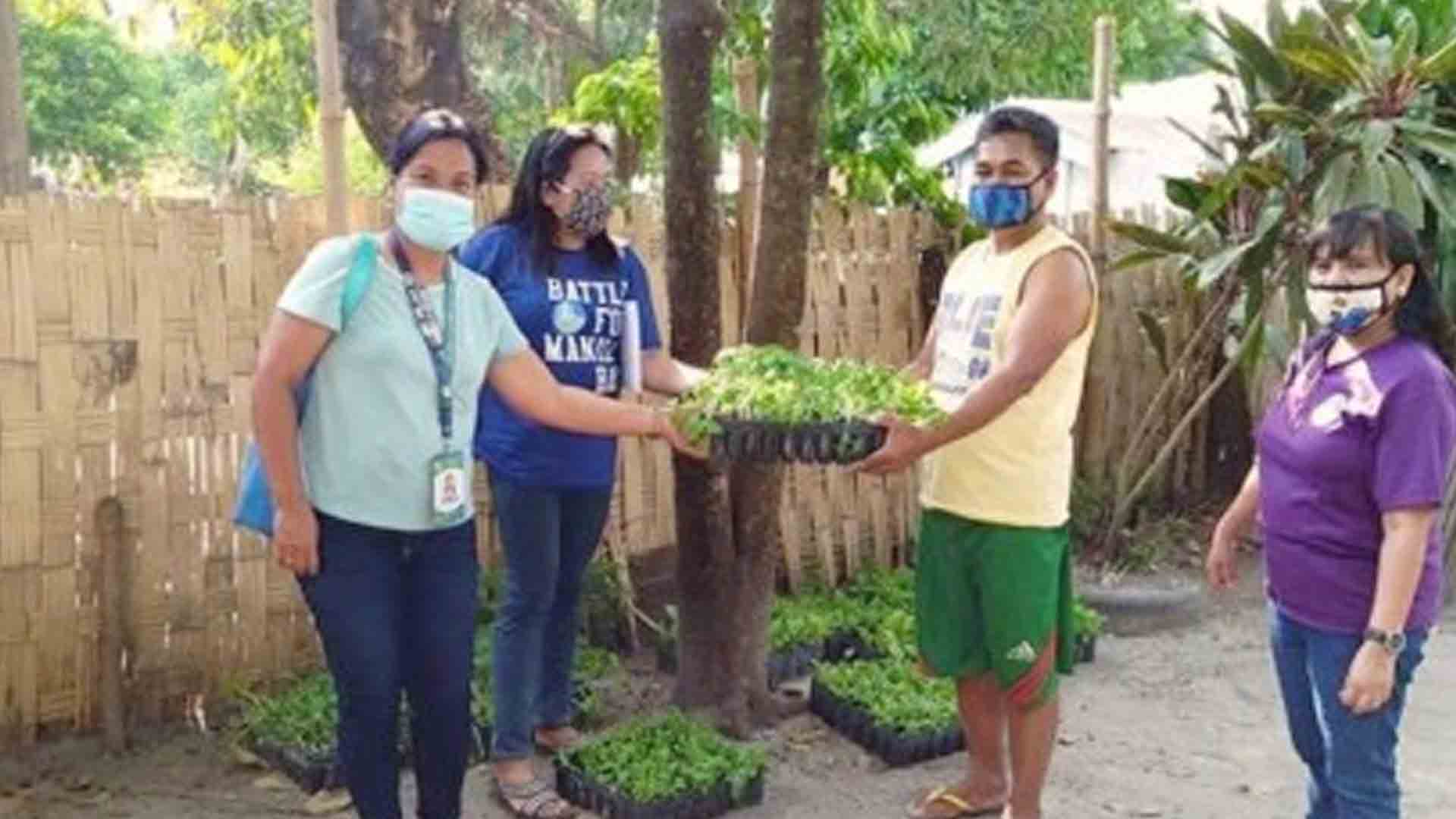






The Department of Environment and Natural Resources (DENR) regional office has distributed more than 600,000 assorted vegetable seedlings as part of its efforts to support the government’s food security program in Central Luzon.
The assorted vegetables were grown at the 1.26-hectare modernized and mechanized forest nursery (MMFN) of the DENR in Tarlac.
Celia Esteban, DENR provincial head, said the vegetables, mostly okra, chili, eggplant, string beans, squash, and petchay, were distributed to some 200 local government units, people’s organizations, indigenous peoples, religious organizations, non-government organizations, and residents of Tarlac and Pampanga.
“We used the mechanized nursery to grow these vegetables to provide our people with food during this pandemic,” Esteban said in a statement on Tuesday.
Arthur Salazar, deputy director for Technical Services of DENR-Region 3 (Central Luzon), said the MMFN was mainly to produce quality forest tree seedlings for the government’s reforestation undertakings such as the National Greening Program.
“We have seen its other potential to produce vegetable seedlings to provide food for our communities,” he said.
“During this pandemic, the MMFN will not only cater to the production of reforestation species but will also help us in vegetable production to secure our food in the region,” he added.
The DENR has requested for more vegetable seeds from the Department of Agriculture (DA) to support more communities.
The DA has provided 11 kilograms of various vegetable seeds to DENR which were raised into seedlings in the MMFN before the distribution.
“It is better to provide our local communities with vegetable seedlings rather than seed because seedlings would yield food faster and survive better,” Salazar said. (PNA)


