



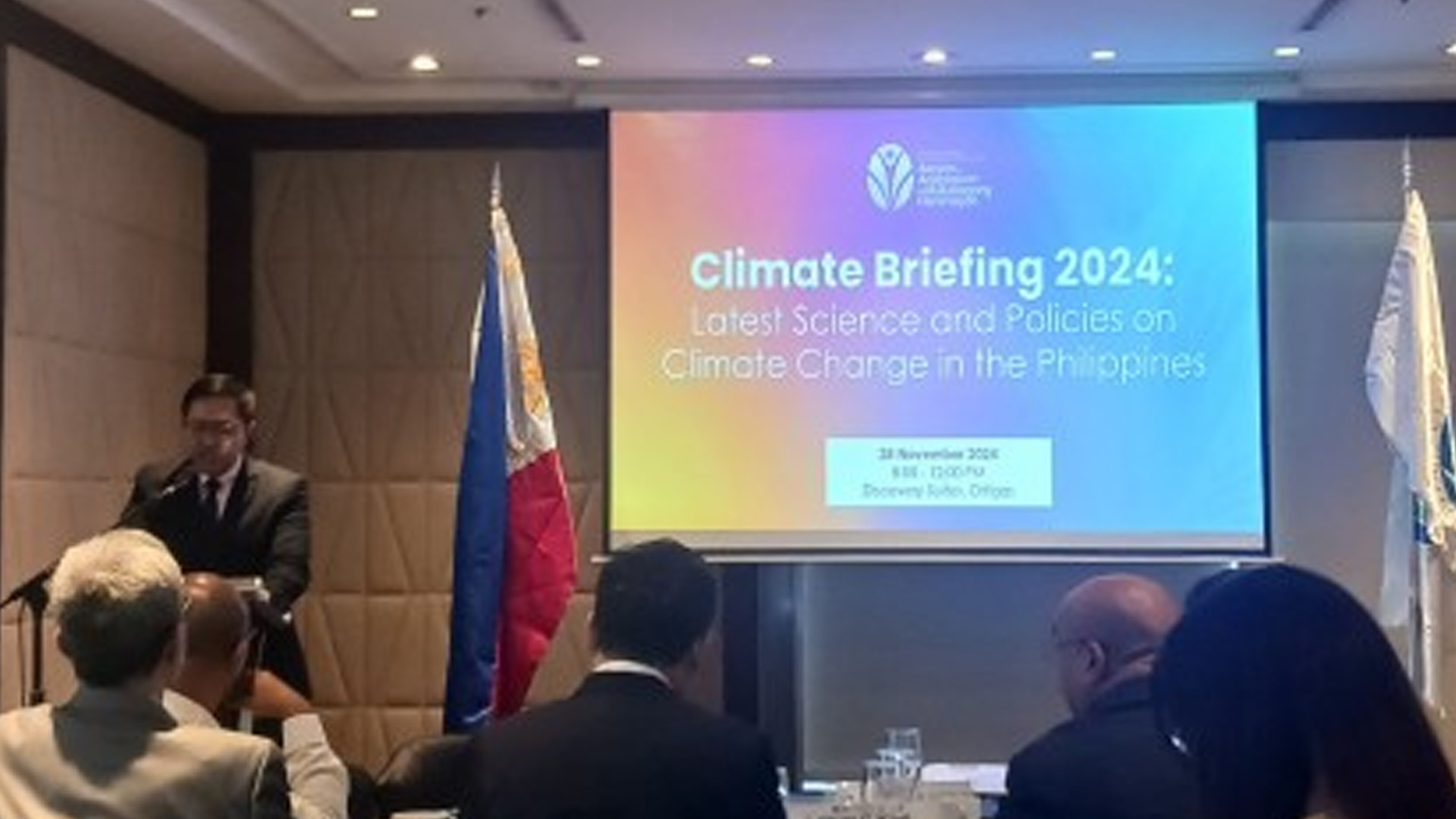







The Climate Change Commission (CCC) on Thursday emphasized the importance of cascading the climate change adaptation plans to the local government units (LGUs) to ensure that these are easily understood by the public.
During the briefing on the latest science and policies on climate change in the Philippines organized by the CCC in Pasig City, participants discussed weather patterns and observed climate trends in the country.
CCC Vice Chairperson and Executive Director Secretary Robert E.A. Borje said climate change adaptation plans must be translated into actions, especially at the local level.
“Importante na understandable na naiintindihan ang agham sa likod ng climate change. Pag hindi natin ginawa ito, we run the risk na magiging for compliance lang yung plano at dokumento (It is important to understand the science behind climate change. If we don’t do this, we run the risk that the plan and document will only be for compliance),” Borje said in a media interview.
“Gusto natin ang plano ay hindi lang mananatiling papel, but ito’y buhay na dokumento na magbibigay ng giya para sa dapat gawin ng ating mga LGUs, dahil sa totoo lang, ang laban talaga ng (We want the plan to not just remain on paper, but to be a living document that will provide guidance for what our LGUs should do, because in reality, the battle of) climate change is really locally led,” he added.
Borje said the government acknowledges that there has been an increase in public awareness, especially after a series of strong tropical cyclones recently hit the country.
He, however, said despite the increased public awareness, effective adaptation requires more than just understanding the issue.
He said it is important to empower the LGUs and ensure that they have the tools to combat the impacts of climate change.
Borje said the government has several national frameworks created to guide climate action, including the National Adaptation Plan (NAP) 2023-2050 and the Nationally Determined Contribution (NDC) Implementation Plan 2020-2030.
He said both plans must be tailored to meet the specific needs of local populations.
Borje said the Philippine Development Plan’s dedicated section on climate and disaster risk resiliency also calls for localized implementation, with officials urging all sectors of society to work together for effective change. (PNA)


