



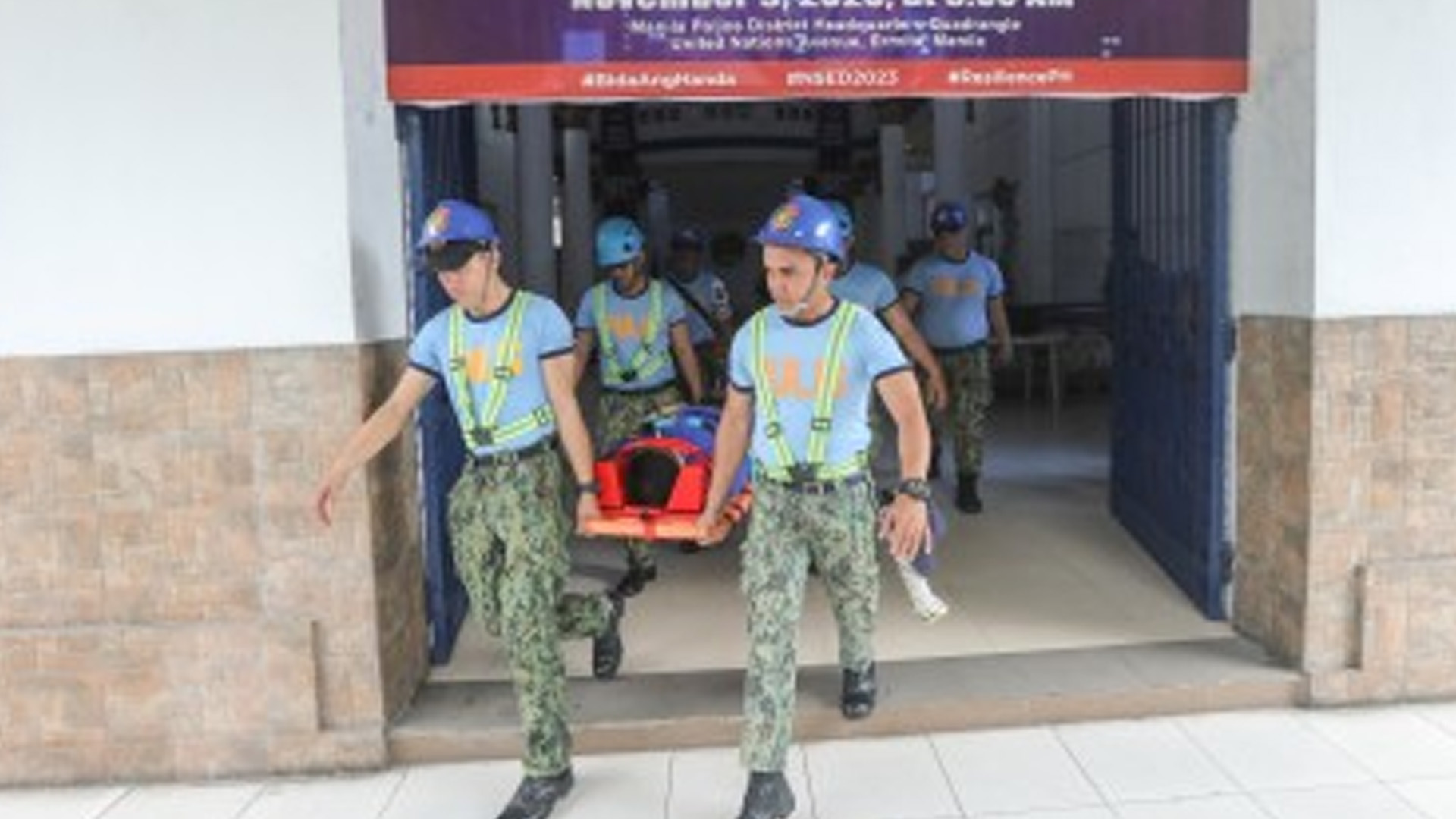






The Civil Service Commission (CSC) is enjoining all civil servants nationwide to actively promote disaster preparedness in celebration of this year’s National Disaster Resilience Month (NDRM).
The theme for this year is “Bantayog ng Katatagan at ang Pagbubuklod sa Layuning Kahandaan” to highlight the need to work collectively to enhance the country’s resilience and preparedness.
“With 1.9 million civil servants nationwide, government employees have a crucial role in helping raise awareness and promoting the government’s program on disaster resilience,” CSC Chairperson Karlo Nograles said in a news release.
“We encourage civil servants to actively engage in the initiatives and activities prepared by the National Disaster Risk Reduction and Management Council (NDRRMC) and the Office of the Civil Defense (OCD), as well as their respective agencies aimed at enhancing preparedness,” he added.
While the Philippines cannot change its location in the Pacific Ring of Fire or its vulnerability to climate change and other natural hazards, Nograles said “we can do our best to prepare.”
“As public officials and employees, we must do our part by contributing our knowledge, skills, and resources to achieve our collective goal of a safer, more resilient Philippines,” he added.
Nograles pointed out that the CSC has pushed for initiatives that contribute to the disaster risk reduction and management (DRRM) agenda in support of the government’s whole-of-nation approach to building disaster resilience.
Under CSC Memorandum Circular (MC) No. 21, s. 2018, government agencies are required to conduct DRRM training to enhance employees’ capabilities in mitigating and preparing for disaster risks.
Agencies must coordinate with the NDRRMC and the OCD to provide DRRM training as part of the orientation to its new employees, periodic reorientation for existing employees, and specialized courses for officials and employees whose roles are directly involved in DRRM.
Meanwhile, the CSC-Department of Health-Department of Labor and Employment Joint MC No. 1, s. 2020, or the Guidelines on Occupational Safety and Health Standards for the Public Sector, aims to protect all government employees from the dangers of injury, sickness, or death in the workplace through the adoption of safe and healthy working conditions.
Agencies shall have an established risk reduction management system, a crisis management plan, and a contingency program in an emergency situation; adequate emergency supplies such as fire extinguishers, medical first aid kits, among others; first aiders who are trained and certified by the Philippine National Red Cross; and a Memorandum of Understanding/Agreement with the nearest government health facility to provide medical services during an emergency.
The National Disaster Resilience Month gears toward building resilience covering four thematic areas: prevention and mitigation, preparedness, response and rehabilitation, and recovery per the Executive Order No. 29 issued on June 28, 2017. (PNA)


