



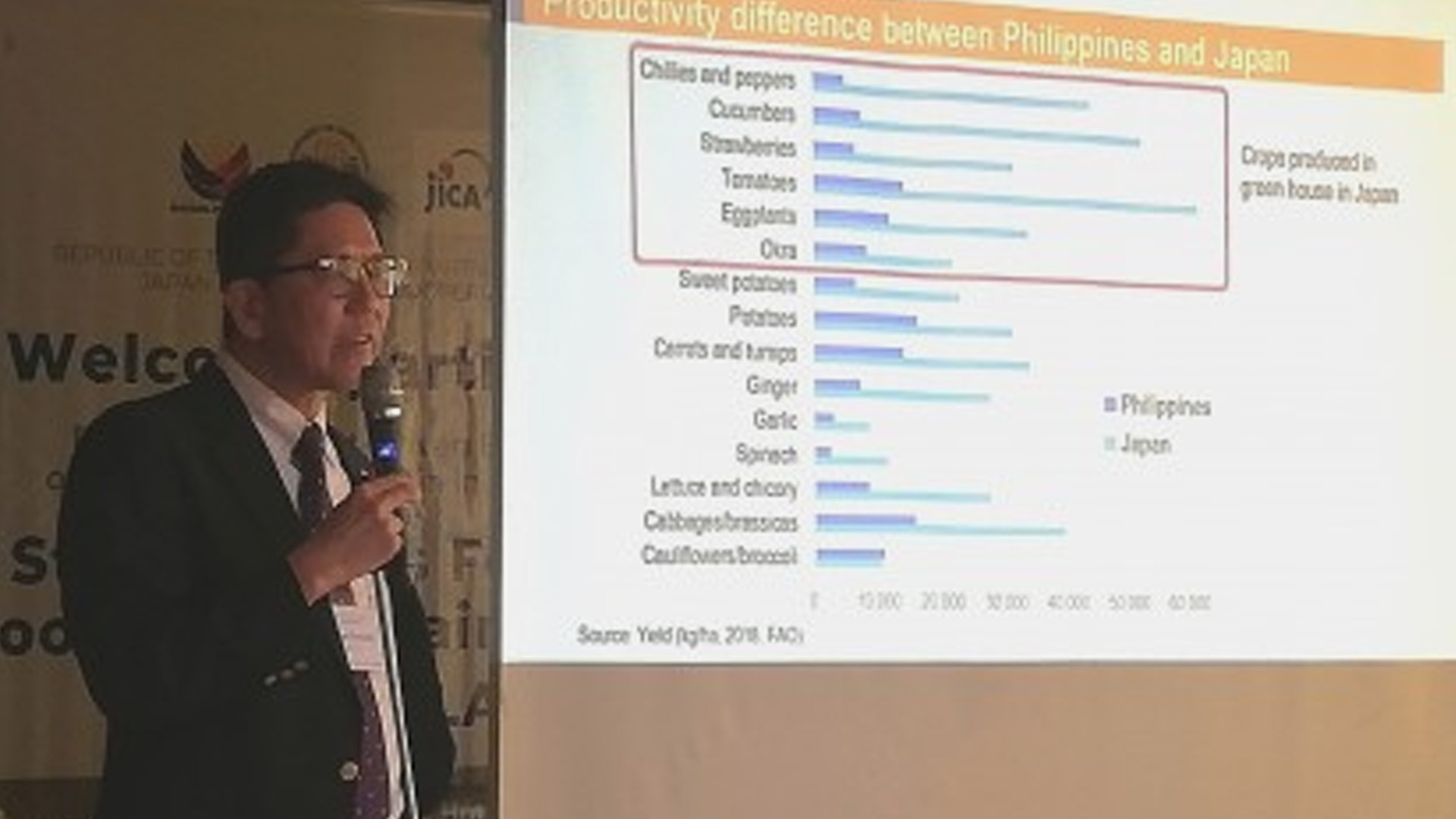






The five-year project of the Japan International Cooperation Agency (JICA) and the Department of Agriculture (DA) aimed to use technological innovations to improve the value chain of vegetables produced in the Cordillera is on track.
“You have seen in the presentation that after production of the vegetables, they (farmer) soon get the institutional buyers, so, definitely they are happy,” said Shingo Furuichi, chief advisor of the food value chain platform for the Market-Driven Enhancement of Vegetable Value Chain in the Philippines (MV2C) dubbed “Ka-Gulay”.
The statement was made on the sidelines of the first stakeholders forum for the food value chain platform held here Tuesday.
He expressed confidence that they are on the right track as far as achieving the goals of the program, which include addressing price fluctuation, low vegetable quality, and high cost of transportation and wastage.
Launched in April 2023, the program is being pilot-tested in Benguet and Quezon provinces.
It aims to address challenges by utilizing technologies that will support seasonal production of some commodities, making vegetables’ shelf life longer, adjusting the selling time of commodities to a time when prices are better, adopting the use of plastic crates to prevent deterioration of the quality of the produce, value-adding by processing and merchandizing, developing institutional wholesale market in Metro Manila, and increasing vegetable consumption among Filipinos for increase farmers’ sales.
Citing food and agriculture agencies’ data, Furuichi said Filipinos’ annual recommended vegetable intake should be 88 kilograms per person, higher than the 63 kilograms to date.
After the pilot testing, the agriculture department will hopefully pursue an interaction with farmers to further increase the number of beneficiaries on the ground, he added. (PNA)


