



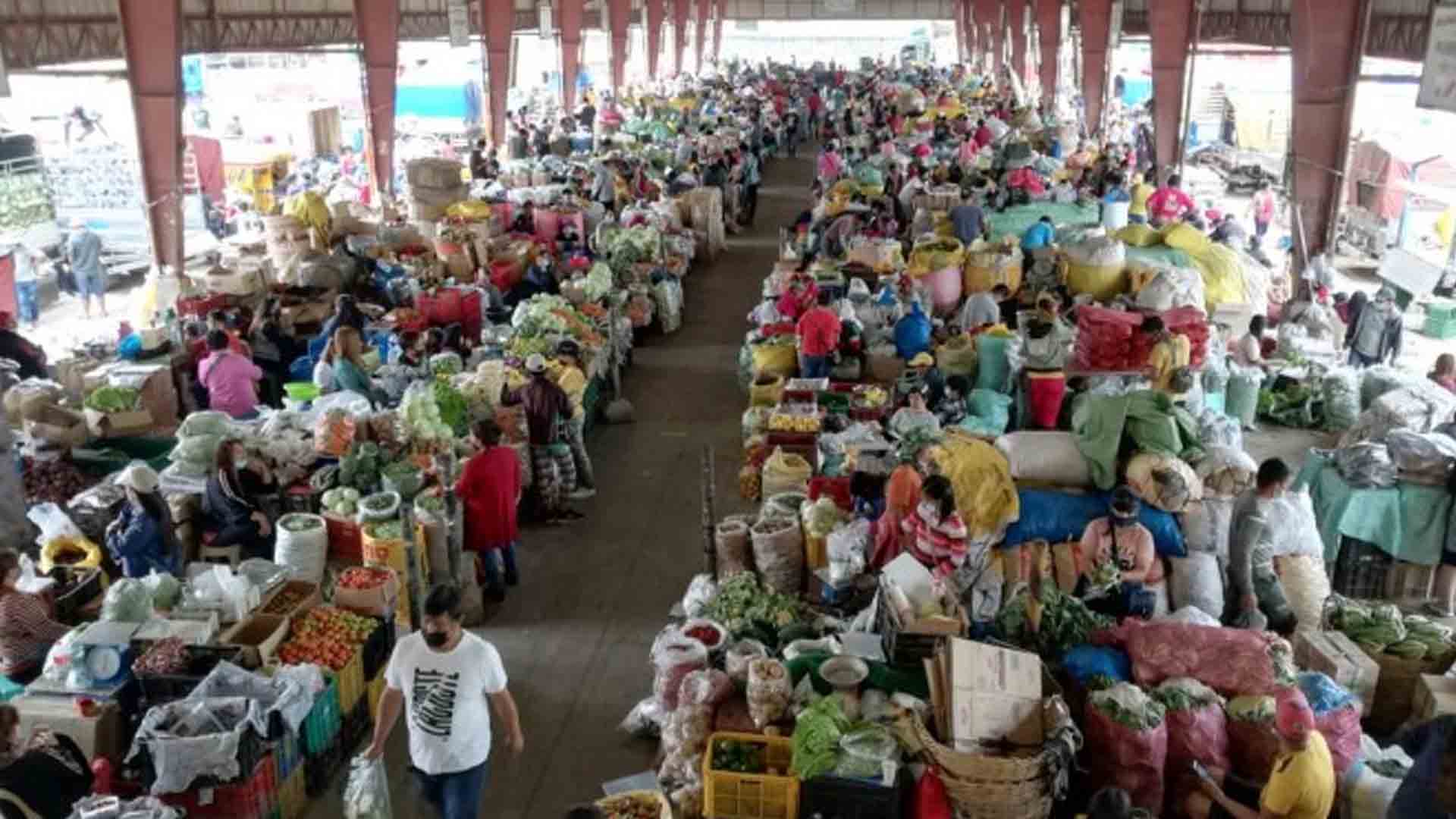






The Department of Agriculture in the Cordillera Administrative Region (DA-CAR) said the region is contributing largely to the production of food that feeds everybody in the country.
Dr. Cameron Odsey, DA-CAR regional director, on Thursday said the region is the no. 1 producer of highland vegetables in the country.
“We supply 80 percent of the highland vegetable requirement in Metro Manila, and in other lowland provinces,” he said.
On average, he said Cordillera sells around 1,000 metric tons (MT) or 1 million kilograms a day.
The vegetables usually come from Benguet, Tinoc, Ifugao, and Bauko, Mountain Province.
The vegetables found in “chop suey” dish are brought to as far north as Batanes to the southern part of the country in Mindanao.
Computed at an average of PHP30 per kilogram of vegetables, around PHP30 million moves around, helping propel the economy.
“That’s a big production trade,” Odsey said.
He said the farming sector contributes a significant amount to the regional economy with around 70,000 vegetable farmers tilling 25,000 hectares, with the bulk being in Benguet.
There are also 28,000 farmers most of them tilling around 11,600 hectares of land in remote villages to produce traditional rice.
Heirloom rice and commercial varieties are both planted by the local farmers. The heirloom rice or the traditional rice is planted on rice terraces. Farmers in several other areas of the region have adapted to planting commercial varieties.
“As our farmers tested high-yielding varieties, they have proven that some are not suitable, so they just continue planting traditional rice. These are called heirloom rice because these have been passed down from generation to generation. Until now, these have been the source of supply of the interior villages in the Cordillera. This can’t be simply forgotten,” he said.
Odsey said the region also produces swine.
“There is an estimate of 270,000 heads of pigs that are being raised by 12,000 farmers though this number might decrease due to the African swine fever,” he said.
While landlocked and bounded by mountains, around 25,000 people in the region are into freshwater fish production using the inland waters like rivers and creeks and the four water impounding dams that double as source of electricity.
“We are a critical component of the economy with the agricultural sector needing to continue and sustain its efforts to ensure food availability and security. This will need the partnership of stakeholders, farmers, local government units, and other offices involved at various levels,” Odsey said.
He lauded the farmers for continuing to produce food for the Filipinos despite the coronavirus disease 2019 (Covid-19) pandemic.
“Our farmers have been continuing to produce food otherwise there would be a greater problem. The DA is looking into the welfare of the farmers for production to continue so we have food for today and tomorrow,” he said.
“We have two responsibilities: produce enough food for our own requirements and that of the country, and continue to maintain our watersheds as these are our assets for the generations to come. The nature of us indigenous peoples helps us in this pandemic, as well as to face other problems or difficulties,” he said. (PNA)


