



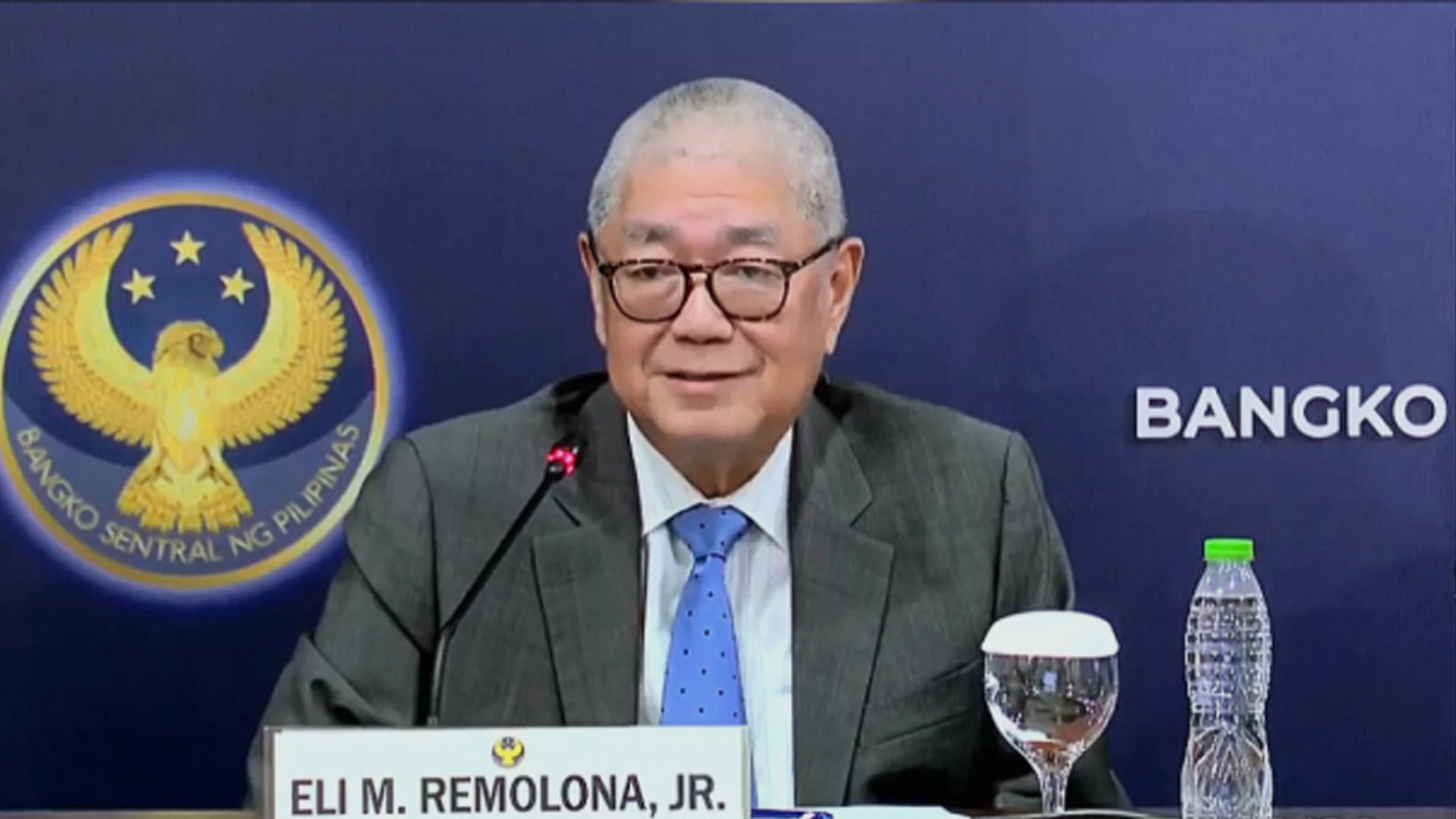







The Monetary Board of the Bangko Sentral ng Pilipinas (BSP) kept its policy rate at 4.25 percent following a rare off-cycle meeting on Thursday.
The board met to assess the impact of the Middle East conflict on inflation and growth, BSP Governor and Monetary Board Chairperson Eli Remolona Jr. said in a virtual briefing.
The next scheduled meeting is on April 23.
“As a data-driven central bank, we have been paying close attention in the fast-changing and uncertain environment resulting from the conflict in the Middle East. We judged that an off-cycle policy meeting was called for,” Remolona said.
The BSP said the conflict has driven up global oil and fertilizer prices, pushing domestic fuel costs and transport fares higher.
Inflation is now projected to breach the 4-percent ceiling in 2026 before easing back within target by 2027, though expectations remain well-anchored.
BSP Deputy Governor Zeno Abenoja said inflation could average 5.1 percent this year, up from the earlier 3.6 percent forecast, and 3.8 percent in 2027 from 3.2 percent.
“Previously, we were looking at around USD64 to USD65 per barrel. Now, we have updated them. Based on the futures prices, the average international oil prices could hover at around USD85 on average for this year. And next year, about USD76 per barrel,” he said.
The BSP also factored in higher transport fares, possible electricity rate hikes, rising fertilizer costs, and the temporary suspension of oil excise taxes.
Remolona said inflation is driven mainly by supply shocks, limiting the impact of monetary policy.
“We also project growth to remain weak. That regard, to raise rates at this time would be painful,” he said.
The BSP forecasts economic growth at 4.4 percent this year and 5.9 percent in 2027.
“I hope it (holding policy rate) reassures markets that we are assessing the situation constantly. Normally, with inflation going where it’s going, we would have hiked. But because it was driven by supply shocks, we felt a hike wouldn’t do very much. And at the same time, because growth was relatively weak, growth would temper any rise in inflation,” Remolona said.
He said risks to inflation remain and will require continued vigilance, with policy focused on preventing second-round effects.
Meanwhile, the BSP is considering regulatory relief measures similar to those during the Covid-19 pandemic to support borrowers.
“Actually, we’re contemplating the same things we did with bank lending to the informal sector and to low-income small businesses. We’re going to have standardized restructuring if a loan is default. We’re going to postpone some payments depending on the sector. So very similar to what we did during COVID,” Remolona said. (PNA)


