


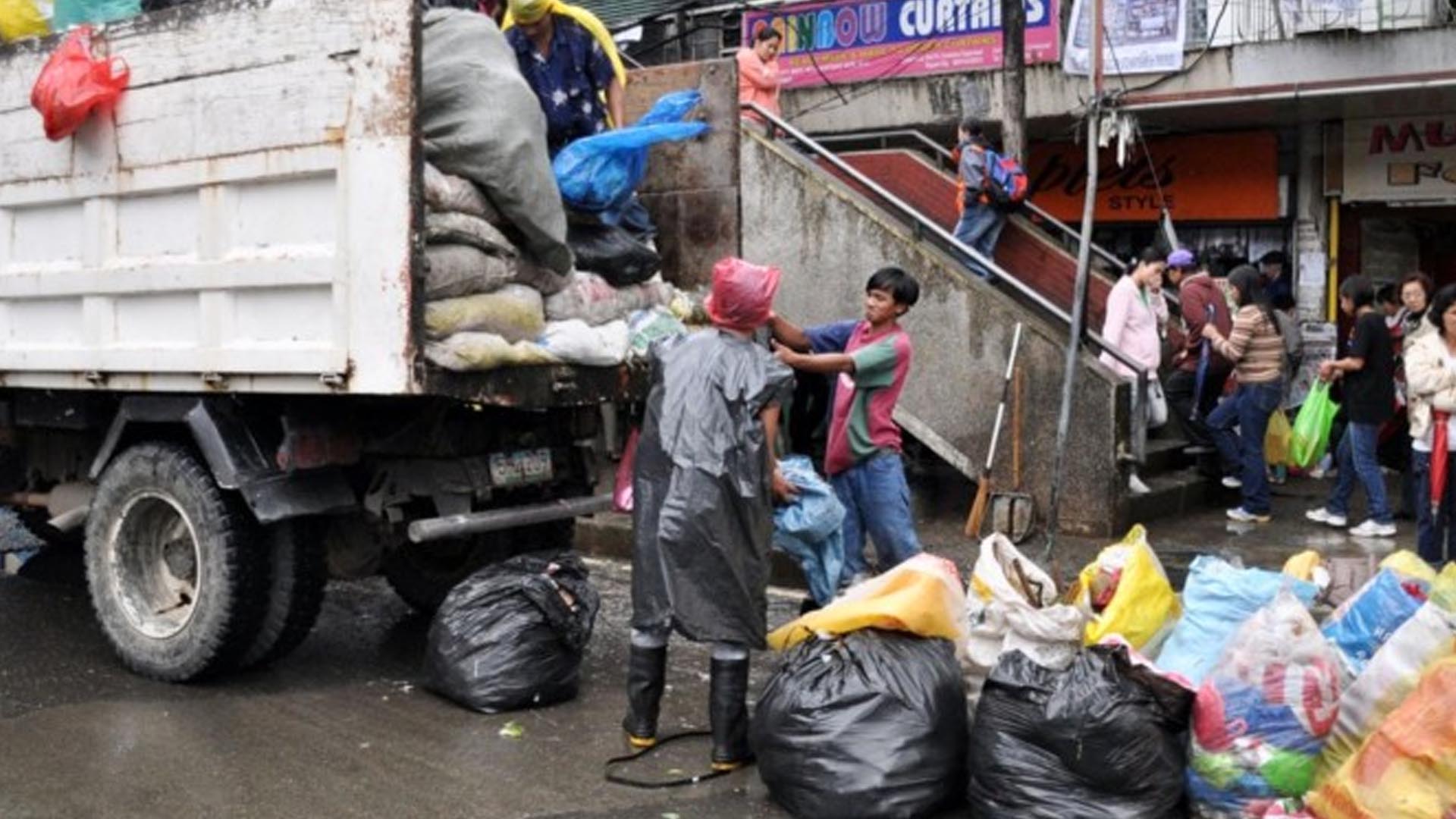







The city government here will enforce stricter waste segregation in six pilot barangays starting Monday, as part of efforts to strengthen its circular economy program and address the city’s garbage problem.
“We ask for the full cooperation of residents in six barangays which we are piloting as part of the circular economy program of the city,” Mayor Benjamin Magalong said in a media interview.
The pilot barangays are Gibraltar, Dominican-Mirador, Irisan, Guisad Central, Happy Hallow and Bakakeng.
Magalong said the six areas would serve as models for an intensified and standardized waste segregation and collection system aligned with the city’s circular economy objectives.
“I have directed the strict implementation of consistent segregation of garbage so that we can implement the step-by-step process that will make waste management more effective,” he said.
Barangay officials from the six pilot areas, together with concerned city government offices, have developed a system to incentivize proper waste segregation and collection to make the program sustainable and encourage residents to comply with the prescribed processes.
The system will also consider the nature of waste generated in different areas of the city.
Barangays in the central business district are expected to generate more recyclable materials that can be sold back to packaging manufacturers or turned over through the Extended Producer Responsibility (EPR) system.
Meanwhile, barangays in the outskirts may establish composting areas where organic waste can be processed into products such as fertilizer or food crops for the market.
The city government reminded residents that the value of recyclable materials depends on their condition. Recyclables must be clean and dry, as wet and contaminated materials have lower value.
Residents are likewise urged to use separate containers for residual waste, food waste intended for processing through the Black Soldier Fly (BSF) system, and green waste or other compostable materials.
Architect Donna Tabangin of the City Planning, Development and Sustainability Office (CPDSO), who serves as coordinator and local circular economy action officer, said households and establishments have a key role in ensuring the success of the program.
“Wastes are segregated at source by households and establishments, and recyclables are kept clean, dry and separate,” he said.
Plastic recyclables will be brought to barangay Materials Recovery Facilities (MRFs) for consolidation, sorting and labeling before being transported for further processing or sale.
Biodegradable waste, meanwhile, will be processed into compost fertilizer that may be sold or used in barangay gardens and by residents, in line with efforts to promote urban gardening.
“They will be weighted and the cash equivalent to the waste will be returned to the barangays,” Tabangin said.
Magalong said the initiative is part of the action plan for the Bida Barangay component of the Pansa-nopen Tayo circular economy program of the city. It was conceived as part of the city government’s response to Baguio’s growing garbage problem, which costs the city around PHP250 million annually.
The program seeks not only to reduce the volume of waste requiring disposal but also to generate income from recyclable and biodegradable materials, turning waste management into an economic opportunity for barangays. (PNA)


