


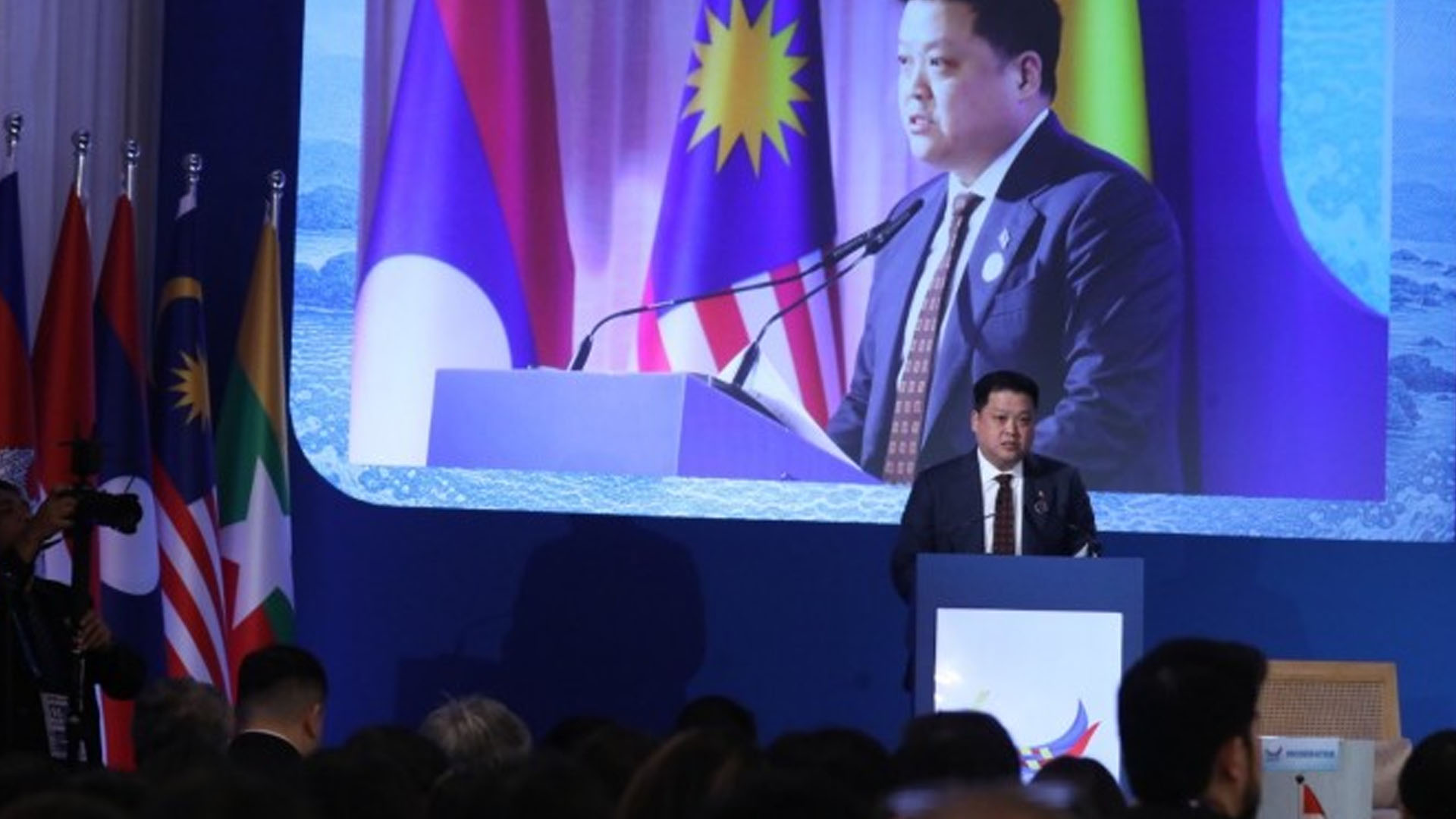






The Philippines, as chair of the Association of Southeast Asian Nations (ASEAN) this year, opened on Wednesday a high-level ASEAN Socio-Cultural Community (ASCC) forum to share best practices and craft strategies for a more “people-centered and people-empowered” region.
“ASEAN stands at a pivotal position as we steer and influence the discourse on how we can further empower families and communities, taking into account our shared regional agenda aligned with the ASEAN community vision of 2045,” ASCC Chair and Department of Social Welfare and Development Secretary Rex Gatchalian said in his opening remarks.
“Our discussions are a testament of our commitment to foster social inclusion, protect the vulnerable groups, and promote a sense of shared identity and community.”
Gatchalian said the dialogue is timely as Southeast Asia faces widening inequality, climate change and other complex challenges.
“These are problems no member state can resolve alone. With these wicked problems that continue to affect the region, we are once again reminded of our role to strengthen our collaboration towards a resilient and people-centered community,” he said.
Thailand Advisor for Social Development Sirilak Meemak, in her presentation, highlighted efforts to build responsive social protection systems amid climate shocks, aging populations, rising costs and digital change.
“Social protection is not merely a policy instrument, it is a reflection of who we are as a society. It demonstrates whether we truly leave no one behind,” she said.
Brunei Darussalam Minister for Culture, Youth and Sports Dato Nazmi bin Haji Mohamad and Cambodian Ministry of Education, Youth and Sports Secretary of State Oung Borat, meanwhile, highlighted the value of enhancing youth empowerment within the region, describing the population as ASEAN’s most important asset.
Borat proposed boosting soft and core skills and promoting student-teacher mobility.
“Together, this platform will lay the foundation for a future-ready, people-centered learning ecosystem that is inclusive, and interconnected,” he said.
Dato Nazmi said youth empowerment must be “rethought and repackaged” into meaningful leadership.
“[We need to] try to embrace the youth with an outward looking approach, so that the youth of today not only collaborate within the boundaries of ASEAN member states but beyond ASEAN member countries itself,” he said.
In Singapore, Minister for Social and Family Development Masagos Zulkifli touted how they put emphasis on family as the most important unit of society by championing policies that are family-centric.
“We used to be like many societies, we prefer people to come to us when they are in trouble and we are ready to meet them, but we also see that by the time they see us, the trouble is so difficult to resolve,” he said.
“Now, our approach for the last five to six years is to go upstream, and to meet and to know who would probably get into trouble, who would probably need help now, and go knock on the doors before they even come to see us,” he added.
Malaysia’s Chiew Choon Man highlighted tourism, arts and culture as drivers of inclusive growth.
“Tourism, arts, and culture are powerful economic driver and instruments to strengthen regional identity and reinforce social cohesion across all ASEAN pillars,” he said.
The forum, launched by Malaysia last year, gathers ASEAN ministers, officials, youth leaders and partners as part of weeklong ASCC meetings in Makati City.
Also present at the event were Lao PDR Deputy Minister for Culture and Tourism Darany Phommavongsa, Indonesian Deputy for the Coordination of Family Quality Improvement & Population Affairs Woro Srihastuti Sulistyaningrum, Vietnam Deputy Minister for Home Affairs Cao Huy, Myanmar Deputy Minister of Religious Affairs and Culture Nu Mra Zan and Timor-Lester Minister for Coordination for Social Affairs and Rural Development and Community Housing Mariano Assanami Sabino. (PNA)


