



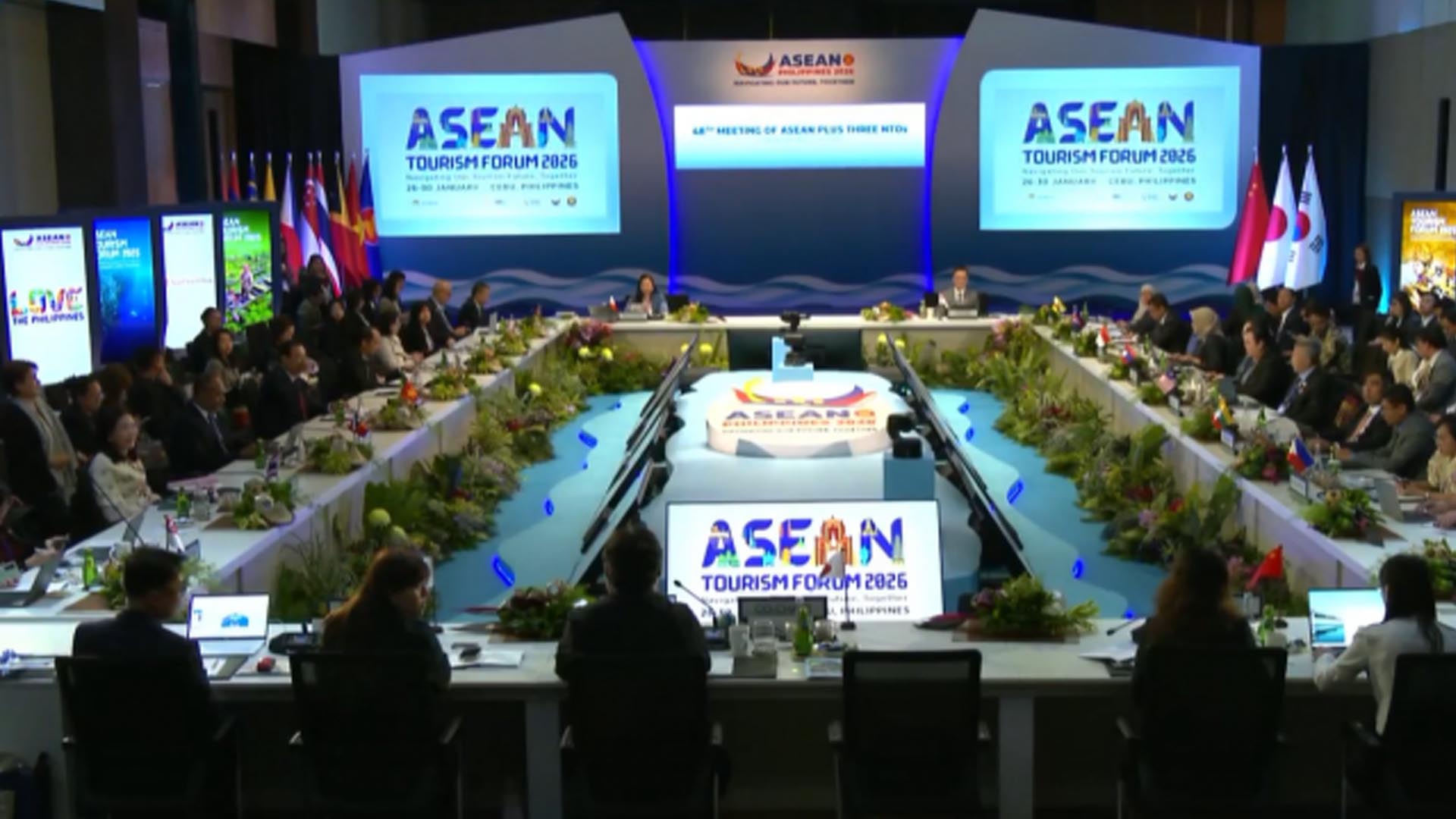







The national tourism organizations (NTOs) of the Association of Southeast Asian Nations (ASEAN) are seeking to strengthen marketing collaboration with counterparts in key markets — China, Japan and Korea.
Senior NTO officials from the 11 ASEAN member states, along with representatives from China, Japan and Korea, met Tuesday at the 48th ASEAN Plus Three NTOs Meeting in Cebu City.
The meeting, co-chaired by Tourism Undersecretary Verna Buensuceso and Japan Tourism Agency Deputy Commissioner Hironobu Nara, comes as the region intensifies efforts to boost arrivals from the three major tourism markets.
Buensuceso said ASEAN aims to build a tourism sector that is competitive, resilient and inclusive through stronger partnerships that promote cultural exchange and innovation in travel experiences.
“By strengthening our partnerships, we can champion cultural exchange and foster innovation in travel experiences, thereby enhancing the appeal of our destinations to travelers from every corner of the globe,” she said.
She noted that tourism remains one of the region’s most dynamic sectors, recording 20 million arrivals from China, 3 million from Japan, and 9 million from Korea in 2024.
Buensuceso added that further growth from these markets is expected in 2025, with tourism continuing to serve as a bridge for cultural exchange and economic development.
“This is really one of the dynamic sectors in our region. Tourism serves as a vital bridge that connects diverse cultures, fosters international understanding, and stimulates economic growth,” she said.
By 2030, ASEAN NTOs aim to develop interconnected tourism corridors showcasing nature-based destinations, strengthen ASEAN’s competitiveness as a single tourism destination, and enhance resilience against potential shocks and crises. (PNA)


