



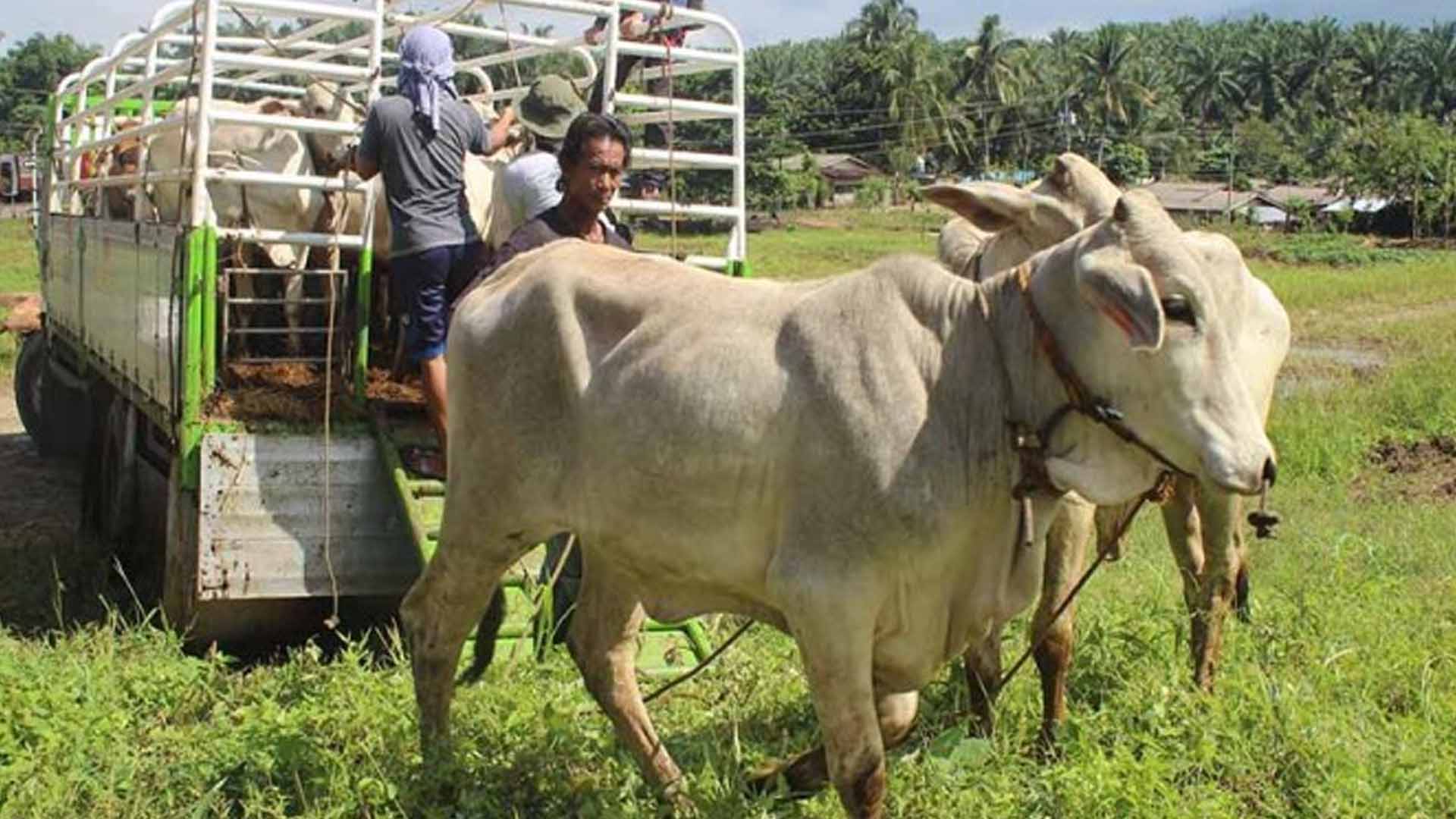






The chairperson of the House of Representatives ways and means committee on Friday pushed for reforms that would encourage more public-private partnerships in the livestock, poultry, and dairy sector to make the agricultural industry less susceptible to budget cuts.
Albay Rep. Joey Salceda made the statement following the contraction of agricultural output by 1.7 percent based on 2021 full-year gross domestic product (GDP) figures, which he said is a warning sign that the country’s agriculture sector is “still struggling to grow” even with a low output base.
“We need to grow agricultural output by at least 2 percent to outpace our population growth and produce enough to support our country’s needs. If we can’t produce our staple foods at competitive prices, we should diversify to other high-value crops to meet that output objective,” Salceda said in a statement.
He pointed out that the livestock sector is one of the factors that drag the country’s agricultural sector down, with the full-year livestock output declining by 17 percent.
“The problems of the livestock sector are One, lack of economies of scale. Most producers are backyard producers. Two, lack of cheap inputs. Feed costs in the Philippines remain among the highest in the region. Three, disjointed government support. You have several agencies for different livestock products, when you could consolidate that into a National Livestock, Poultry, and Dairy Program since the inputs, the problems, and the issues are very similar and require close coordination,” Salceda said.
He said the agencies handling livestock should be consolidated into a single umbrella.
He also suggested the creation of a national livestock, poultry, and dairy development plan to be reviewed every five or six years.
Other reforms include allocating tariff revenues in imported corn towards the development of cheap domestic corn, and revenues from imported feeds towards the development of cheaper feed alternatives, as well as organizing support services and investing in related infrastructure from farm transport to slaughterhouses.
“Finally, we also need to reform the Bureau of Animal Industry’s biosafety and inspection processes to make the sector more resilient against biohazards, such as the African swine fever. We are already working on that in the Committee on Ways and Means, during our discussions on the livestock import process,” Salceda said. (PNA)


