



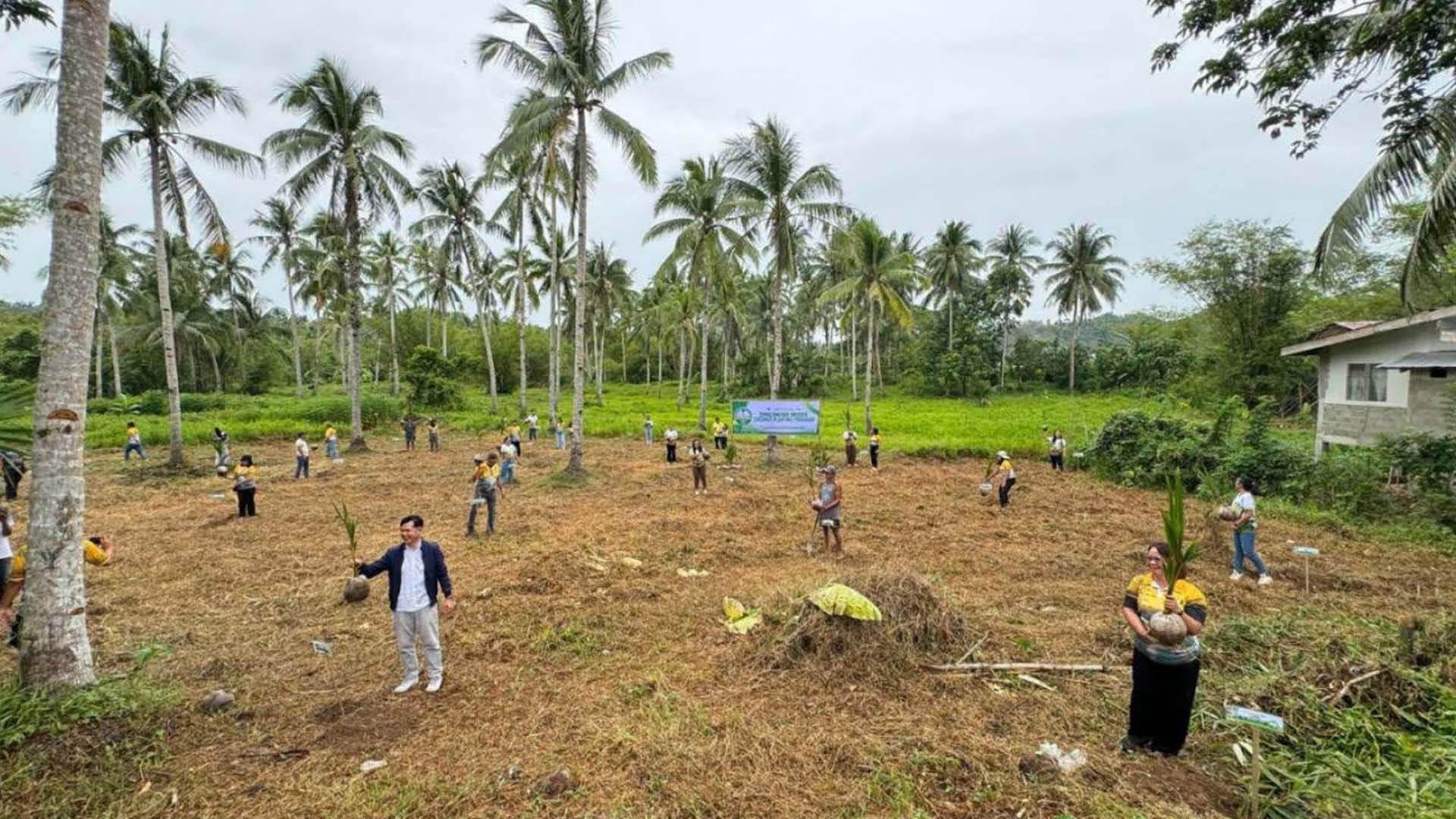







The Philippine Coconut Authority (PCA) is accelerating the replanting of 128,000 coconut trees in Eastern Visayas ahead of the expected peak of El Niño to improve the survival of newly planted seedlings.
PCA-Eastern Visayas Manager Marlon Terrado said Wednesday that the agency has completed more than half of its replanting target for the quarter and is stepping up efforts to finish the remaining work in the coming weeks.
The Philippine Atmospheric, Geophysical and Astronomical Services Administration (PAGASA) expects El Niño to peak before the end of 2026, with its effects likely to persist until the first half of 2027.
“The target is to achieve significant progress in the replanting activity while the region is still experiencing rainfall. We will start distributing incentives to farmers to encourage more of them to actively participate in the program,” Terrado said.
The PCA is implementing the Massive Coconut Planting and Replanting Project, which provides financial incentives to farmers who grow seedlings and replace aging or damaged coconut trees.
Under the program, beneficiaries can receive up to PHP85 per seedling in two installments: PHP40 when seedlings reach at least one foot in height and meet health standards, and another PHP45 after they are transplanted and established in the field.
Terrado said replanting is necessary to replace senile coconut trees planted decades ago that are no longer as productive.
“There are many vacant spaces in existing coconut farms. If we do not replace these old trees, we will have a shortage in the future, especially with the growing global demand for coconut products,” he said.
Eastern Visayas has a target of planting one million coconut trees, about half of which have been planted since the program began in 2023, Terrado said.
The regional initiative supports the national goal of planting 100 million coconut seedlings by 2028 to strengthen the industry’s resilience, sustainability, and global competitiveness.
The five-year project, covering 2023 to 2028, also aims to increase the coconut industry’s contribution to the national economy and improve the livelihood of Filipino coconut farmers.
The PCA reported that coconut plantations covered 3.6 million hectares nationwide in 2022, equivalent to 27 percent of the country’s agricultural land.
The agency plans to sustain and strengthen the replanting program over the next 10 to 15 years to rehabilitate the coconut industry, which has suffered from climate change and natural disasters over the past decade. (PNA)